

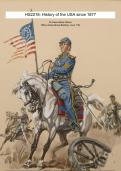
HS2218: History of the USA since 1877
Dr Dawn-Marie Gibson
Office (International Building, room 118)
-
1
,1. Introduction
Context:
•The United States on the eve of 1900:
•Society divided along socioeconomic and political lines and recovering from a failed First Reconstruction
•Urbanisation
•Racial oppression and the reality of inequality
•Recovering from war and the ‘splendid failure’ of reconstruction
Progressivism and the First World War
•This lecture outlines the aims, achievements, and failures of progressive campaigners at the beginning of the
twentieth century. It explores their long-term impact on U.S. social and political norms and examines the
various debates in the scholarly literature concerning the movement's origins and impact.
•The lecture also examines U.S. foreign policy concerns and ideals before, during and after the war. We will
examine various scholarly debates including those relating to why the U.S. intervened in the war effort and the
long-term impact of their involvement. In particular, we will examine to what extent U.S. exceptionalism
influenced public and political attitudes to the war and the increasing role that the U.S. came to play in Europe.
•The lecture will highlight the role that debates about the role, responsibilities, and limits of Government played
in the early twentieth-century U.S. and how such debates continue to shape attitudes about government today.
The 1920s, the Great Depression and the New Deal
•The lecture will outline the social and cultural impact of the First World War and address the multifaceted
ways in which the experience of war-shattered pre-war ideals and challenged pre-war customs.
•The lecture will examine the Women’s Movement of the 1920s (and how the flapper of the 1920s challenged
pre-war ideals about women’s work, divorce rates and attitudes to marriage), the booming economy of the
Jazz Age and outline the impact of the economic depression on various groups in the U.S.
•The lecture will examine the impact of the economic depression on the presidential race and assess the
extent to which the New Deal alleviated / sufficiently addressed the fundamental problems the U.S. economy
experienced.
•The lecture will also examine how the New Deal shifted both political and public discourses over the role of
the federal government
•The lecture will include a discussion of relevant and contentious scholarly debates
The Second World War
•The lecture will interrogate the various debates in existing literature relating to U.S. entry in the Second World
War and assess the foreign policy context of the late 1930s and early 1940s
•The lecture will examine the impact that the war effort had on minority groups in the U.S. and in particular
Japanese Americans and African Americans (we will also address the long-term impact of the war on civil
rights organisations)
•The lecture will examine primary source material relating prevalent attitudes to minority groups at the time and
in particular Japanese Americans
•The lecture will close with an assessment of the war’s impact on shaping America’s increasingly
interventionist foreign policy.
Civil Rights Movement
•This lecture will focus on what historians refer to as the “short civil rights movement” or the “Montgomery to
Memphis” narrative of the movement. In other words, our focus in this lecture will be on the period 1955-1968
2
,and will examine key strategies, goals, successes and failures of the movement under the leadership of
several civil rights groups.
•The lecture will provide a context for the movement’s emergence, examine the federal and state governments
responses and determine the shifts that occurred in U.S. race relations as a result of the movement.
•The lecture will also address the challenges that existed within the movement and the external challenges it
faced from the emergence of the Black Power Movement.
•Moreover, it will examine the varied ways in which the international context both propelled and limited the
movement.
•The lecture will include an assessment of the relevant scholarship relating to the movement’s origins, King’s
role, debates over non-violent vs. violent protest.
Cold War America
•This lecture will examine the contentious debates that relate to the origins of the Cold War.
•It will also address key foreign policy concerns and the impact the Cold War had on shaping U.S. society in
this period.
•We will examine the conservatism of the period and assess the impact that the war had on limiting the
freedoms of ordinary citizens.
•The lecture will highlight foreign policy objectives during the period and assess the long-term impact that the
experience of the Cold War had on U.S. society
The resurgence of the Right 1968-1988
•This lecture will explore America’s conservatism during the period 1968-1988. It will examine the forces that
enabled the new right to emerge and assess the role that the religious right had on U.S. politics in the period.
•The lecture will focus on the impact that Republican inspired and implemented policies had on various
sections of U.S. society and address the achievements and failures of the new religious right.
•The lecture will address Republican efforts to court the votes of the religious right and assess the long-term
impact of their identification with religious right voters and organizations.
The Clinton Years
•This lecture will address Bill Clinton’s presidential run and subsequent presidency.
•It will assess the domestic context and the various debates that existed concerning Clinton’s efforts to move
the party right of centre and disassociate the party from minority groups (in particular African Americans)
•The lecture will consider debates about Clinton’s handling of the economy, social issues and his efforts to
navigate a congress dominated by Republicans
•It will assess to a lesser extent the scandals that emerged during his presidency.
•Issues addressed in this lecture will be quite timely given Hillary Clinton’s suggestion that she would have put
her husband in charge of the economy if she had been elected
•Clinton’s policies did indeed pull the U.S. out of recession but they also had longer-term impacts that some
political scientists (such as Harris-Perry) suggest contributed to the recession in 2008
• The lecture will examine in some detail Clinton’s foreign policy failures and successes
The War on Terror
•The lecture will assess President Bush’s contested election, attitudes toward him in Europe and his foreign
policy priorities pre-9/11
•The lecture will examine how the 9/11 terror attacks influenced U.S. foreign policy and what impact the Bush
Doctrine (National Security Strategy, 2002) has had on shaping foreign policy.
3
, •The lecture will examine the war effort and its impact on U.S. society (particularly in terms of domestic
security)
•The lecture will examine the NSS 2002 and the impact that the war had on U.S. relations with Europe.
Barack Obama and the Politics of Race
•This lecture will address the key elements of Obama’s campaign and address the racial and religious
prejudice that he faced from both his Democratic rivals (none more so than Clinton) and his Republican
counterparts.
•The lecture will address the context of race relations during the campaign and assess the varied ways in
which it inspired debates about post-racialism.
•The lecture will introduce relevant historiography and assess the role that 2the 2008 election played inshaping
perceptions of Hillary Clinton in particular.
2. Progressivism and the First World War
Historiography
4
Dr Dawn-Marie Gibson
Office (International Building, room 118)
-
1
,1. Introduction
Context:
•The United States on the eve of 1900:
•Society divided along socioeconomic and political lines and recovering from a failed First Reconstruction
•Urbanisation
•Racial oppression and the reality of inequality
•Recovering from war and the ‘splendid failure’ of reconstruction
Progressivism and the First World War
•This lecture outlines the aims, achievements, and failures of progressive campaigners at the beginning of the
twentieth century. It explores their long-term impact on U.S. social and political norms and examines the
various debates in the scholarly literature concerning the movement's origins and impact.
•The lecture also examines U.S. foreign policy concerns and ideals before, during and after the war. We will
examine various scholarly debates including those relating to why the U.S. intervened in the war effort and the
long-term impact of their involvement. In particular, we will examine to what extent U.S. exceptionalism
influenced public and political attitudes to the war and the increasing role that the U.S. came to play in Europe.
•The lecture will highlight the role that debates about the role, responsibilities, and limits of Government played
in the early twentieth-century U.S. and how such debates continue to shape attitudes about government today.
The 1920s, the Great Depression and the New Deal
•The lecture will outline the social and cultural impact of the First World War and address the multifaceted
ways in which the experience of war-shattered pre-war ideals and challenged pre-war customs.
•The lecture will examine the Women’s Movement of the 1920s (and how the flapper of the 1920s challenged
pre-war ideals about women’s work, divorce rates and attitudes to marriage), the booming economy of the
Jazz Age and outline the impact of the economic depression on various groups in the U.S.
•The lecture will examine the impact of the economic depression on the presidential race and assess the
extent to which the New Deal alleviated / sufficiently addressed the fundamental problems the U.S. economy
experienced.
•The lecture will also examine how the New Deal shifted both political and public discourses over the role of
the federal government
•The lecture will include a discussion of relevant and contentious scholarly debates
The Second World War
•The lecture will interrogate the various debates in existing literature relating to U.S. entry in the Second World
War and assess the foreign policy context of the late 1930s and early 1940s
•The lecture will examine the impact that the war effort had on minority groups in the U.S. and in particular
Japanese Americans and African Americans (we will also address the long-term impact of the war on civil
rights organisations)
•The lecture will examine primary source material relating prevalent attitudes to minority groups at the time and
in particular Japanese Americans
•The lecture will close with an assessment of the war’s impact on shaping America’s increasingly
interventionist foreign policy.
Civil Rights Movement
•This lecture will focus on what historians refer to as the “short civil rights movement” or the “Montgomery to
Memphis” narrative of the movement. In other words, our focus in this lecture will be on the period 1955-1968
2
,and will examine key strategies, goals, successes and failures of the movement under the leadership of
several civil rights groups.
•The lecture will provide a context for the movement’s emergence, examine the federal and state governments
responses and determine the shifts that occurred in U.S. race relations as a result of the movement.
•The lecture will also address the challenges that existed within the movement and the external challenges it
faced from the emergence of the Black Power Movement.
•Moreover, it will examine the varied ways in which the international context both propelled and limited the
movement.
•The lecture will include an assessment of the relevant scholarship relating to the movement’s origins, King’s
role, debates over non-violent vs. violent protest.
Cold War America
•This lecture will examine the contentious debates that relate to the origins of the Cold War.
•It will also address key foreign policy concerns and the impact the Cold War had on shaping U.S. society in
this period.
•We will examine the conservatism of the period and assess the impact that the war had on limiting the
freedoms of ordinary citizens.
•The lecture will highlight foreign policy objectives during the period and assess the long-term impact that the
experience of the Cold War had on U.S. society
The resurgence of the Right 1968-1988
•This lecture will explore America’s conservatism during the period 1968-1988. It will examine the forces that
enabled the new right to emerge and assess the role that the religious right had on U.S. politics in the period.
•The lecture will focus on the impact that Republican inspired and implemented policies had on various
sections of U.S. society and address the achievements and failures of the new religious right.
•The lecture will address Republican efforts to court the votes of the religious right and assess the long-term
impact of their identification with religious right voters and organizations.
The Clinton Years
•This lecture will address Bill Clinton’s presidential run and subsequent presidency.
•It will assess the domestic context and the various debates that existed concerning Clinton’s efforts to move
the party right of centre and disassociate the party from minority groups (in particular African Americans)
•The lecture will consider debates about Clinton’s handling of the economy, social issues and his efforts to
navigate a congress dominated by Republicans
•It will assess to a lesser extent the scandals that emerged during his presidency.
•Issues addressed in this lecture will be quite timely given Hillary Clinton’s suggestion that she would have put
her husband in charge of the economy if she had been elected
•Clinton’s policies did indeed pull the U.S. out of recession but they also had longer-term impacts that some
political scientists (such as Harris-Perry) suggest contributed to the recession in 2008
• The lecture will examine in some detail Clinton’s foreign policy failures and successes
The War on Terror
•The lecture will assess President Bush’s contested election, attitudes toward him in Europe and his foreign
policy priorities pre-9/11
•The lecture will examine how the 9/11 terror attacks influenced U.S. foreign policy and what impact the Bush
Doctrine (National Security Strategy, 2002) has had on shaping foreign policy.
3
, •The lecture will examine the war effort and its impact on U.S. society (particularly in terms of domestic
security)
•The lecture will examine the NSS 2002 and the impact that the war had on U.S. relations with Europe.
Barack Obama and the Politics of Race
•This lecture will address the key elements of Obama’s campaign and address the racial and religious
prejudice that he faced from both his Democratic rivals (none more so than Clinton) and his Republican
counterparts.
•The lecture will address the context of race relations during the campaign and assess the varied ways in
which it inspired debates about post-racialism.
•The lecture will introduce relevant historiography and assess the role that 2the 2008 election played inshaping
perceptions of Hillary Clinton in particular.
2. Progressivism and the First World War
Historiography
4


