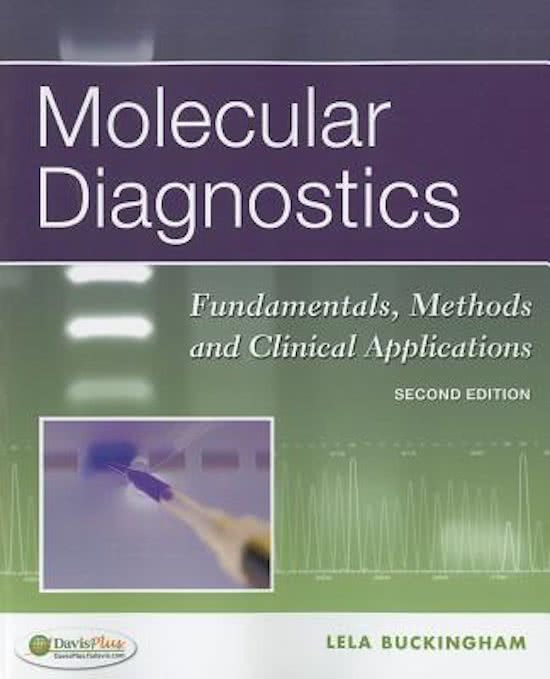
Test bank for Tietz Fundamentals of Clinical Chemistry an
q q q q q q q q
Molecular Diagnostics,
q q q
8th Edition by Nader Rifai, PhD
q q q q q q
Chapters 1 - 49
q q q q
,Tietz Fundamentals of Clinical Chemistry and Molecular Diagnostics 8th Edition Test Bank
q q q q q q q q
q
q q
Table of contents:
q q
I. Principles Of Laboratory Medicine
q q q q
Chapter 1. Clinical Chemistry, Molecular Diagnostics, and Laboratory Medicine
q q q q q q q q
Chapter 2. Selection and Analytical Evaluation of Methods — With Statistical Techniques
q q q q q q q q q q q
Chapter 3. Clinical Evaluation of Methods
q q q q q
Chapter 4. Evidence-Based Laboratory Medicine
q q q q
Chapter 5. Establishment and Use of Reference Values
q q q q q q q
Chapter 6. Specimen Collection, Processing, and Other Preanalytical Variables
q q q q q q q q
Chapter 7. Quality Management
q q q
II. Analytical Techniques And Instrumentation
q q q q
Chapter 8. Principles of Basic Techniques and Laboratory Safety
q q q q q q q q
Chapter 9. Optical Techniques
q q q
Chapter 10. Electrochemistry and Chemical Sensors
q q q q q
Chapter 11. Electrophoresis
q q
Chapter 12. Chromatography
q q
Chapter 13. Mass Spectrometry
q q q
Chapter 14. Enzyme and Rate Analyses
q q q q q
Chapter 15. Immunochemical Techniques
q q q
Chapter 16 Automation
q q
Chapter 17. Point-of-Care Instrumentation
q q q
III. Analytes
q
Chapter 18. Amino Acids, Peptides, and Proteins
q q q q q q
Chapter 19. Serum Enzymes
q q q
Chapter 20. Tumor Markers and Cancer Genes
q q q q q q
Chapter 21. Kidney Function Tests — Creatinine, GFR, Urea, and Uric Acid
q q q q q q q q q q q
Chapter 22. Carbohydrates
q q
Chapter 23. Lipids, Lipoproteins, Apolipoproteins, and Other Cardiac Risk Factors
q q q q q q q q q
Chapter 24. Electrolytes and Blood Gases
q q q q q
Chapter 25. Hormones
q q
Chapter 26. Catecholamines and Serotonin
q q q q
Chapter 27. Vitamins, Trace Elements, Nutritional Assessment
q q q q q q
Chapter 28. Hemoglobin, Iron, and Bilirubin
q q q q q
Chapter 29. Porphyrins and Porphyrias
q q q q
Chapter 30. Therapeutic Drugs and Their Management
q q q q q q
Chapter 31. Clinical Toxicology
q q q
Chapter 32. Toxic Metals
q q q
IV. Pathophysiology
q
Chapter 33. Diabetes
q q
,Chapter 34. Cardiovascular Disease
q q q
Chapter 35. Kidney Disease
q q q
Chapter 36. Physiology and Disorders of Water, Electrolyte, and Acid-Base Metabolism
q q q q q q q q q q
Chapter 37. Liver Disease
q qq q
Chapter 38. Gastrointestinal and Pancreatic Diseases
q q q q q
Chapter 39. Disorders of Bone and Mineral Metabolism
q qq q q q q q
Chapter 40. Disorders of the Pituitary Gland
q qq q q q q
Chapter 41. Disorders of the Adrenal Cortex
q q q q q q
Chapter 42. Thyroid Disorders
q q q
Chapter 43. Reproduction-Related Disorders
q q q
Chapter 44. Pregnancy and Prenatal Testing
q qq q q q
Chapter 45. Newborn Screening and Inborn Errors of Metabolism
q q q q q q q q
Chapter 46. Pharmacogenetics
q q
V. Molecular Diagnostics
q q
Chapter 47. Principles of Molecular Biology
q q q q q
Chapter 48. Nucleic Acid Techniques and Applications
q q q q q q
Chapter 49. Genomes and Nucleic Acid Alterations
q q q q q q
, Chapter 01: Clinical Chemistry, Molecular Diagnostics, and Laboratory Medicine
q q q q q q q q
TestBank
q q
MULTIPLE CHOICE q
1. An individual working in a clinical chemistry laboratory is married to a sales representative
q q q q q q q q q q q q q
who works for a company that sells chemistry laboratory supplies. When the laboratory
q q q q q q q q q q q q q
manager requests a list of needed supplies, cost of supplies, and vendors, this individual
q q q q q q q q q q q q q q
onlyrecommends the spouse’s company as the vendor. This is considered to be a(n):
q q q q q q q q q q q q q q
a. accounting issue. q
b. possible conflict of interest. q q q
c. maintenance of confidentiality issue. q q q
d. problem with resource allocation. q q q
ANS: B q
Concern has been raised over the interrelationships between practitioners in the medical
q q q q q q q q q q q
fieldand commercial suppliers of drugs, devices, equipment, etc., to the medical profession.
q q q q q q q q q q q q q
Similarly, relationships have been scrutinized between clinical laboratorians and
q q q q q q q q
manufacturers and providers of diagnostic equipment and supplies. These concerns led the
q q q q q q q q q q q q
National Institutes of Health (NIH) in 1995 to require official institutional review of financial
q q q q q q q q q q q q q q
disclosure by researchers and management of situations in which disclosure indicates
q q q q q q q q q q q
potentialconflicts of interest.
q q q q
DIF: 1 REF: Page 4-5 qqq q OBJ: 6 | 7 q q q
2. A patient visits her physician stating that her prescribed painkiller is not working to reduce
q q q q q q q q q q q q q q
the pain following her recent surgery. A friend of the patient claims that the same
q q q q q q q q q q q q q q q
painkiller―worked wonders‖ to reduce her pain after the same surgery. The physician
q q q q q q q q q q q q q
states that the difference in the effect of the drug might be caused by , which is studied
q q q q q q q q q q q q q q q q q
in pharmacogenetics.
q q
a. epidemiology
b. an inherited disease q q
c. a conflict of interest
q q q
d. a genetic variation in drug-metabolizing enzymes
q q q q q
ANS: D q
Pharmacogenetics is the study of the genetic variation of drug metabolism q q q q q q q q q q
betweenindividuals.
q q
DIF: 1 REF: Page 3 qqq q OBJ: 1 q
3. John works in a molecular diagnostics laboratory and receives a blood sample that has the
q q q q q q q q q q q q q q
name of a close friend printed on the bar-coded label. The genetic test that is ordered on
q q q q q q q q q q q q q q q q q
thefriend’s sample would provide diagnostic information about a disorder that has a poor
q q q q q q q q q q q q q q
prognosis, and the test is usually performed by John. He asks a fellow employee to
q q q q q q q q q q q q q q q
analyzethe sample for him and not divulge the results. This ethical issue concerns:
q q q q q q q q q q q q q q
a. confidentiality of patient genetic and medical information. q q q q q q
b. a conflict of interest.
q q q
c. resource allocation. q
d. diagnostic accuracy. q
q q q q q q q q
Molecular Diagnostics,
q q q
8th Edition by Nader Rifai, PhD
q q q q q q
Chapters 1 - 49
q q q q
,Tietz Fundamentals of Clinical Chemistry and Molecular Diagnostics 8th Edition Test Bank
q q q q q q q q
q
q q
Table of contents:
q q
I. Principles Of Laboratory Medicine
q q q q
Chapter 1. Clinical Chemistry, Molecular Diagnostics, and Laboratory Medicine
q q q q q q q q
Chapter 2. Selection and Analytical Evaluation of Methods — With Statistical Techniques
q q q q q q q q q q q
Chapter 3. Clinical Evaluation of Methods
q q q q q
Chapter 4. Evidence-Based Laboratory Medicine
q q q q
Chapter 5. Establishment and Use of Reference Values
q q q q q q q
Chapter 6. Specimen Collection, Processing, and Other Preanalytical Variables
q q q q q q q q
Chapter 7. Quality Management
q q q
II. Analytical Techniques And Instrumentation
q q q q
Chapter 8. Principles of Basic Techniques and Laboratory Safety
q q q q q q q q
Chapter 9. Optical Techniques
q q q
Chapter 10. Electrochemistry and Chemical Sensors
q q q q q
Chapter 11. Electrophoresis
q q
Chapter 12. Chromatography
q q
Chapter 13. Mass Spectrometry
q q q
Chapter 14. Enzyme and Rate Analyses
q q q q q
Chapter 15. Immunochemical Techniques
q q q
Chapter 16 Automation
q q
Chapter 17. Point-of-Care Instrumentation
q q q
III. Analytes
q
Chapter 18. Amino Acids, Peptides, and Proteins
q q q q q q
Chapter 19. Serum Enzymes
q q q
Chapter 20. Tumor Markers and Cancer Genes
q q q q q q
Chapter 21. Kidney Function Tests — Creatinine, GFR, Urea, and Uric Acid
q q q q q q q q q q q
Chapter 22. Carbohydrates
q q
Chapter 23. Lipids, Lipoproteins, Apolipoproteins, and Other Cardiac Risk Factors
q q q q q q q q q
Chapter 24. Electrolytes and Blood Gases
q q q q q
Chapter 25. Hormones
q q
Chapter 26. Catecholamines and Serotonin
q q q q
Chapter 27. Vitamins, Trace Elements, Nutritional Assessment
q q q q q q
Chapter 28. Hemoglobin, Iron, and Bilirubin
q q q q q
Chapter 29. Porphyrins and Porphyrias
q q q q
Chapter 30. Therapeutic Drugs and Their Management
q q q q q q
Chapter 31. Clinical Toxicology
q q q
Chapter 32. Toxic Metals
q q q
IV. Pathophysiology
q
Chapter 33. Diabetes
q q
,Chapter 34. Cardiovascular Disease
q q q
Chapter 35. Kidney Disease
q q q
Chapter 36. Physiology and Disorders of Water, Electrolyte, and Acid-Base Metabolism
q q q q q q q q q q
Chapter 37. Liver Disease
q qq q
Chapter 38. Gastrointestinal and Pancreatic Diseases
q q q q q
Chapter 39. Disorders of Bone and Mineral Metabolism
q qq q q q q q
Chapter 40. Disorders of the Pituitary Gland
q qq q q q q
Chapter 41. Disorders of the Adrenal Cortex
q q q q q q
Chapter 42. Thyroid Disorders
q q q
Chapter 43. Reproduction-Related Disorders
q q q
Chapter 44. Pregnancy and Prenatal Testing
q qq q q q
Chapter 45. Newborn Screening and Inborn Errors of Metabolism
q q q q q q q q
Chapter 46. Pharmacogenetics
q q
V. Molecular Diagnostics
q q
Chapter 47. Principles of Molecular Biology
q q q q q
Chapter 48. Nucleic Acid Techniques and Applications
q q q q q q
Chapter 49. Genomes and Nucleic Acid Alterations
q q q q q q
, Chapter 01: Clinical Chemistry, Molecular Diagnostics, and Laboratory Medicine
q q q q q q q q
TestBank
q q
MULTIPLE CHOICE q
1. An individual working in a clinical chemistry laboratory is married to a sales representative
q q q q q q q q q q q q q
who works for a company that sells chemistry laboratory supplies. When the laboratory
q q q q q q q q q q q q q
manager requests a list of needed supplies, cost of supplies, and vendors, this individual
q q q q q q q q q q q q q q
onlyrecommends the spouse’s company as the vendor. This is considered to be a(n):
q q q q q q q q q q q q q q
a. accounting issue. q
b. possible conflict of interest. q q q
c. maintenance of confidentiality issue. q q q
d. problem with resource allocation. q q q
ANS: B q
Concern has been raised over the interrelationships between practitioners in the medical
q q q q q q q q q q q
fieldand commercial suppliers of drugs, devices, equipment, etc., to the medical profession.
q q q q q q q q q q q q q
Similarly, relationships have been scrutinized between clinical laboratorians and
q q q q q q q q
manufacturers and providers of diagnostic equipment and supplies. These concerns led the
q q q q q q q q q q q q
National Institutes of Health (NIH) in 1995 to require official institutional review of financial
q q q q q q q q q q q q q q
disclosure by researchers and management of situations in which disclosure indicates
q q q q q q q q q q q
potentialconflicts of interest.
q q q q
DIF: 1 REF: Page 4-5 qqq q OBJ: 6 | 7 q q q
2. A patient visits her physician stating that her prescribed painkiller is not working to reduce
q q q q q q q q q q q q q q
the pain following her recent surgery. A friend of the patient claims that the same
q q q q q q q q q q q q q q q
painkiller―worked wonders‖ to reduce her pain after the same surgery. The physician
q q q q q q q q q q q q q
states that the difference in the effect of the drug might be caused by , which is studied
q q q q q q q q q q q q q q q q q
in pharmacogenetics.
q q
a. epidemiology
b. an inherited disease q q
c. a conflict of interest
q q q
d. a genetic variation in drug-metabolizing enzymes
q q q q q
ANS: D q
Pharmacogenetics is the study of the genetic variation of drug metabolism q q q q q q q q q q
betweenindividuals.
q q
DIF: 1 REF: Page 3 qqq q OBJ: 1 q
3. John works in a molecular diagnostics laboratory and receives a blood sample that has the
q q q q q q q q q q q q q q
name of a close friend printed on the bar-coded label. The genetic test that is ordered on
q q q q q q q q q q q q q q q q q
thefriend’s sample would provide diagnostic information about a disorder that has a poor
q q q q q q q q q q q q q q
prognosis, and the test is usually performed by John. He asks a fellow employee to
q q q q q q q q q q q q q q q
analyzethe sample for him and not divulge the results. This ethical issue concerns:
q q q q q q q q q q q q q q
a. confidentiality of patient genetic and medical information. q q q q q q
b. a conflict of interest.
q q q
c. resource allocation. q
d. diagnostic accuracy. q