NBC-HIS Study Guide
Study online at https://quizlet.com/_cklxaf
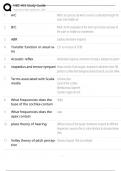
1. A/C Refers to a process by which sound is conducted through the
outer and middle ear
2. B/C Refers to the evaluation of the inner ear function exclusive of
the outer or middle ear involvement
3. ABR auditory brainstem response
4. Transfer function or areal ra- 22:1 an increase of 27dB
tio
5. Acoustic reflex Involuntary response, contraction of stapes, damper on system
6. stapedius and tensor tympani Keeps ossicles Chain taught, responds to vibrations from TM,
protects cochlea from dangerously loud sounds, acoustic reflex
7. Terms associated with Scalia Cochlear duct
media Canal of the cochlea
Membranous labyrinth
Contains organ of corti
8. What frequencies does the Highs
base of the cochlea contain
9. What frequencies does the Lows
apex contain
10. place theory of hearing different areas of the basilar membrane respond to different
frequencies, neurons fire at a rate identical to stimulus below
1kHz
11. Volley theory of pitch percep- Stimulus beyond 1KHz are volleyed
tion
, NBC-HIS Study Guide
Study online at https://quizlet.com/_cklxaf
12. Outer Ear Components Helix
Anti Helix
scaphoid fossa
triangular fossa
external auditory meatus
tragus
anti tragus
lobule
concha
tympanic membrane
osseos portion
cartilaginous portion
inter-tragal notch
13. What does the outer ear do funnels sound toward the inner ear
14. External Auditory Meatus Self cleaning, 5cm long portion of the outer ear
15. Vagus Nerve Tenth cranial nerve
16. Tympanic Membrane Comprised of 4 layers and creates an air tight/water tight seal
to the middle ear cavity
17. TM layers comprised of 4 layers
18. Annular Ring Holds TM in place
19. Pars Tensa thick, taut, central-inferior section of tympanic membrane
20. Pars flaccida small, slack, superior section of tympanic membrane
21. Quadrants of the Tm anterior superior, anterior inferior, posterior superior, posterior
inferior
, NBC-HIS Study Guide
Study online at https://quizlet.com/_cklxaf
22. Middle ear components and conduct sound energy to the inner ear, holds the ossicular
use chain by the tensor tympani and stapeius muscles
23. Incudostapedial junction top of malleus articulates with top of incus, bottom of incus
meets stapes
24. Middle ear muscles and func- Suspends the ossicular chain, acoustic reflex and protects
tions cochlea from dangerously loud sounds
25. Eustachian Tube connects the middle ear with the nasopharynx and allows pas-
sage of air
26. mastoid process round projection on the temporal bone behind the ear
27. Semicircular Canals three fluid-filled canals in the inner ear responsible for our
sense of balance
28. Vestibule endolymph filled cavity attached to the semicircular canals and
the cochlea that is responsible for gravity and acceleration
29. Cochlea a coiled, bony, fluid-filled tube in the inner ear through which
sound waves trigger nerve impulses
30. Key areas of the cochlea 11 areas, membranes, windows, the scala's
31. Terms associated with scala cochlear duct, canal of the cochlea, membranous labyrinth
media
32. Organ of Corti Center part of the cochlea, containing hair cells, canals, and
membranes
33. Tectorial membrane A membrane located above the basilar membrane; serves as a
shelf against which the cilia of the auditory hair cells move
34. Auditory Nerve VIII cranial nerve
, NBC-HIS Study Guide
Study online at https://quizlet.com/_cklxaf
35. Vestibular nerve nerve that conducts impulses related to maintaining balance to
the brain
36. Auditory nerve contains 30 000 neurons
37. spiral ganglion formed and combined by nerve impulses traveling along nerve
fibers
38. afferent pathway transmits from cochlea to the brain
39. efferent transmits from brain to cochlea
40. binaural fusion sounds presented to both ears come together as one single
sound
41. binaural summation listening with two ears has a 6-10 dB increase
42. binaural squelch effect Benefit of better listening in background noise resulting from
binaural hearing
43. Frequency physical measurement
44. pitch psychological aspect
45. intensity physical measurement
46. loudness psychological aspect
47. Sine waves and cycle per sec- compression, rarefaction, frequency, hertz, kilohertz
ond characteristics
48. compression positive pressure in sine wave
49. rarefaction negative pressure in sine waves
Study online at https://quizlet.com/_cklxaf
1. A/C Refers to a process by which sound is conducted through the
outer and middle ear
2. B/C Refers to the evaluation of the inner ear function exclusive of
the outer or middle ear involvement
3. ABR auditory brainstem response
4. Transfer function or areal ra- 22:1 an increase of 27dB
tio
5. Acoustic reflex Involuntary response, contraction of stapes, damper on system
6. stapedius and tensor tympani Keeps ossicles Chain taught, responds to vibrations from TM,
protects cochlea from dangerously loud sounds, acoustic reflex
7. Terms associated with Scalia Cochlear duct
media Canal of the cochlea
Membranous labyrinth
Contains organ of corti
8. What frequencies does the Highs
base of the cochlea contain
9. What frequencies does the Lows
apex contain
10. place theory of hearing different areas of the basilar membrane respond to different
frequencies, neurons fire at a rate identical to stimulus below
1kHz
11. Volley theory of pitch percep- Stimulus beyond 1KHz are volleyed
tion
, NBC-HIS Study Guide
Study online at https://quizlet.com/_cklxaf
12. Outer Ear Components Helix
Anti Helix
scaphoid fossa
triangular fossa
external auditory meatus
tragus
anti tragus
lobule
concha
tympanic membrane
osseos portion
cartilaginous portion
inter-tragal notch
13. What does the outer ear do funnels sound toward the inner ear
14. External Auditory Meatus Self cleaning, 5cm long portion of the outer ear
15. Vagus Nerve Tenth cranial nerve
16. Tympanic Membrane Comprised of 4 layers and creates an air tight/water tight seal
to the middle ear cavity
17. TM layers comprised of 4 layers
18. Annular Ring Holds TM in place
19. Pars Tensa thick, taut, central-inferior section of tympanic membrane
20. Pars flaccida small, slack, superior section of tympanic membrane
21. Quadrants of the Tm anterior superior, anterior inferior, posterior superior, posterior
inferior
, NBC-HIS Study Guide
Study online at https://quizlet.com/_cklxaf
22. Middle ear components and conduct sound energy to the inner ear, holds the ossicular
use chain by the tensor tympani and stapeius muscles
23. Incudostapedial junction top of malleus articulates with top of incus, bottom of incus
meets stapes
24. Middle ear muscles and func- Suspends the ossicular chain, acoustic reflex and protects
tions cochlea from dangerously loud sounds
25. Eustachian Tube connects the middle ear with the nasopharynx and allows pas-
sage of air
26. mastoid process round projection on the temporal bone behind the ear
27. Semicircular Canals three fluid-filled canals in the inner ear responsible for our
sense of balance
28. Vestibule endolymph filled cavity attached to the semicircular canals and
the cochlea that is responsible for gravity and acceleration
29. Cochlea a coiled, bony, fluid-filled tube in the inner ear through which
sound waves trigger nerve impulses
30. Key areas of the cochlea 11 areas, membranes, windows, the scala's
31. Terms associated with scala cochlear duct, canal of the cochlea, membranous labyrinth
media
32. Organ of Corti Center part of the cochlea, containing hair cells, canals, and
membranes
33. Tectorial membrane A membrane located above the basilar membrane; serves as a
shelf against which the cilia of the auditory hair cells move
34. Auditory Nerve VIII cranial nerve
, NBC-HIS Study Guide
Study online at https://quizlet.com/_cklxaf
35. Vestibular nerve nerve that conducts impulses related to maintaining balance to
the brain
36. Auditory nerve contains 30 000 neurons
37. spiral ganglion formed and combined by nerve impulses traveling along nerve
fibers
38. afferent pathway transmits from cochlea to the brain
39. efferent transmits from brain to cochlea
40. binaural fusion sounds presented to both ears come together as one single
sound
41. binaural summation listening with two ears has a 6-10 dB increase
42. binaural squelch effect Benefit of better listening in background noise resulting from
binaural hearing
43. Frequency physical measurement
44. pitch psychological aspect
45. intensity physical measurement
46. loudness psychological aspect
47. Sine waves and cycle per sec- compression, rarefaction, frequency, hertz, kilohertz
ond characteristics
48. compression positive pressure in sine wave
49. rarefaction negative pressure in sine waves