

Written by students who passed Immediately available after payment Read online or as PDF Wrong document? Swap it for free 4.6 TrustPilot
logo-home
Document preview thumbnail
Preview 1 out of 2 pages
Exam (elaborations)

CVS207 EXAM 1 MEASUREMENTS

Document preview thumbnail
Preview 1 out of 2 pages

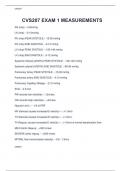
RA (nhp) - -2-8mmhg LA (nhp) - -2-12mmhg RV (nhp) PEAK SYSTOLE - -15-30 mmhg RV (nhp) END DIASTOLE - -3-12 mmhg LV (nhp) PEAK SYSTOLE - -120-140 mmhg LV (nhp) END DIASTOLE - -3-12 mmhg Systemic Arterial (AORTA) PEAK SYSTOLE - -100-140 mmhg Systemic arterial (AORTA) END DIASTOLE - -60-90 mmhg Pulmonary Artery PEAK SYSTOLE - -15-30 mmhg Pulmonary artery END DIASTOLE - -4-12 mmhg Pulmonary Capillary Wedge - -2-12 mmhg SVG - -4-6 mm PW records low velocities - -2m/sec CW records high velocities - -2m/sec Nyquist Limit = - -1/2 of PRF MV stenosis causes increased E velocity = - -1.3m/s TV Stenosis causes increased E velocity= - -1.0m/s TV Regurg. causes increased E velocity = - -1.0m/s w normal deceleration time MILD Aortic Regurg - -500 m/sec SEVERE aortic regurg. - -200 m/sec MITRAL flow (normal peak velocity) - -0.6 - 1.3m/s CVS207 TRICUSPID flow (normal peak velocity) - -0.3-0.7 m/s PULMONARY artery (normal peak velocity) - -0.6-0.9m/s LVOT (normal peak velocity) - -0.7- 1.1m/sec AORTIC valve (normal peak velocity) - -1.0-1.7m/sec LA diameter END SYSTOLE - -3-4cm AOR diameter END DIASTOLE - -2-3.7cm ACS diameter (cusp open) - -1.5 -2.6cm E-F Slope - -70-150 mm/sec EPSS - -2-7 mm D-E - -18-28mm RVID diastole - -1.9 - 2.6 cm LVID diastole - -4.2-5.8 cm LVID systole - -2.5 - 4.0 cm MV area - -4-6 cm2 TV area - -7-9cm2 AOR area - -3-4cm2 PV area - -4-6cm2

Content preview

CVS207


CVS207 EXAM 1 MEASUREMENTS
RA (nhp) - -2-8mmhg

LA (nhp) - -2-12mmhg

RV (nhp) PEAK SYSTOLE - -15-30 mmhg

RV (nhp) END DIASTOLE - -3-12 mmhg

LV (nhp) PEAK SYSTOLE - -120-140 mmhg

LV (nhp) END DIASTOLE - -3-12 mmhg

Systemic Arterial (AORTA) PEAK SYSTOLE - -100-140 mmhg

Systemic arterial (AORTA) END DIASTOLE - -60-90 mmhg

Pulmonary Artery PEAK SYSTOLE - -15-30 mmhg

Pulmonary artery END DIASTOLE - -4-12 mmhg

Pulmonary Capillary Wedge - -2-12 mmhg

SVG - -4-6 mm

PW records low velocities - -<2m/sec

CW records high velocities - ->2m/sec

Nyquist Limit = - -1/2 of PRF

MV stenosis causes increased E velocity = - ->1.3m/s

TV Stenosis causes increased E velocity= - ->1.0m/s

TV Regurg. causes increased E velocity = - ->1.0m/s w normal deceleration time

MILD Aortic Regurg - ->500 m/sec

SEVERE aortic regurg. - -<200 m/sec

MITRAL flow (normal peak velocity) - -0.6 - 1.3m/s

CVS207

Document information

Uploaded on
June 9, 2025
Number of pages
2
Written in
2024/2025
Type
Exam (elaborations)
Contains
Questions & answers
$11.89

Wrong document? Swap it for free Within 14 days of purchase and before downloading, you can choose a different document. You can simply spend the amount again.
Written by students who passed
Immediately available after payment
Read online or as PDF

Seller avatar
Reputation scores are based on the amount of documents a seller has sold for a fee and the reviews they have received for those documents. There are three levels: Bronze, Silver and Gold. The better the reputation, the more your can rely on the quality of the sellers work.
AlexScorer
2.5
(2)
Sold
11
Followers
0
Items
1800
Last sold
2 weeks ago


Why students choose Stuvia

Created by fellow students, verified by reviews

Quality you can trust: written by students who passed their tests and reviewed by others who've used these notes.

Didn't get what you expected? Choose another document

No worries! You can instantly pick a different document that better fits what you're looking for.

Pay as you like, start learning right away

No subscription, no commitments. Pay the way you're used to via credit card and download your PDF document instantly.

Student with book image

“Bought, downloaded, and aced it. It really can be that simple.”

Alisha Student

Working on your references?

Create accurate citations in APA, MLA and Harvard with our free citation generator.

Working on your references?

Frequently asked questions

