

Written by students who passed Immediately available after payment Read online or as PDF Wrong document? Swap it for free 4.6 TrustPilot
logo-home
Document preview thumbnail
Preview 3 out of 18 pages
Exam (elaborations)

ATI Mental Health Exam Questions and Answers (2025 Version).

Document preview thumbnail
Preview 3 out of 18 pages

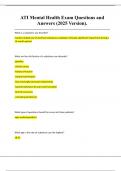
ATI Mental Health Exam Questions and Answers (2025 Version). What is a substance use disorder? involves related use of chemical substances, leading to clinically significant impairment during a 12-month period. What are the risk factors of a substance use disorder? -genetics -chronic stress -history of trauma -lowered self esteem -few meaningful personal relationships -lowered tolerance for pain and frustration -few life successes -risk-taking tendencies What type of questions should the nurse ask these patients? open ended questions What age is the rate of substance use the highest? 18-25 What are older adults who use substances more prone to? -falls and other injuries -memory loss -somatic reports (headaches) -changes in sleep patterns What are the indications of older adult alcohol use? -decrease in ability for self care -urinary incontinence -manifestations of dementia -older adults show effects at lower doses than younger adults What are commonly uses substances? -ecstasy -improper use of prescription meds (opioids and CNS depressants) What are the effects of opioids? -slurred speech -impaired memory -pupillary changes -decreased respirations -LOC which can cause death -maladaptive behavior or psychological changes What are the withdrawal manifestations of opioids? -sweating and rhinorrhea -tremors -insomnia -pupil dialtion -nausea and vomiting -pain in muscles and bones -muscle spasms What is the blood alcohol level to be considered legally intoxicated? 0.08% (80mg/dL) At what blood alcohol level could death occur? greater than 0.4% (440mg/dL) What are the intended effects of alcohol? relaxation, decreased social anxiety, stress reduction What are the withdrawal manifestations of alcohol? abd cramping, vomiting, tremors, inability to sleep, increased HR, transient hallucinations, anxiety, increased BP, RR, Temp, and tonic clonic seizures How long can alcohol delirium last? 2 to 3 days- medical emergency What are the types of sedatives/hypnotics/anxiolytics? -benzodiazepines -barbiturates -flunitrazepam What is the withdrawal manifestations of sedatives/hypnotics/anxiolytics? anxiety, insomnia, diaphoresis, hypertension, possible psychotic reactions, hand tremors, n/v, hallucinations, possible seizure activity What are the intended effects of cannibas? euphoria, sedation, hallucinations How long can cannibas impair motor skills? 8 to 12 hours What are the intended effects of cocaine? Rush of euphoria, pleasure, increased energy. What is mild toxicity of cocaine? dizziness, irritability, tremor, blurred vision What are the severe effects of cocaine? hallucinations, seizures, extreme, extreme fever, tachycardia, hypertension, chest pain, possible cardiovascular collapse and death, suicidal ideation What are the intended effects of amphetamines? Increased energy, euphoria similar to cocaine What are the intended effects of inhalants? euphoria What are the effects of intoxication hallucinogens? anxiety, depression, paranoia, impaired judgment, pupil dilation, tachycardia, diaphoresis, palpitations, blurred vision, tremors, incoordination, and panic attacks What are the withdrawal manifestations of hallucinogens? hallucinogen persisting perceptions disorder What are the intended effects of caffeine? increased level of alertness and decreased fatigue When does caffeine intoxications usually occur? greater than 250 mg What is the nursing care of a substance abuse disorder? -must self assess their own feelings, body language, terminology -safety is the primary focus -implement seizure precautions -physical restraint should be the last resort -low stimulation environment -educate about the addiction What are the meds that are related to alcohol withdrawal? diazepam, carbamazepine, clonidine, chlordiazepoxide, phenobarbital, naltrexone What are the meds that are related to alcohol abstinence? disulfiram, naltrexone, acamprosate What are the meds that are related to opioid withdrawal? methadone substitution, clonidine, buprenorphine, naltrexone, levo-alpha-acetylmethadol What are the meds that are related to nicotine withdrawal from tobacco use? bupropion, nicotine replacement therapy, varenicline, bupropion What are the meds that are related to nicotine abstinence? varenicline and rimonabant What are the nursing actions of a person going though withdrawal? -monitor vital signs -monitor neurological status -client safety -implementing seizure precautions A nurse is planning a staff education program on substance use in order adults. Which of the following information should the nurse to include in the presentation? Older adults are at an increased risk for substance use following retirement A nurse is assessing a client who has alcohol use disorder and is experiencing withdrawal. Which of the following findings should the nurse expect? Fine tremors of both hands, vomiting, restlessness A nurse is planning care for a client who is experiencing benzodiazepine withdrawal. Which of the following interventions should the nurse identify as the priority? implement seizure precautions A nurse is providing teaching to the family of a client who has a substance use disorder. The client is no longer experiencing withdrawal manifestations. Which of the following meds should the nurse anticipate administering to assist the client with maintaining abstinence from alcohol? Disulfiram A nurse is providing teaching Which of the following statements by a family member indicates an understanding of the teaching? -"eliminating codependent behavior will promote recovery" -"the primary goal of treatment is abstinence from substance use" -our sibling needs to discuss personal feelings about substance use to help with recovery" WQ What is a crisis? an acute, time limited (usually lasting 4 to 6 weeks) event during hick a client experiences an emotional response that cannot be managed with the clients normal coping mechanisms. What are common crisis characteristics? -sudden event, no time to prepare -perception of the event as life threatening -loss or decreases in communication with significant others -sense of displacement from the familiar -an actual or perceived loss What is a situational/external crisis? Often unanticipated loss or change. What is a maturational/internal crisis? achieving new developmental stages, which requires learning additional coping mechanisms What is an adventitious crisis? the occurrence of natural disasters, crimes, or national disasters What are the risk factors for a crisis management? -accumulation of unresolved losses -current life stressors -concurrent mental and physical health issues -excessive fatigue or pain -age and developmental stage What is phase 1 of a crisis? escalating anxiety from a threat activates increased defense responses What is phase 2 of a crisis? defense mechanisms fail, threat persists, increasing anxiety and feelings of extreme discomfort; disorganized functioning; trial-and-error attempt to solve problem and restore normal balance again What is phase 3 of a crisis? trial-and-error attempts fail, anxiety can escalate to severe or panic, fight/flight/freeze; some form of resolution may be devised, but may be a way they never wanted to solve What is phase 4 of a crisis? problem is unresolved, coping skills ineffective, overwhelming anxiety, possible serious personality disorganization, depression, confusion, violence against others, or suicidal behavior What meds do we give for crisis management? antianxiety and/or antidepressant A nurse is reviewing the medical records of multiple clients as a community mental health facility. Which of the following events is an example of client experiencing a maturational crisis? marriage A nurse is caring for a client who is experiencing a crisis? Which of the following medications might the provider prescribe? paroxetine and lorazepam What are the risk factors for older adults committing suicide? untreated depression, loss of employment, isolation, change in functional ability, alcohol or substance use disorder, loss of loved ones What are the physical assessment findings or a suicide attempt? lacerations, scratches, and scars that could indicate previous attempts at self-harm What are the suicide precautions? -milieu therapy in facility -one on one constant supervision -watch the environment What antidepressant meds prevent suicide? citalopram, fluoxetine, sertraline What sedative hypnotic anxiolytics meds prevent suicide? diazepam and lorazepam What mood stabilizers prevent suicide? lithium carbonate What second generation antipsychotics prevent suicide? risperidone and olanzapine What is electroconvulsive therapy? a biomedical therapy for severely depressed patients in which a brief electric current is sent through the brain of an anesthetized patient A nurser is assessing a client who has a ,major depressive disorder. The nurse should identify which of the following client statements as an overt comment about suicide? -"my family will be better off if I'm dead." -I wish my life was over" -"if I kill myself then my problems will go away" A nurse is caring for a client who states, "I plan to commit suicide. "Which of the following assessments should the nurse identify as the priority? lethality of the method and availability of means A nurse is assisting with the development of protocols to address the increasing number of suicide attempts in the community. Which of the following interventions should the nurse include as a primary intervention? -conducting a suicide risk screening on all new clients -educating high school teens about suicide prevention -teaching middle-school educators about warning indicators of suicide A nurse is caring for a client who is on suicide precautions. Which of the following interventions should the nurse include in the plan of care? ensure that the clients swallows medication A nurse is conducting a class for a group of newly licensed nurses on caring for clients who are at risk for suicide. Which of the following information should the nurse include in the teaching? a no-suicide contract decreases the client's risk for suicide What is the preassaultive stage of aggression? the client begins to become angry and exhibits increasing anxiety, tension, hyperactivity, and verbal abuse What is assaultive stage of aggression? The client commits an act of violence. Seclusion and physical restraints can be required. What is postassualtive stage of aggression? Staff reviews the incident with the client during this stage What are the anger management comorbidities? -depressive disorders -substance use disorders -bipolar disorders -posttraumatic stress disorder -azherimer's disease -personality and psychotic disorder -individauals easily overwhelmed What are the anger management risk factors? -past hx -poor coping skills -comorbity that leads to acts of violence -living in a violent environment A nurse is conducting group therapy with a group of clients. Which of the following statements made by a client is an example of aggressive communication? "you'd better listen to me" A nurse is caring for a client who is speaking in a loud voice with clenched fists. Which of the following actions should the nurse take? request that other staff members remain close by A nurse is assessing a client in an inpatient mental health unit. Which of the following findings should the nurse expect if the client is in the preassultive stage of violence? defensive response to questions, facial grimacing, agitation A nurse is caring for a client in an inpatient mental health facility who gets up from a chair and throws it across the day room. Which of the following is the priority nursing action? move the client away from others A nurse is caring for a client who is screaming at staff members and other clients. Which of the following is a therapeutic response by the nurse to the client? "stop screaming, and walk with me outside." What is the tension-building phase? victim feels tense and afraid abuser is edgy, has minor explosions What is acute battering phase? abuser inflicts emotional and physical abuse onto partner What is the honeymoon phase? the situations is defused for a while after the violent episode What is acute stress disorder? Exposure to a Traumatic event causes numbing, detachment and amnesia about the event for at least three days but for no more than one month following the event What is post-traumatic stress disorder? A mental condition that develops after being exposed to a stressful event What is compound rape reaction? When a victim develops a problem due to being raped like drinking ect. What is silent rape reaction? This occurs in the long term, where the survivor tells no one about the assault, anxiety is suppressed, and the burden may become overwhelming A charge nurse is leading a peer group discussion about family and community violence. Which of the following statements by a member of the group indicates an understanding of teaching? "pregnancy increases the risk for violence from a spouse or partner." A nurse is preparing to assess an infant. Which of the following is an expected finding if shaken baby syndrome? respiratory distress, retinal hemorrhage, altered level of consciousness, increase in head circumference A nurse working in an emergency department is assessing a preschool-age child who reports abdominal pain. Which of the following findings should alert the nurse to possible abuse? round burn marks on forearms and areas of ecchymosis on torso We have an expert-written solution to this problem! A nurse is preparing a community education seminar about family violence. When discussing types of violence, the nurse should include which of following? intentionally causing someone to fall is an example of physical violence A nurse is caring for an adult client who has injuries resulting from spousal violence. The client does not wish to report the violence to law enforcement authorities. Which of the following nursing actions is the highest priority? advise the client about the location of safe house and shelters A nurse is assessing a client who experienced sexual assault. Which of the following findings indicate the client is experiencing an emotional reaction of rape-trauma syndrome? emotional outburst and difficulty making decisions A nurse is discussing the care if a client following a sexual assault with a newly licensed nurse. Which of the following statements by the newly licensed nurse indicated an understanding of teaching. "I will administer prophylactic treatment for sexually transmitted infections, like claymida." A nurse is caring for a client who was recently sexually assaulted. The client states, "I never should have been out on the street alone at night. "Which of the following responses should the nurse make? "you believe this wouldn't have happened if you hadn't been out alone?" A community health nurse is leading a discussion about rape with a neighborhood task force. Which of the following statements by a neighborhood citizen indicates an understanding of the teaching? "acquaintance rape

Content preview

ATI Mental Health Exam Questions and
Answers (2025 Version).
What is a substance use disorder?

involves related use of chemical substances, leading to clinically significant impairment during a
12-month period.


What are the risk factors of a substance use disorder?

-genetics

-chronic stress

-history of trauma

-lowered self esteem

-few meaningful personal relationships

-lowered tolerance for pain and frustration

-few life successes

-risk-taking tendencies


What type of questions should the nurse ask these patients?

open ended questions


What age is the rate of substance use the highest?
ww
18-25

,What are older adults who use substances more prone to?

-falls and other injuries

-memory loss

-somatic reports (headaches)

-changes in sleep patterns


What are the indications of older adult alcohol use?

-decrease in ability for self care

-urinary incontinence

-manifestations of dementia

-older adults show effects at lower doses than younger adults


What are commonly uses substances?

-ecstasy

-improper use of prescription meds (opioids and CNS depressants)


What are the effects of opioids?

-slurred speech

-impaired memory

-pupillary changes

-decreased respirations

-LOC which can cause death

, -maladaptive behavior or psychological changes


What are the withdrawal manifestations of opioids?

-sweating and rhinorrhea

-tremors

-insomnia

-pupil dialtion

-nausea and vomiting

-pain in muscles and bones

-muscle spasms


What is the blood alcohol level to be considered legally intoxicated?

0.08% (80mg/dL)


At what blood alcohol level could death occur?

greater than 0.4% (440mg/dL)


What are the intended effects of alcohol?

relaxation, decreased social anxiety, stress reduction


What are the withdrawal manifestations of alcohol?

Document information

Uploaded on
June 5, 2025
Number of pages
18
Written in
2024/2025
Type
Exam (elaborations)
Contains
Questions & answers
$10.99

Wrong document? Swap it for free Within 14 days of purchase and before downloading, you can choose a different document. You can simply spend the amount again.
Written by students who passed
Immediately available after payment
Read online or as PDF

Sold
0
Followers
0
Items
87
Last sold
-


Why students choose Stuvia

Created by fellow students, verified by reviews

Quality you can trust: written by students who passed their tests and reviewed by others who've used these notes.

Didn't get what you expected? Choose another document

No worries! You can instantly pick a different document that better fits what you're looking for.

Pay as you like, start learning right away

No subscription, no commitments. Pay the way you're used to via credit card and download your PDF document instantly.

Student with book image

“Bought, downloaded, and aced it. It really can be that simple.”

Alisha Student

Working on your references?

Create accurate citations in APA, MLA and Harvard with our free citation generator.

Working on your references?

Frequently asked questions
