
6/4/25, 9:28 AM EMT-BASIC EXAM 2 QUESTIONS WITH COMPLETE SOLUTION GUIDE) (MULTIPLE CHOICES) A+ GRADED 100% VERIFI…
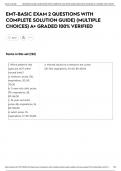
EMT-BASIC EXAM 2 QUESTIONS WITH
COMPLETE SOLUTION GUIDE) (MULTIPLE
CHOICES) A+ GRADED 100% VERIFIED
Save
Terms in this set (122)
1. Which patient's vital a. Normal values for a newborn are: pulse,
signs are NOT within 120-160; respirations, 40-60; BP, 80/40.
normal limits?
a. newborn: pulse, 100;
respirations, 30; BP,
70/30
b. 3-year-old child: pulse,
90; respirations, 28;
BP, 86/50
c. 10-year-old child:
pulse, 88; respirations, 18;
BP, 100/60
d. adult: pulse, 76;
respirations, 17; BP, 116/86
https://quizlet.com/1051198421/emt-basic-exam-2-questions-with-complete-solution-guide-multiple-choices-a-graded-100-verified-flash-cards/?n… 1/55
,6/4/25, 9:28 AM EMT-BASIC EXAM 2 QUESTIONS WITH COMPLETE SOLUTION GUIDE) (MULTIPLE CHOICES) A+ GRADED 100% VERIFI…
2. A 45-year-old male is c. Based on the information provided, the
breathing at a rate of patient is breathing too quickly to provide his
32 times per minute with own adequate ventilations. This patient cannot
shallow respirations. be managed with a nonrebreather alone;
He is altered, and his skin artificial ventilations are needed to oxygenate
signs are cool, the patient adequately
cyanotic, and
diaphoretic. You should
a. provide oxygen at 6
L/min using a nasal
cannula.
b. provide oxygen at 12
L/min using a
nonrebreather mask.
c. provide artificial
ventilation with a gas-
valve
mask and high-flow
oxygen.
d. place the patient into
the left lateral
"recovery" position.
3. You should assess skin c. Assess skin color in an adult patient by
color by examining an examining the nailbeds, oral mucosa, and
adult patient's conjunctiva.
a. extremities.
b. face.
c. nailbeds.
d. palms.
https://quizlet.com/1051198421/emt-basic-exam-2-questions-with-complete-solution-guide-multiple-choices-a-graded-100-verified-flash-cards/?n… 2/55
,6/4/25, 9:28 AM EMT-BASIC EXAM 2 QUESTIONS WITH COMPLETE SOLUTION GUIDE) (MULTIPLE CHOICES) A+ GRADED 100% VERIFI…
4. A 45-year-old female b. Based on the information provided, the
is breathing at a rate of patient is ventilating adequately but has poor
22 times per minute with skin signs, indicating inadequate perfusion.
adequate tidal High-flow oxygen via a nonrebreather mask
volume. She is alert, but should ensure that the patient is fully
her skin signs are cool, oxygenated.
pale, and diaphoretic.
You should
a. provide oxygen at 6
L/min using a nasal
cannula.
b. provide oxygen at 12
L/min using a
nonrebreather mask.
c. provide artificial
ventilation with a gas-
mask
valve and high-flow
oxygen.
d. place the patient into
the left lateral
"recovery" position.
5. You would locate a d. When assessing the carotid pulse, first locate
patient's carotid pulse by the Adam's apple and then slide two fingers
first finding the Adam's toward one side of the neck; never exert
apple and then strong pressure or assess the carotid pulse on
a. pressing hard on only both sides of the neck at the same time
one side of the
patient's neck.
b. placing one hand
gently on each side of
the neck.
c. pressing with your
thumb on one side of
the neck.
d. sliding two fingers
toward one side of
the neck.
https://quizlet.com/1051198421/emt-basic-exam-2-questions-with-complete-solution-guide-multiple-choices-a-graded-100-verified-flash-cards/?n… 3/55
, 6/4/25, 9:28 AM EMT-BASIC EXAM 2 QUESTIONS WITH COMPLETE SOLUTION GUIDE) (MULTIPLE CHOICES) A+ GRADED 100% VERIFI…
6. Your patient's pupils a. Head injury, eye injury, or drug use may
react unequally to light. cause the pupils to be nonreactive or
You should suspect the unequally reactive. Shock, airway obstruction,
presence of and cardiac arrest will cause both
a. head injury. pupils to dilate equally
b. shock.
c. airway obstruction.
d. cardiac arrest.
7. A 70-year-old female is c. While it may be true that providing high levels
complaining of of oxygen over prolonged time periods
shortness of breath. She may cause the hypoxic drive to fail, it is a
has a history of rare occurrence in the prehospital field. With
emphysema. You should the complaint of shortness of breath, it is
a. withhold oxygen, since better to ensure that the patient is fully oxygenated
these patients do not rather than taking a chance that she
respond to oxygen. is hypoxic. The EMT-Basic is prepared to
b. withhold oxygen, ventilate the patient if she goes into respiratory
because you could arrest due to the high levels of oxygen
eliminate the hypoxic
drive.
c. administer oxygen,
because in most cases,
the hypoxic drive will not
be a problem.
d. withhold oxygen,
because these patients
become apneic if they
receive high-flow
oxygen
8. Ecchymosis refers to b. Blood under the skin, appearing on the surface
a. an unreactive left pupil. as a bruise, is also known as ecchymosis
b. bruising or
discoloration.
c. motion sickness.
d. a bad taste in the
mouth.
https://quizlet.com/1051198421/emt-basic-exam-2-questions-with-complete-solution-guide-multiple-choices-a-graded-100-verified-flash-cards/?n… 4/55
EMT-BASIC EXAM 2 QUESTIONS WITH
COMPLETE SOLUTION GUIDE) (MULTIPLE
CHOICES) A+ GRADED 100% VERIFIED
Save
Terms in this set (122)
1. Which patient's vital a. Normal values for a newborn are: pulse,
signs are NOT within 120-160; respirations, 40-60; BP, 80/40.
normal limits?
a. newborn: pulse, 100;
respirations, 30; BP,
70/30
b. 3-year-old child: pulse,
90; respirations, 28;
BP, 86/50
c. 10-year-old child:
pulse, 88; respirations, 18;
BP, 100/60
d. adult: pulse, 76;
respirations, 17; BP, 116/86
https://quizlet.com/1051198421/emt-basic-exam-2-questions-with-complete-solution-guide-multiple-choices-a-graded-100-verified-flash-cards/?n… 1/55
,6/4/25, 9:28 AM EMT-BASIC EXAM 2 QUESTIONS WITH COMPLETE SOLUTION GUIDE) (MULTIPLE CHOICES) A+ GRADED 100% VERIFI…
2. A 45-year-old male is c. Based on the information provided, the
breathing at a rate of patient is breathing too quickly to provide his
32 times per minute with own adequate ventilations. This patient cannot
shallow respirations. be managed with a nonrebreather alone;
He is altered, and his skin artificial ventilations are needed to oxygenate
signs are cool, the patient adequately
cyanotic, and
diaphoretic. You should
a. provide oxygen at 6
L/min using a nasal
cannula.
b. provide oxygen at 12
L/min using a
nonrebreather mask.
c. provide artificial
ventilation with a gas-
valve
mask and high-flow
oxygen.
d. place the patient into
the left lateral
"recovery" position.
3. You should assess skin c. Assess skin color in an adult patient by
color by examining an examining the nailbeds, oral mucosa, and
adult patient's conjunctiva.
a. extremities.
b. face.
c. nailbeds.
d. palms.
https://quizlet.com/1051198421/emt-basic-exam-2-questions-with-complete-solution-guide-multiple-choices-a-graded-100-verified-flash-cards/?n… 2/55
,6/4/25, 9:28 AM EMT-BASIC EXAM 2 QUESTIONS WITH COMPLETE SOLUTION GUIDE) (MULTIPLE CHOICES) A+ GRADED 100% VERIFI…
4. A 45-year-old female b. Based on the information provided, the
is breathing at a rate of patient is ventilating adequately but has poor
22 times per minute with skin signs, indicating inadequate perfusion.
adequate tidal High-flow oxygen via a nonrebreather mask
volume. She is alert, but should ensure that the patient is fully
her skin signs are cool, oxygenated.
pale, and diaphoretic.
You should
a. provide oxygen at 6
L/min using a nasal
cannula.
b. provide oxygen at 12
L/min using a
nonrebreather mask.
c. provide artificial
ventilation with a gas-
mask
valve and high-flow
oxygen.
d. place the patient into
the left lateral
"recovery" position.
5. You would locate a d. When assessing the carotid pulse, first locate
patient's carotid pulse by the Adam's apple and then slide two fingers
first finding the Adam's toward one side of the neck; never exert
apple and then strong pressure or assess the carotid pulse on
a. pressing hard on only both sides of the neck at the same time
one side of the
patient's neck.
b. placing one hand
gently on each side of
the neck.
c. pressing with your
thumb on one side of
the neck.
d. sliding two fingers
toward one side of
the neck.
https://quizlet.com/1051198421/emt-basic-exam-2-questions-with-complete-solution-guide-multiple-choices-a-graded-100-verified-flash-cards/?n… 3/55
, 6/4/25, 9:28 AM EMT-BASIC EXAM 2 QUESTIONS WITH COMPLETE SOLUTION GUIDE) (MULTIPLE CHOICES) A+ GRADED 100% VERIFI…
6. Your patient's pupils a. Head injury, eye injury, or drug use may
react unequally to light. cause the pupils to be nonreactive or
You should suspect the unequally reactive. Shock, airway obstruction,
presence of and cardiac arrest will cause both
a. head injury. pupils to dilate equally
b. shock.
c. airway obstruction.
d. cardiac arrest.
7. A 70-year-old female is c. While it may be true that providing high levels
complaining of of oxygen over prolonged time periods
shortness of breath. She may cause the hypoxic drive to fail, it is a
has a history of rare occurrence in the prehospital field. With
emphysema. You should the complaint of shortness of breath, it is
a. withhold oxygen, since better to ensure that the patient is fully oxygenated
these patients do not rather than taking a chance that she
respond to oxygen. is hypoxic. The EMT-Basic is prepared to
b. withhold oxygen, ventilate the patient if she goes into respiratory
because you could arrest due to the high levels of oxygen
eliminate the hypoxic
drive.
c. administer oxygen,
because in most cases,
the hypoxic drive will not
be a problem.
d. withhold oxygen,
because these patients
become apneic if they
receive high-flow
oxygen
8. Ecchymosis refers to b. Blood under the skin, appearing on the surface
a. an unreactive left pupil. as a bruise, is also known as ecchymosis
b. bruising or
discoloration.
c. motion sickness.
d. a bad taste in the
mouth.
https://quizlet.com/1051198421/emt-basic-exam-2-questions-with-complete-solution-guide-multiple-choices-a-graded-100-verified-flash-cards/?n… 4/55


