THE Test Bank for Psychology 6th Edition Ciccarelli UPDATED THE Test Bank for Psychology 6th Edition Ciccarelli UPDATED
VERSION CLEAR VERSION CLEAR
Psychology 6e/Ciccarelli/White Psychology 6e/Ciccarelli/White
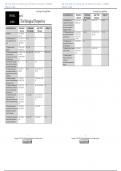
TOTAL Chapter 2 ASSESSMENT Learning Objectives Remember
the Facts
Understand
the Concepts
Apply What
You Know
Analyze It
GUIDE The Biological Perspective 2.11 Describe how the
components of the central
147–153, 155,
208–212, 237
156, 160 154, 157, 159 158, 231
nervous system interact and
how they may respond to
Learning Objectives Remember Understand Apply What Analyze It
experiences or injury.
the Facts the Concepts You Know 2.12 Differentiate the roles of 162, 168 167, 169, 172, 176, 231, 232
161, 163–166,
Introduction 1, 2, 146, 180, the somatic and autonomic 170, 171, 173– 178, 179
181, 215 nervous systems. 175, 177, 213,
2.1 Identify the parts of a 3–10, 12, 13, 17, 15, 19 16 11, 14 214, 238
neuron and the function of 18, 20–26, 191– 2.13 Explain why the 183, 184, 239 182
each. 194, 220, 221, pituitary gland is known as
234 the “master gland.”
2.2 Explain the action 27–29, 31, 195– 30, 32, 34 33 2.14 Recall the role of various 185, 188, 189, 186, 187, 190
potential. 197, 220, 234 endocrine glands. 216–219, 233,
2.3 Describe how neurons use 35–39, 41, 45, 47, 42, 43, 58, 59, 198 46, 48, 50, 57 40, 44, 52, 55 239
neurotransmitters to 49, 51, 53, 2.15 Identify potential
communicate with each other 54, 56, 199, 222–
strategies for positively
and with the body. 224
coping with
2.4 Describe how lesioning 60 61 235 attentiondeficit/hyperactivity
studies and brain stimulation disorder.
are used to study the brain.
2.5 Compare and contrast 62, 66, 69–71, 65, 74 63, 64, 67, 68, 72, 73,
neuroimaging techniques for 200, 225 75, 235
mapping the brain’s structure
and function.
2.6 Identify the different 76, 78, 79, 81, 77, 80, 82, 84, 85, 88–
structures of the hindbrain and 83, 86, 87, 201 91
the function of each.
2.7 Identify the structures of 92–94, 97, 98, 99 96, 101, 105, 106, 202 95
the brain that are involved in 100, 102–104
emotion, learning, memory,
and motivation.
2.8 Identify the parts of the 107–110, 112– 115, 130, 226 111, 116, 119, 120,
cortex that process the 114, 117, 118, 123, 124, 126–129,
different senses and those that 121, 122, 125, 131
control movement of the body. 132, 203–205,
236
2.9 Recall the function of 133, 134, 136, 135, 137, 138
association areas of the cortex, 227, 228, 236
including those especially
crucial for language.
2.10 Explain how some brain 139, 142, 206, 143, 145, 207 140, 141, 144 230
functions differ between the 229
left and right hemispheres.
1 2
Copyright © 2020, 2017, 2015 Pearson Education, Inc. All rights reserved. Copyright © 2020, 2017, 2015 Pearson Education, Inc. All rights reserved.
mynursytest.store mynursytest.store
,THE Test Bank for Psychology 6th Edition Ciccarelli UPDATED THE Test Bank for Psychology 6th Edition Ciccarelli UPDATED
VERSION CLEAR VERSION CLEAR
Psychology 6e/Ciccarelli/White Psychology 6e/Ciccarelli/White
Name _____________________________________________________________ Chapter 2 – Quick Quiz 1 Answer
Key
Chapter 2 – Quick Quiz 1 1. b Explanation: The soma is responsible for maintaining the life of the cell. (Topic: 2.1 Structure of the
Neuron: The Nervous System’s Building Block, Skill Level: Remember the Facts, Difficulty Level: Moderate,
1. Which part of the neuron is responsible for maintaining the life of the cell? Learning Objective: 2.1 Identify the parts of a neuron and the function of each, APA Learning Objective: 1.1
a) axon c) dendrite Describe key concepts, principles, and overarching themes in psychology.)
b) soma d) cell membrane
2. a Explanation: Acetylcholine is an excitatory neurotransmitter that stimulates muscles to contract.
2. __________ plays a critical role as a neurotransmitter that stimulates skeletal muscles to contract. (Topic: 2.3 Neurotransmission, Skill Level: Remember the Facts, Difficulty Level: Easy, Learning
a) Acetylcholine c) Dopamine Objective: 2.3 Describe how neurons use neurotransmitters to communicate with each other and
b) GABA d) Endorphin with the body, APA Learning Objective: 1.1 Describe key concepts, principles, and overarching
themes in psychology.)
3. A brain-imaging method using radio waves and magnetic fields of the body to produce detailed images of the
brain is called __________. 3. a Explanation: MRI is a brain-imaging method using radio waves and magnetic fields of the body. (Topic: 2.5
a) magnetic resonance imaging (MRI) c) positron emission tomography (PET) Neuroimaging Techniques, Skill Level: Remember the Facts, Difficulty Level: Difficult, Learning Objective:
b) electroencephalography (EEG) d) computed tomography (CT) 2.5 Compare and contrast neuroimaging techniques for mapping the brain’s structure and function, APA
Learning Objective: 1.1 Describe key concepts, principles, and overarching themes in psychology.)
4. What part of the brain acts as a relay station for incoming sensory information?
a) hypothalamus c) cerebellum 4. b Explanation: The thalamus acts as a relay station. (Topic: 2.7 Structures Under the Cortex: The Limbic
b) thalamus d) pituitary gland System, Skill Level: Remember the Facts, Difficulty Level: Difficult, Learning Objective: 2.7 Identify the
structures of the brain that are involved in emotion, learning, memory, and motivation, APA Learning
5. Which of the following regions contains the primary visual cortex? Objective: 1.1 Describe key concepts, principles, and overarching themes in psychology.)
a) frontal lobe c) temporal lobe
b) parietal lobe d) occipital lobe 5. d Explanation: The occipital lobes contain the primary visual cortex. (Topic: 2.8 The Cortex, Skill Level:
Remember the Facts, Difficulty Level: Easy, Learning Objective: 2.8 Identify the parts of the cortex that
6. Which of the following is/are functions of the right hemisphere? process the different senses and those that control movement of the body, APA Learning Objective: 1.1
a) perception, expression of emotions, and recognition of patterns Describe key concepts, principles, and overarching themes in psychology.)
b) sense of time and rhythm
c) speech, handwriting, and calculation 6. a Explanation: Perception, expression of emotions, and recognition of patterns are functions of the right
d) language processing in most individuals hemisphere. (Topic: 2.10 The Cerebral Hemispheres, Skill Level: Understand the Concepts, Difficulty Level:
Moderate, Learning Objective: 2.10 Explain how some brain functions differ between the left and right
7. The two main divisions of the nervous system are the __________ and __________. a) brain; spinal cord hemispheres, APA Learning Objective: 1.1 Describe key concepts, principles, and overarching themes in
b) autonomic nervous system; somatic nervous system psychology.)
c) peripheral nervous system; central nervous system
d) glands; muscles 7. c Explanation: The two main divisions of the nervous system are the central and peripheral nervous
systems. (Topic: 2.11–2.12 The Nervous System: The Rest of the Story, Skill Level: Remember
8. Which part of the nervous system takes the information received from the senses, makes sense out of it, makes the Facts, Difficulty Level: Easy, Learning Objective: None, APA Learning Objective: 1.1
decisions, and sends commands out to the muscles and the rest of the body? Describe key concepts, principles, and overarching themes in psychology.)
a) spinal cord c) reflexes
b) brain d) interneurons 8. b Explanation: Interpreting information from the senses and sending commands to the rest of the body are
responsibilities of the brain. (Topic: 2.11 The Central Nervous System: The “Central Processing Unit,” Skill
9. The part of the autonomic nervous system that is responsible for reacting to stressful events and bodily arousal Level: Remember the Facts, Difficulty Level: Easy, Learning Objective: 2.11 Describe how the components of
is called the __________ nervous system. the central nervous system interact and how they may respond to experiences or injury, APA Learning
a) central c) sympathetic Objective: 1.1 Describe key concepts, principles, and overarching themes in psychology.)
b) somatic d) parasympathetic
10. The hormone released by the pineal gland that reduces body temperature and prepares you for sleep is 9. c Explanation: The sympathetic nervous system is responsible for reacting to stressful events and
__________. bodily arousal. (Topic: 2.12 The Peripheral Nervous System: Nerves on the Edge, Skill Level:
a) melatonin c) parathormone Remember the Facts, Difficulty Level: Moderate, Learning Objective: 2.12 Differentiate the roles
b) DHEA d) thyroxin of the somatic and autonomic nervous systems, APA Learning Objective: 1.1 Describe key
concepts, principles, and overarching themes in psychology.)
3 4
Copyright © 2020, 2017, 2015 Pearson Education, Inc. All rights reserved. Copyright © 2020, 2017, 2015 Pearson Education, Inc. All rights reserved.
mynursytest.store mynursytest.store
,THE Test Bank for Psychology 6th Edition Ciccarelli UPDATED THE Test Bank for Psychology 6th Edition Ciccarelli UPDATED
VERSION CLEAR VERSION CLEAR
Psychology 6e/Ciccarelli/White Psychology 6e/Ciccarelli/White
10. a Explanation: The pineal gland secretes melatonin. (Topic: 2.14 Other Endocrine Glands, Skill Level: Name _____________________________________________________________
Remember the Facts, Difficulty Level: Easy, Learning Objective: 2.14 Recall the role of various endocrine
glands, APA Learning Objective: 1.1 Describe key concepts, principles, and overarching themes in Chapter 2 – Quick Quiz 2
psychology.)
1. The branchlike structures that receive messages from other neurons are called __________.
a) axons c) dendrites
b) nerve bundles d) synapses
2. Which of the following are tiny sacs in a synaptic knob that release chemicals into the synapse?
a) synaptic vesicles c) terminal buttons
b) synaptic nodes d) synaptic gaps
3. The point at which the nerves from the left side of the body cross over into the right side of the brain, and vice
versa, is the __________.
a) reticular activating system c) medulla
b) pons d) cerebellum
4. The __________ is the part of the brain responsible for the formation of long-term memories.
a) amygdala c) fornix
b) hypothalamus d) hippocampus
5. Which of the following is the upper part of the brain consisting of two cerebral hemispheres and the structures
that connect them?
a) occipital lobe c) corpus callosum
b) cerebrum d) cerebellum
6. Which of the following is the section of the brain located at the rear and bottom of each cerebral hemisphere and
contains the visual centers of the brain?
a) occipital lobe c) temporal lobe
b) parietal lobe d) frontal lobe
7. The area of the frontal lobe that is devoted to the production of fluent speech is __________ area.
a) Broca’s c) Wernicke’s
b) Gall’s d) Korsakoff’s
8. Which of the following are responsible for acting as a facilitator of communication between neurons?
a) motor neurons c) sensory neurons
b) interneurons d) reflexes
9. Every deliberate action you make, such as pedaling a bike, walking, scratching, or smelling a flower, involves
neurons in the __________ nervous system.
a) sympathetic c) parasympathetic
b) somatic d) autonomic
10. Which endocrine gland controls all of the other endocrine glands?
a) thyroid c) thymus
b) adrenal d) pituitary
Chapter 2 – Quick Quiz 2 Answer
Key
5 6
Copyright © 2020, 2017, 2015 Pearson Education, Inc. All rights reserved. Copyright © 2020, 2017, 2015 Pearson Education, Inc. All rights reserved.
mynursytest.store mynursytest.store
, THE Test Bank for Psychology 6th Edition Ciccarelli UPDATED THE Test Bank for Psychology 6th Edition Ciccarelli UPDATED
VERSION CLEAR VERSION CLEAR
Psychology 6e/Ciccarelli/White Psychology 6e/Ciccarelli/White
1. c Explanation: Dendrites receive messages from other neurons. (Topic: 2.1 Structure of the Neuron: 10. d Explanation: The pituitary gland controls all other endocrine glands. (Topic: 2.13 The Pituitary: Master of
The Nervous System’s Building Block, Skill Level: Remember the Facts, Difficulty Level: Easy, the Hormonal Universe, Skill Level: Remember the Facts, Difficulty Level: Easy,
Learning Objective: 2.1 Identify the parts of a neuron and the function of each, APA Learning Learning Objective: 2.13 Explain why the pituitary gland is known as the “master gland,” APA
Objective: 1.1 Describe key concepts, principles, and overarching themes in psychology.) Learning Objective: 1.1 Describe key concepts, principles, and overarching themes in
psychology.)
2. a Explanation: Synaptic vesicles are structures within the synaptic knobs. (Topic: 2.3
Neurotransmission, Skill Level: Remember the Facts, Difficulty Level: Moderate, Learning
Objective: 2.3 Describe how neurons use neurotransmitters to communicate with each other and
with the body, APA Learning Objective: 1.1 Describe key concepts, principles, and overarching
themes in psychology.)
3. c Explanation: The medulla is the point where nerves cross over. (Topic: 2.6 The Hindbrain , Skill Level:
Remember the Facts, Difficulty Level: Moderate, Learning Objective: 2.6 Identify the different structures of
the hindbrain and the function of each, APA Learning Objective: 1.1 Describe key concepts, principles, and
overarching themes in psychology.)
4. d Explanation: The hippocampus is responsible for the formation of long-term memories. (Topic:
2.7 Structures Under the Cortex: The Limbic System, Skill Level: Remember the Facts, Difficulty
Level: Moderate, Learning Objective: 2.7 Identify the structures of the brain that are involved in
emotion, learning, memory, and motivation, APA Learning Objective: 1.1 Describe key concepts,
principles, and overarching themes in psychology.)
5. b Explanation: The cerebrum consists of the two cerebral hemispheres and the structures that
connect them. (Topic: 2.8 The Cortex , Skill Level: Remember the Facts, Difficulty Level:
Difficult, Learning Objective: 2.8 Identify the parts of the cortex that process the different senses
and those that control movement of the body, APA Learning Objective: 1.1 Describe key
concepts, principles, and overarching themes in psychology.)
6. a Explanation: The occipital lobes contain the visual centers of the brain. (Topic: 2.8 The Cortex, Skill Level:
Remember the Facts, Difficulty Level: Easy, Learning Objective: 2.8 Identify the parts of the cortex that
process the different senses and those that control movement of the body, APA Learning Objective: 1.1
Describe key concepts, principles, and overarching themes in psychology.)
7. a Explanation: Broca’s area is devoted to the production of fluent speech. (Topic: 2.9 The
Association Areas of the Cortex, Skill Level: Remember the Facts, Difficulty Level: Moderate,
Learning Objective: 2.9 Recall the function of association areas of the cortex, including those
especially crucial for language, APA Learning Objective: 1.1 Describe key concepts, principles,
and overarching themes in psychology.)
8. b Explanation: Interneurons connect the sensory neurons to the motor neurons. (Topic: 2.11 The
Central Nervous System: The “Central Processing Unit,” Skill Level: Remember the Facts,
Difficulty Level: Easy, Learning Objective: 2.11 Describe how the components of the central
nervous system interact and how they may respond to experiences or injury, APA Learning
Objective: 1.1 Describe key concepts, principles, and overarching themes in psychology.)
9. b Explanation: The somatic nervous system controls voluntary muscle movement. (Topic: 2.12 The
Peripheral Nervous System: Nerves on the Edge, Skill Level: Understand the Concepts, Difficulty
Level: Difficult, Learning Objective: 2.12 Differentiate the roles of the somatic and autonomic
nervous systems, APA Learning Objective: 1.1 Describe key concepts, principles, and
overarching themes in psychology.)
7 8
Copyright © 2020, 2017, 2015 Pearson Education, Inc. All rights reserved. Copyright © 2020, 2017, 2015 Pearson Education, Inc. All rights reserved.
mynursytest.store mynursytest.store
VERSION CLEAR VERSION CLEAR
Psychology 6e/Ciccarelli/White Psychology 6e/Ciccarelli/White
TOTAL Chapter 2 ASSESSMENT Learning Objectives Remember
the Facts
Understand
the Concepts
Apply What
You Know
Analyze It
GUIDE The Biological Perspective 2.11 Describe how the
components of the central
147–153, 155,
208–212, 237
156, 160 154, 157, 159 158, 231
nervous system interact and
how they may respond to
Learning Objectives Remember Understand Apply What Analyze It
experiences or injury.
the Facts the Concepts You Know 2.12 Differentiate the roles of 162, 168 167, 169, 172, 176, 231, 232
161, 163–166,
Introduction 1, 2, 146, 180, the somatic and autonomic 170, 171, 173– 178, 179
181, 215 nervous systems. 175, 177, 213,
2.1 Identify the parts of a 3–10, 12, 13, 17, 15, 19 16 11, 14 214, 238
neuron and the function of 18, 20–26, 191– 2.13 Explain why the 183, 184, 239 182
each. 194, 220, 221, pituitary gland is known as
234 the “master gland.”
2.2 Explain the action 27–29, 31, 195– 30, 32, 34 33 2.14 Recall the role of various 185, 188, 189, 186, 187, 190
potential. 197, 220, 234 endocrine glands. 216–219, 233,
2.3 Describe how neurons use 35–39, 41, 45, 47, 42, 43, 58, 59, 198 46, 48, 50, 57 40, 44, 52, 55 239
neurotransmitters to 49, 51, 53, 2.15 Identify potential
communicate with each other 54, 56, 199, 222–
strategies for positively
and with the body. 224
coping with
2.4 Describe how lesioning 60 61 235 attentiondeficit/hyperactivity
studies and brain stimulation disorder.
are used to study the brain.
2.5 Compare and contrast 62, 66, 69–71, 65, 74 63, 64, 67, 68, 72, 73,
neuroimaging techniques for 200, 225 75, 235
mapping the brain’s structure
and function.
2.6 Identify the different 76, 78, 79, 81, 77, 80, 82, 84, 85, 88–
structures of the hindbrain and 83, 86, 87, 201 91
the function of each.
2.7 Identify the structures of 92–94, 97, 98, 99 96, 101, 105, 106, 202 95
the brain that are involved in 100, 102–104
emotion, learning, memory,
and motivation.
2.8 Identify the parts of the 107–110, 112– 115, 130, 226 111, 116, 119, 120,
cortex that process the 114, 117, 118, 123, 124, 126–129,
different senses and those that 121, 122, 125, 131
control movement of the body. 132, 203–205,
236
2.9 Recall the function of 133, 134, 136, 135, 137, 138
association areas of the cortex, 227, 228, 236
including those especially
crucial for language.
2.10 Explain how some brain 139, 142, 206, 143, 145, 207 140, 141, 144 230
functions differ between the 229
left and right hemispheres.
1 2
Copyright © 2020, 2017, 2015 Pearson Education, Inc. All rights reserved. Copyright © 2020, 2017, 2015 Pearson Education, Inc. All rights reserved.
mynursytest.store mynursytest.store
,THE Test Bank for Psychology 6th Edition Ciccarelli UPDATED THE Test Bank for Psychology 6th Edition Ciccarelli UPDATED
VERSION CLEAR VERSION CLEAR
Psychology 6e/Ciccarelli/White Psychology 6e/Ciccarelli/White
Name _____________________________________________________________ Chapter 2 – Quick Quiz 1 Answer
Key
Chapter 2 – Quick Quiz 1 1. b Explanation: The soma is responsible for maintaining the life of the cell. (Topic: 2.1 Structure of the
Neuron: The Nervous System’s Building Block, Skill Level: Remember the Facts, Difficulty Level: Moderate,
1. Which part of the neuron is responsible for maintaining the life of the cell? Learning Objective: 2.1 Identify the parts of a neuron and the function of each, APA Learning Objective: 1.1
a) axon c) dendrite Describe key concepts, principles, and overarching themes in psychology.)
b) soma d) cell membrane
2. a Explanation: Acetylcholine is an excitatory neurotransmitter that stimulates muscles to contract.
2. __________ plays a critical role as a neurotransmitter that stimulates skeletal muscles to contract. (Topic: 2.3 Neurotransmission, Skill Level: Remember the Facts, Difficulty Level: Easy, Learning
a) Acetylcholine c) Dopamine Objective: 2.3 Describe how neurons use neurotransmitters to communicate with each other and
b) GABA d) Endorphin with the body, APA Learning Objective: 1.1 Describe key concepts, principles, and overarching
themes in psychology.)
3. A brain-imaging method using radio waves and magnetic fields of the body to produce detailed images of the
brain is called __________. 3. a Explanation: MRI is a brain-imaging method using radio waves and magnetic fields of the body. (Topic: 2.5
a) magnetic resonance imaging (MRI) c) positron emission tomography (PET) Neuroimaging Techniques, Skill Level: Remember the Facts, Difficulty Level: Difficult, Learning Objective:
b) electroencephalography (EEG) d) computed tomography (CT) 2.5 Compare and contrast neuroimaging techniques for mapping the brain’s structure and function, APA
Learning Objective: 1.1 Describe key concepts, principles, and overarching themes in psychology.)
4. What part of the brain acts as a relay station for incoming sensory information?
a) hypothalamus c) cerebellum 4. b Explanation: The thalamus acts as a relay station. (Topic: 2.7 Structures Under the Cortex: The Limbic
b) thalamus d) pituitary gland System, Skill Level: Remember the Facts, Difficulty Level: Difficult, Learning Objective: 2.7 Identify the
structures of the brain that are involved in emotion, learning, memory, and motivation, APA Learning
5. Which of the following regions contains the primary visual cortex? Objective: 1.1 Describe key concepts, principles, and overarching themes in psychology.)
a) frontal lobe c) temporal lobe
b) parietal lobe d) occipital lobe 5. d Explanation: The occipital lobes contain the primary visual cortex. (Topic: 2.8 The Cortex, Skill Level:
Remember the Facts, Difficulty Level: Easy, Learning Objective: 2.8 Identify the parts of the cortex that
6. Which of the following is/are functions of the right hemisphere? process the different senses and those that control movement of the body, APA Learning Objective: 1.1
a) perception, expression of emotions, and recognition of patterns Describe key concepts, principles, and overarching themes in psychology.)
b) sense of time and rhythm
c) speech, handwriting, and calculation 6. a Explanation: Perception, expression of emotions, and recognition of patterns are functions of the right
d) language processing in most individuals hemisphere. (Topic: 2.10 The Cerebral Hemispheres, Skill Level: Understand the Concepts, Difficulty Level:
Moderate, Learning Objective: 2.10 Explain how some brain functions differ between the left and right
7. The two main divisions of the nervous system are the __________ and __________. a) brain; spinal cord hemispheres, APA Learning Objective: 1.1 Describe key concepts, principles, and overarching themes in
b) autonomic nervous system; somatic nervous system psychology.)
c) peripheral nervous system; central nervous system
d) glands; muscles 7. c Explanation: The two main divisions of the nervous system are the central and peripheral nervous
systems. (Topic: 2.11–2.12 The Nervous System: The Rest of the Story, Skill Level: Remember
8. Which part of the nervous system takes the information received from the senses, makes sense out of it, makes the Facts, Difficulty Level: Easy, Learning Objective: None, APA Learning Objective: 1.1
decisions, and sends commands out to the muscles and the rest of the body? Describe key concepts, principles, and overarching themes in psychology.)
a) spinal cord c) reflexes
b) brain d) interneurons 8. b Explanation: Interpreting information from the senses and sending commands to the rest of the body are
responsibilities of the brain. (Topic: 2.11 The Central Nervous System: The “Central Processing Unit,” Skill
9. The part of the autonomic nervous system that is responsible for reacting to stressful events and bodily arousal Level: Remember the Facts, Difficulty Level: Easy, Learning Objective: 2.11 Describe how the components of
is called the __________ nervous system. the central nervous system interact and how they may respond to experiences or injury, APA Learning
a) central c) sympathetic Objective: 1.1 Describe key concepts, principles, and overarching themes in psychology.)
b) somatic d) parasympathetic
10. The hormone released by the pineal gland that reduces body temperature and prepares you for sleep is 9. c Explanation: The sympathetic nervous system is responsible for reacting to stressful events and
__________. bodily arousal. (Topic: 2.12 The Peripheral Nervous System: Nerves on the Edge, Skill Level:
a) melatonin c) parathormone Remember the Facts, Difficulty Level: Moderate, Learning Objective: 2.12 Differentiate the roles
b) DHEA d) thyroxin of the somatic and autonomic nervous systems, APA Learning Objective: 1.1 Describe key
concepts, principles, and overarching themes in psychology.)
3 4
Copyright © 2020, 2017, 2015 Pearson Education, Inc. All rights reserved. Copyright © 2020, 2017, 2015 Pearson Education, Inc. All rights reserved.
mynursytest.store mynursytest.store
,THE Test Bank for Psychology 6th Edition Ciccarelli UPDATED THE Test Bank for Psychology 6th Edition Ciccarelli UPDATED
VERSION CLEAR VERSION CLEAR
Psychology 6e/Ciccarelli/White Psychology 6e/Ciccarelli/White
10. a Explanation: The pineal gland secretes melatonin. (Topic: 2.14 Other Endocrine Glands, Skill Level: Name _____________________________________________________________
Remember the Facts, Difficulty Level: Easy, Learning Objective: 2.14 Recall the role of various endocrine
glands, APA Learning Objective: 1.1 Describe key concepts, principles, and overarching themes in Chapter 2 – Quick Quiz 2
psychology.)
1. The branchlike structures that receive messages from other neurons are called __________.
a) axons c) dendrites
b) nerve bundles d) synapses
2. Which of the following are tiny sacs in a synaptic knob that release chemicals into the synapse?
a) synaptic vesicles c) terminal buttons
b) synaptic nodes d) synaptic gaps
3. The point at which the nerves from the left side of the body cross over into the right side of the brain, and vice
versa, is the __________.
a) reticular activating system c) medulla
b) pons d) cerebellum
4. The __________ is the part of the brain responsible for the formation of long-term memories.
a) amygdala c) fornix
b) hypothalamus d) hippocampus
5. Which of the following is the upper part of the brain consisting of two cerebral hemispheres and the structures
that connect them?
a) occipital lobe c) corpus callosum
b) cerebrum d) cerebellum
6. Which of the following is the section of the brain located at the rear and bottom of each cerebral hemisphere and
contains the visual centers of the brain?
a) occipital lobe c) temporal lobe
b) parietal lobe d) frontal lobe
7. The area of the frontal lobe that is devoted to the production of fluent speech is __________ area.
a) Broca’s c) Wernicke’s
b) Gall’s d) Korsakoff’s
8. Which of the following are responsible for acting as a facilitator of communication between neurons?
a) motor neurons c) sensory neurons
b) interneurons d) reflexes
9. Every deliberate action you make, such as pedaling a bike, walking, scratching, or smelling a flower, involves
neurons in the __________ nervous system.
a) sympathetic c) parasympathetic
b) somatic d) autonomic
10. Which endocrine gland controls all of the other endocrine glands?
a) thyroid c) thymus
b) adrenal d) pituitary
Chapter 2 – Quick Quiz 2 Answer
Key
5 6
Copyright © 2020, 2017, 2015 Pearson Education, Inc. All rights reserved. Copyright © 2020, 2017, 2015 Pearson Education, Inc. All rights reserved.
mynursytest.store mynursytest.store
, THE Test Bank for Psychology 6th Edition Ciccarelli UPDATED THE Test Bank for Psychology 6th Edition Ciccarelli UPDATED
VERSION CLEAR VERSION CLEAR
Psychology 6e/Ciccarelli/White Psychology 6e/Ciccarelli/White
1. c Explanation: Dendrites receive messages from other neurons. (Topic: 2.1 Structure of the Neuron: 10. d Explanation: The pituitary gland controls all other endocrine glands. (Topic: 2.13 The Pituitary: Master of
The Nervous System’s Building Block, Skill Level: Remember the Facts, Difficulty Level: Easy, the Hormonal Universe, Skill Level: Remember the Facts, Difficulty Level: Easy,
Learning Objective: 2.1 Identify the parts of a neuron and the function of each, APA Learning Learning Objective: 2.13 Explain why the pituitary gland is known as the “master gland,” APA
Objective: 1.1 Describe key concepts, principles, and overarching themes in psychology.) Learning Objective: 1.1 Describe key concepts, principles, and overarching themes in
psychology.)
2. a Explanation: Synaptic vesicles are structures within the synaptic knobs. (Topic: 2.3
Neurotransmission, Skill Level: Remember the Facts, Difficulty Level: Moderate, Learning
Objective: 2.3 Describe how neurons use neurotransmitters to communicate with each other and
with the body, APA Learning Objective: 1.1 Describe key concepts, principles, and overarching
themes in psychology.)
3. c Explanation: The medulla is the point where nerves cross over. (Topic: 2.6 The Hindbrain , Skill Level:
Remember the Facts, Difficulty Level: Moderate, Learning Objective: 2.6 Identify the different structures of
the hindbrain and the function of each, APA Learning Objective: 1.1 Describe key concepts, principles, and
overarching themes in psychology.)
4. d Explanation: The hippocampus is responsible for the formation of long-term memories. (Topic:
2.7 Structures Under the Cortex: The Limbic System, Skill Level: Remember the Facts, Difficulty
Level: Moderate, Learning Objective: 2.7 Identify the structures of the brain that are involved in
emotion, learning, memory, and motivation, APA Learning Objective: 1.1 Describe key concepts,
principles, and overarching themes in psychology.)
5. b Explanation: The cerebrum consists of the two cerebral hemispheres and the structures that
connect them. (Topic: 2.8 The Cortex , Skill Level: Remember the Facts, Difficulty Level:
Difficult, Learning Objective: 2.8 Identify the parts of the cortex that process the different senses
and those that control movement of the body, APA Learning Objective: 1.1 Describe key
concepts, principles, and overarching themes in psychology.)
6. a Explanation: The occipital lobes contain the visual centers of the brain. (Topic: 2.8 The Cortex, Skill Level:
Remember the Facts, Difficulty Level: Easy, Learning Objective: 2.8 Identify the parts of the cortex that
process the different senses and those that control movement of the body, APA Learning Objective: 1.1
Describe key concepts, principles, and overarching themes in psychology.)
7. a Explanation: Broca’s area is devoted to the production of fluent speech. (Topic: 2.9 The
Association Areas of the Cortex, Skill Level: Remember the Facts, Difficulty Level: Moderate,
Learning Objective: 2.9 Recall the function of association areas of the cortex, including those
especially crucial for language, APA Learning Objective: 1.1 Describe key concepts, principles,
and overarching themes in psychology.)
8. b Explanation: Interneurons connect the sensory neurons to the motor neurons. (Topic: 2.11 The
Central Nervous System: The “Central Processing Unit,” Skill Level: Remember the Facts,
Difficulty Level: Easy, Learning Objective: 2.11 Describe how the components of the central
nervous system interact and how they may respond to experiences or injury, APA Learning
Objective: 1.1 Describe key concepts, principles, and overarching themes in psychology.)
9. b Explanation: The somatic nervous system controls voluntary muscle movement. (Topic: 2.12 The
Peripheral Nervous System: Nerves on the Edge, Skill Level: Understand the Concepts, Difficulty
Level: Difficult, Learning Objective: 2.12 Differentiate the roles of the somatic and autonomic
nervous systems, APA Learning Objective: 1.1 Describe key concepts, principles, and
overarching themes in psychology.)
7 8
Copyright © 2020, 2017, 2015 Pearson Education, Inc. All rights reserved. Copyright © 2020, 2017, 2015 Pearson Education, Inc. All rights reserved.
mynursytest.store mynursytest.store