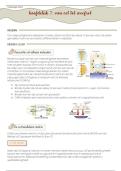
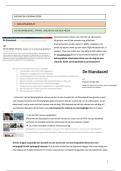
1. Introduction
60% of essential climatic variables can be provided by satellite data
- Interactions: soil-vegetation-atmosphere (+ their responses to external drivers)
- Over a spatial and temporal scale
1.1 principles of RS technologies
Orbits
- Sun synchronous: ~800 km altitude
- Polar orbiting
- Geostationary: 36 000 km altitude
measurement
- Passive: blue (IR, thermal emission of earth)
- Active: red (VIS form sun)
- Absorption and scattering by atmosphere
Atmospheric windows (opacity):
- VNIR: visible and Near infrared (vegetation indices)
- TIR: thermal infrared (temperature, water stress)
- MW: microwave
Device : satellite → airplane → drone
- SAR : synthetic aperature radar
- LiDAR : Light detection and ranging
1.2 resolutions
Spatial resolution: size of the pixels
- Not fixed: dependent on the angle → highest resolution in the centre of the orbit
- Of zenith angle: larger footprint but lower resolution
Spectral resolution: number of wavelengths
Radiometric resolution: how much levels of intensity can be distinguished
Temporal resolution: frequency of measurements
Limits & trade offs:
1. Energy constraint on resolution: only small amounts of energy are measured
a. Received energy: we get an amount of radiation from the sun (scattering and absorption)
b. Reflected energy: only a part of this radiation is reflected by the object
c. Collected energy: only a part of this reflected energy is captured by the satellite
2. Spectral energy decreases with increasing wavelength (longer wl= lower e)
3. Trade-off between spectral and spatial detail
a. High spectral detail: integrating energy over a larger spatial extend to compensate for
low energy because only looking at a small spectral window
b. High spatial detail: integrate small amount of reflected energy from the small area over
broader wavebands to compensate
4. Trade-off between altitude and spatial resolution:
a. High altitude: energy must be integrated over larger spatial areas to achieve sufficient
signal to nois
b. Low altitude: can integrate energy over smaller spatial areas (because closer= less energy
lost)
5. Constraint by download limits: synchronisation with downlink
→ size= #pixels (spatial res) * #bands (spectral res) * #bits (radio res)
,1.3 the RS process
photosynthesis, measurable, we can link different processes measure in the correct
evapotranspiration, them to the process e.g. have different waveband e.g. red edge is
sedimentation chlorophyll content to influences important for
quantify photosynthesis photosynthesis
processes vs properties
- process: a transformation that occurs over time and results in a change in the properties of a
feature (dynamic activity)
- property: a characteristic of a feature that can be measured or observed (describes the current
state of the feature)
1.3.1 forward vs backward process
Forward process: from landscape to signal
Points of attention
→ Process and properties are sometimes poorly linked
(e.g. beetle outbreak in forest, you see discoloration of trees only a
year later)
→ Role of scale: reflectance of one leaf ≠ canopy reflectance ≠
reflectance received by satellite
→ We don’t measure total spectral response curve (+ disstortions by
atmosphere): we need additional variables to make connections
backward process: from signal to interpretation
→ Convert satellite data (spectral signals) to what’s happening on ground (landscape properties)
→ Prior knowledge: about the problem (how e.g. light interacts with leaves), RM technology used
,2. EMR interaction with vegetative systems
Position in scheme If something changes in the
property what will happen to
the received signal
2.1 interactions between leaf mass and EMR
2.2.1 distribution of energy in leaves
- Transmitted
- Absorbed -> emitted Energy available for
- Reflected remote detection
1
2
3
1. Reflection: by cuticular wax
2. Absorption: by internal constituents of leaf (chloroplast, cellular water,..) → is lost, will be used
for processes in the plant
3. Transmission: radiation is diffused and scattered by internal leaf structures with different
refractive indices (part is scattered upwards)
→ Refraction: when light moves from 1 medium to another it is scattered
→ n: index of refraction (speed at which light travels through a medium compared to
vacuum)
→ for air: n=1 (intracellular air spaces in spongy parenchym); water: n=1.33; hydrated cell
walls: n=1.4
, typical
spectrum for
healthy
leaves
1) long UV region (0.3-0.4 µm): low reflectance, cuticular wax (flavonoids) absorb incoming UV
radiation (protection against UV damage)
2) VIS region (0.4-0.7µm): PAR (photosynthetically active radiation) > absorption by pigments
→
Pigments have preference for red and blue, green is reflected (why vegetation is green)
3) NIR region (0.75-1.5 µm): high reflectance (50%), absorptive ‘no mans land’ > because of cellular
structure of the leaves
→ Natural grass: lot’s of different cell structures with refraction indexes results in a lot more
scattering
→ Artificial grass: 1 homogenous material with 1n > minimal scattering (=minimal reflection)
4) SWIR (1.5-2.6 µm): strong water absorption bands (+ cellulose & lignin)
60% of essential climatic variables can be provided by satellite data
- Interactions: soil-vegetation-atmosphere (+ their responses to external drivers)
- Over a spatial and temporal scale
1.1 principles of RS technologies
Orbits
- Sun synchronous: ~800 km altitude
- Polar orbiting
- Geostationary: 36 000 km altitude
measurement
- Passive: blue (IR, thermal emission of earth)
- Active: red (VIS form sun)
- Absorption and scattering by atmosphere
Atmospheric windows (opacity):
- VNIR: visible and Near infrared (vegetation indices)
- TIR: thermal infrared (temperature, water stress)
- MW: microwave
Device : satellite → airplane → drone
- SAR : synthetic aperature radar
- LiDAR : Light detection and ranging
1.2 resolutions
Spatial resolution: size of the pixels
- Not fixed: dependent on the angle → highest resolution in the centre of the orbit
- Of zenith angle: larger footprint but lower resolution
Spectral resolution: number of wavelengths
Radiometric resolution: how much levels of intensity can be distinguished
Temporal resolution: frequency of measurements
Limits & trade offs:
1. Energy constraint on resolution: only small amounts of energy are measured
a. Received energy: we get an amount of radiation from the sun (scattering and absorption)
b. Reflected energy: only a part of this radiation is reflected by the object
c. Collected energy: only a part of this reflected energy is captured by the satellite
2. Spectral energy decreases with increasing wavelength (longer wl= lower e)
3. Trade-off between spectral and spatial detail
a. High spectral detail: integrating energy over a larger spatial extend to compensate for
low energy because only looking at a small spectral window
b. High spatial detail: integrate small amount of reflected energy from the small area over
broader wavebands to compensate
4. Trade-off between altitude and spatial resolution:
a. High altitude: energy must be integrated over larger spatial areas to achieve sufficient
signal to nois
b. Low altitude: can integrate energy over smaller spatial areas (because closer= less energy
lost)
5. Constraint by download limits: synchronisation with downlink
→ size= #pixels (spatial res) * #bands (spectral res) * #bits (radio res)
,1.3 the RS process
photosynthesis, measurable, we can link different processes measure in the correct
evapotranspiration, them to the process e.g. have different waveband e.g. red edge is
sedimentation chlorophyll content to influences important for
quantify photosynthesis photosynthesis
processes vs properties
- process: a transformation that occurs over time and results in a change in the properties of a
feature (dynamic activity)
- property: a characteristic of a feature that can be measured or observed (describes the current
state of the feature)
1.3.1 forward vs backward process
Forward process: from landscape to signal
Points of attention
→ Process and properties are sometimes poorly linked
(e.g. beetle outbreak in forest, you see discoloration of trees only a
year later)
→ Role of scale: reflectance of one leaf ≠ canopy reflectance ≠
reflectance received by satellite
→ We don’t measure total spectral response curve (+ disstortions by
atmosphere): we need additional variables to make connections
backward process: from signal to interpretation
→ Convert satellite data (spectral signals) to what’s happening on ground (landscape properties)
→ Prior knowledge: about the problem (how e.g. light interacts with leaves), RM technology used
,2. EMR interaction with vegetative systems
Position in scheme If something changes in the
property what will happen to
the received signal
2.1 interactions between leaf mass and EMR
2.2.1 distribution of energy in leaves
- Transmitted
- Absorbed -> emitted Energy available for
- Reflected remote detection
1
2
3
1. Reflection: by cuticular wax
2. Absorption: by internal constituents of leaf (chloroplast, cellular water,..) → is lost, will be used
for processes in the plant
3. Transmission: radiation is diffused and scattered by internal leaf structures with different
refractive indices (part is scattered upwards)
→ Refraction: when light moves from 1 medium to another it is scattered
→ n: index of refraction (speed at which light travels through a medium compared to
vacuum)
→ for air: n=1 (intracellular air spaces in spongy parenchym); water: n=1.33; hydrated cell
walls: n=1.4
, typical
spectrum for
healthy
leaves
1) long UV region (0.3-0.4 µm): low reflectance, cuticular wax (flavonoids) absorb incoming UV
radiation (protection against UV damage)
2) VIS region (0.4-0.7µm): PAR (photosynthetically active radiation) > absorption by pigments
→
Pigments have preference for red and blue, green is reflected (why vegetation is green)
3) NIR region (0.75-1.5 µm): high reflectance (50%), absorptive ‘no mans land’ > because of cellular
structure of the leaves
→ Natural grass: lot’s of different cell structures with refraction indexes results in a lot more
scattering
→ Artificial grass: 1 homogenous material with 1n > minimal scattering (=minimal reflection)
4) SWIR (1.5-2.6 µm): strong water absorption bands (+ cellulose & lignin)