

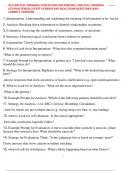
ATI CRITICAL THINKING STRATEGIES FOR NURSING /CRITICAL THINKING
ATI PROCTORED LATEST VERSION AND REAL EXAM QUESTIONS |AND
CORRECT ANSWERS.
1. Interpretation: Understanding and explaining the meaning of information or be- havior.
2. Analysis: Breaking down information to identify relationships or patterns. @#$%^
&*()
3. Evaluation: Assessing the credibility of statements, sources, or decisions.
4. Inference: Drawing logical conclusions from evidence or patterns.
5. Explanation: Clearly justifying your reasoning or action.
6. What to Look for in Interpretation: -What does this symptom/statement mean?
-What is the patient trying to express?
7. Example Prompt for Interpretation: A patient says "I just don't care anymore." What
should the nurse do?
8. Strategy for Interpretation: Rephrase in your mind: "What is the underlying message
here?"
-choose responses that show awareness or lead to clarification (e.g, open ended questions)
9. What to Look for in Analysis: -What are the most important facts?
-What is the priority?
10. Example Prompt for Analysis: Which of the following patients should be seen first?
11. Strategy for Analysis: -Use ABCs (Airway, Breathing, Circulation).
- look for trends not just isolated data (e.g, risiing temp over time vs. one reading)
12. what to Look for in Evaluation: -Is this action appropriate?
-Does this conclusion logically follow?
13. Example Prompt for Evaluation: A nurse concludes that a patient is noncom- pliant
because they missed a dose. What should the nurse do?
14. Strategy for Evaluation: Think: "Is this judgment fair or based on assump- tions?"
Chose answers that show caution or further checking
15. what to Look for in Inference: -What is likely happening based on what I know?
1/3
ATI PROCTORED LATEST VERSION AND REAL EXAM QUESTIONS |AND
CORRECT ANSWERS.
1. Interpretation: Understanding and explaining the meaning of information or be- havior.
2. Analysis: Breaking down information to identify relationships or patterns. @#$%^
&*()
3. Evaluation: Assessing the credibility of statements, sources, or decisions.
4. Inference: Drawing logical conclusions from evidence or patterns.
5. Explanation: Clearly justifying your reasoning or action.
6. What to Look for in Interpretation: -What does this symptom/statement mean?
-What is the patient trying to express?
7. Example Prompt for Interpretation: A patient says "I just don't care anymore." What
should the nurse do?
8. Strategy for Interpretation: Rephrase in your mind: "What is the underlying message
here?"
-choose responses that show awareness or lead to clarification (e.g, open ended questions)
9. What to Look for in Analysis: -What are the most important facts?
-What is the priority?
10. Example Prompt for Analysis: Which of the following patients should be seen first?
11. Strategy for Analysis: -Use ABCs (Airway, Breathing, Circulation).
- look for trends not just isolated data (e.g, risiing temp over time vs. one reading)
12. what to Look for in Evaluation: -Is this action appropriate?
-Does this conclusion logically follow?
13. Example Prompt for Evaluation: A nurse concludes that a patient is noncom- pliant
because they missed a dose. What should the nurse do?
14. Strategy for Evaluation: Think: "Is this judgment fair or based on assump- tions?"
Chose answers that show caution or further checking
15. what to Look for in Inference: -What is likely happening based on what I know?
1/3


