5/27/25, 8:45 AM PATH 1000 MIDTERM 2 EXAM QUESTIONS WITH ACCURATE VERIFIED ANSWERS (ACCURATE SOLUTIONS) A+ PASS…
PATH 1000 MIDTERM 2 EXAM QUESTIONS WITH
ACCURATE VERIFIED ANSWERS (ACCURATE
SOLUTIONS) A+ PASSED!!
Save
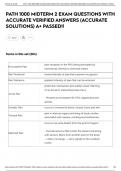
Terms in this set (204)
pain receptors in the PNS being stimulated by
Nociceptive Pain
mechanical, thermal or chemical means
Pain Threshold lowest intensity of pain that a person recognizes
Pain Tolerance greatest intensity of pain that can be endured
protective mechanism and sudden onset. Warning
of an actual or impending tissue injury
Acute Pain
- Presents as increased HR, HTN, diaphoresis and
anxiety
Somatic Pain occurs in connective tissue, muscle, bone and skin
pain in internal organs and lining of body cavities
Visceral Pain
associated with nausea, vomiting and restlessness
occurs in an area distant from the point of region
- Visceral sensory fibers enter the spinal cord along
Referred Pain
with sensory fibers from another point in the body
→ fibers converge → carry signals to the cerebral
cortex
https://quizlet.com/1048511209/path-1000-midterm-2-exam-questions-with-accurate-verified-answers-accurate-solutions-a-passed-flash-cards/?… 1/34
,5/27/25, 8:45 AM PATH 1000 MIDTERM 2 EXAM QUESTIONS WITH ACCURATE VERIFIED ANSWERS (ACCURATE SOLUTIONS) A+ PASS…
pain lasting longer than 3 months and may be
persistent. Onset can be sudden or develop
Persistent Pain (Chronic insidiously
Pain)
- Leads to physiological adaptation & behavioural
and psychological changes
Neuralgia pain in the distribution of a nerve
pain caused by a lesion or dysfunction of the
Neuropathic Pain
nervous system
neuropathic pain from nerve trauma or disease
- Occurs in patients who had pain prior to
amputation
Phantom Limb Pain - Cause:
• Hyperactivity of peripheral nerves
• Scar tissue
• Neuroma formation
pain and inflammation in the fascia that covers
Myofascial Pain
muscles due to injury and spams (chronic condition)
process that allows your body to maintain its core
Thermoregulation internal temperature mediated by the hypothalamus
and endocrine system
- Decreased shivering
- Slowed BMR
How does aging affect - Decreased sweating
thermoregulation? - Slowed blood circulation
- Changes to the skin
- Decreased heat producing activities
- Autonomic Nervous system:
• Evaporation & vasodilation
- Relation to environmental temperature:
Mechanism of Heat Loss • Radiation
• Conduction
• Convection - transfer liquids/gases through the air
from a warmer environment to a cooler environment
https://quizlet.com/1048511209/path-1000-midterm-2-exam-questions-with-accurate-verified-answers-accurate-solutions-a-passed-flash-cards/?… 2/34
,5/27/25, 8:45 AM PATH 1000 MIDTERM 2 EXAM QUESTIONS WITH ACCURATE VERIFIED ANSWERS (ACCURATE SOLUTIONS) A+ PASS…
- Vasoconstriction by sympathetic nervous system
Mechanism of Heat
Conservation Ex: dressing in layers helps with heat conservation
as it traps heat in
temporary response to either endogenous or
exogenous pyrogens
Fever - Hypothalamus & Brainstem Cause:
• Increased heat production & conservation
• Peripheral vasoconstriction
• Epinephrine release
- Older Adults
• Limited fever response to infection
• May lead to increased morbidity & mortality
How does fever effect
- Infants
older adults & infants?
• Inability to shiver
• High temps can occur in mild infections
• May develop febrile seizures
increased body temperature without hypothalamus
Hyperthermia trigger.
- Can lead to nerve damage, convulsions & death
heat illness due to muscle spasms from loss of large
Heat Cramps
amount of salt and water through exercise
result of body overheating
Heat Exhaustion
- S/S: dizziness, headache, heat sweating, paleness,
muscle cramps
severe heat illness that results in a body temperature
greater than 130°F
Heat Stroke
- S/S: throbbing headache, unconsciousness,
confusion, rapid/strong pulse, red/hot/dry skin (no
sweating)
https://quizlet.com/1048511209/path-1000-midterm-2-exam-questions-with-accurate-verified-answers-accurate-solutions-a-passed-flash-cards/?… 3/34
, 5/27/25, 8:45 AM PATH 1000 MIDTERM 2 EXAM QUESTIONS WITH ACCURATE VERIFIED ANSWERS (ACCURATE SOLUTIONS) A+ PASS…
core body temperature falls below 35°C
- Causes:
• Prolonged cold exposure → vasoconstriction,
increased blood viscosity, ischemic damage
Hypothermia
- Clinical Manifestations:
• Shivering, increased risk of coagulation, ice
crystals form in cells causing them to rupture and
die
- Non Rapid Eye Movement (Non-REM)
1. Stage 1: your eyes are closed, but easy to wake
you up. Lasts for 5-10 minutes
2. Stage 2: you are in light sleep. Heart rate slows
and body temperature drops. Body prepares for
deep sleep
3. Stage 3: deep sleep stage. Body repairs and
Stages of Sleep
regrows tissues, builds bone and muscle, and
strengthens immune system
- Rapid Eye Movement (REM): happens 90 minutes
after you fall asleep. Heart rate and breathing
quickens. Intense dreams occur due to hyperactive
brain
(sleeplessness) difficulty falling asleep or staying
asleep.
Insomia
- Day time sleepiness, low energy, irritability, and
depressed mood
Obstructive Sleep Apnea serious sleep disorder where it causes breathing to
Syndrome (OSAS) repeatedly stops and start during sleep
trouble sleeping due to working nights or rotating
Shift Work Sleep
shifts. May also have trouble staying awake or alert
Disorder
during work
uncontrollable urge to move your legs due to an
Restless Leg Syndrome
uncomfortable sensation
https://quizlet.com/1048511209/path-1000-midterm-2-exam-questions-with-accurate-verified-answers-accurate-solutions-a-passed-flash-cards/?… 4/34
PATH 1000 MIDTERM 2 EXAM QUESTIONS WITH
ACCURATE VERIFIED ANSWERS (ACCURATE
SOLUTIONS) A+ PASSED!!
Save
Terms in this set (204)
pain receptors in the PNS being stimulated by
Nociceptive Pain
mechanical, thermal or chemical means
Pain Threshold lowest intensity of pain that a person recognizes
Pain Tolerance greatest intensity of pain that can be endured
protective mechanism and sudden onset. Warning
of an actual or impending tissue injury
Acute Pain
- Presents as increased HR, HTN, diaphoresis and
anxiety
Somatic Pain occurs in connective tissue, muscle, bone and skin
pain in internal organs and lining of body cavities
Visceral Pain
associated with nausea, vomiting and restlessness
occurs in an area distant from the point of region
- Visceral sensory fibers enter the spinal cord along
Referred Pain
with sensory fibers from another point in the body
→ fibers converge → carry signals to the cerebral
cortex
https://quizlet.com/1048511209/path-1000-midterm-2-exam-questions-with-accurate-verified-answers-accurate-solutions-a-passed-flash-cards/?… 1/34
,5/27/25, 8:45 AM PATH 1000 MIDTERM 2 EXAM QUESTIONS WITH ACCURATE VERIFIED ANSWERS (ACCURATE SOLUTIONS) A+ PASS…
pain lasting longer than 3 months and may be
persistent. Onset can be sudden or develop
Persistent Pain (Chronic insidiously
Pain)
- Leads to physiological adaptation & behavioural
and psychological changes
Neuralgia pain in the distribution of a nerve
pain caused by a lesion or dysfunction of the
Neuropathic Pain
nervous system
neuropathic pain from nerve trauma or disease
- Occurs in patients who had pain prior to
amputation
Phantom Limb Pain - Cause:
• Hyperactivity of peripheral nerves
• Scar tissue
• Neuroma formation
pain and inflammation in the fascia that covers
Myofascial Pain
muscles due to injury and spams (chronic condition)
process that allows your body to maintain its core
Thermoregulation internal temperature mediated by the hypothalamus
and endocrine system
- Decreased shivering
- Slowed BMR
How does aging affect - Decreased sweating
thermoregulation? - Slowed blood circulation
- Changes to the skin
- Decreased heat producing activities
- Autonomic Nervous system:
• Evaporation & vasodilation
- Relation to environmental temperature:
Mechanism of Heat Loss • Radiation
• Conduction
• Convection - transfer liquids/gases through the air
from a warmer environment to a cooler environment
https://quizlet.com/1048511209/path-1000-midterm-2-exam-questions-with-accurate-verified-answers-accurate-solutions-a-passed-flash-cards/?… 2/34
,5/27/25, 8:45 AM PATH 1000 MIDTERM 2 EXAM QUESTIONS WITH ACCURATE VERIFIED ANSWERS (ACCURATE SOLUTIONS) A+ PASS…
- Vasoconstriction by sympathetic nervous system
Mechanism of Heat
Conservation Ex: dressing in layers helps with heat conservation
as it traps heat in
temporary response to either endogenous or
exogenous pyrogens
Fever - Hypothalamus & Brainstem Cause:
• Increased heat production & conservation
• Peripheral vasoconstriction
• Epinephrine release
- Older Adults
• Limited fever response to infection
• May lead to increased morbidity & mortality
How does fever effect
- Infants
older adults & infants?
• Inability to shiver
• High temps can occur in mild infections
• May develop febrile seizures
increased body temperature without hypothalamus
Hyperthermia trigger.
- Can lead to nerve damage, convulsions & death
heat illness due to muscle spasms from loss of large
Heat Cramps
amount of salt and water through exercise
result of body overheating
Heat Exhaustion
- S/S: dizziness, headache, heat sweating, paleness,
muscle cramps
severe heat illness that results in a body temperature
greater than 130°F
Heat Stroke
- S/S: throbbing headache, unconsciousness,
confusion, rapid/strong pulse, red/hot/dry skin (no
sweating)
https://quizlet.com/1048511209/path-1000-midterm-2-exam-questions-with-accurate-verified-answers-accurate-solutions-a-passed-flash-cards/?… 3/34
, 5/27/25, 8:45 AM PATH 1000 MIDTERM 2 EXAM QUESTIONS WITH ACCURATE VERIFIED ANSWERS (ACCURATE SOLUTIONS) A+ PASS…
core body temperature falls below 35°C
- Causes:
• Prolonged cold exposure → vasoconstriction,
increased blood viscosity, ischemic damage
Hypothermia
- Clinical Manifestations:
• Shivering, increased risk of coagulation, ice
crystals form in cells causing them to rupture and
die
- Non Rapid Eye Movement (Non-REM)
1. Stage 1: your eyes are closed, but easy to wake
you up. Lasts for 5-10 minutes
2. Stage 2: you are in light sleep. Heart rate slows
and body temperature drops. Body prepares for
deep sleep
3. Stage 3: deep sleep stage. Body repairs and
Stages of Sleep
regrows tissues, builds bone and muscle, and
strengthens immune system
- Rapid Eye Movement (REM): happens 90 minutes
after you fall asleep. Heart rate and breathing
quickens. Intense dreams occur due to hyperactive
brain
(sleeplessness) difficulty falling asleep or staying
asleep.
Insomia
- Day time sleepiness, low energy, irritability, and
depressed mood
Obstructive Sleep Apnea serious sleep disorder where it causes breathing to
Syndrome (OSAS) repeatedly stops and start during sleep
trouble sleeping due to working nights or rotating
Shift Work Sleep
shifts. May also have trouble staying awake or alert
Disorder
during work
uncontrollable urge to move your legs due to an
Restless Leg Syndrome
uncomfortable sensation
https://quizlet.com/1048511209/path-1000-midterm-2-exam-questions-with-accurate-verified-answers-accurate-solutions-a-passed-flash-cards/?… 4/34