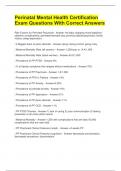
Perinatal Mental Health Certification
Exam Questions With Correct Answers
Risk Factors for Perinatal Psychosis - Answer-1st baby; stopping mood stabilizer;
obstetric complications; perinatal/neonatal loss; previous bipolar/psychosis; family
history; sleep deprivation
/.3 Biggest fears of panic disorder - Answer-dying; losing control; going crazy
/.Maternal Mortality Rate (all women) - Answer-1,200/year or 14.4/1,000
/.Maternal Mortality Rate (black women) - Answer-43.5/1,000
/.Prevalence of PP PTSD - Answer-9%
/.% of bipolar symptoms that relapse without medications - Answer-70%
/.Prevalence of PP Psychosis - Answer-1-2/1,000
/.Prevalence of PPD in Fathers - Answer-10%
/.Prevalence of PP Anxiety - Answer-8-20%
/.Prevalence of prenatal anxiety - Answer-15%
/.Prevalence of PP depression - Answer-21%
/.Prevalence of PP panic disorder - Answer-11%
/.Prevalence of PP OCD - Answer-11%
/.PP PTSD Themes - Answer-1) lack of caring 2) poor communication 3) feeling
powerless 4) do ends justify means
/.Maternal Mortality - Answer-1,200 with complications that are fatal; 60,000
complications that are near fatal
/.PP Psychosis Clinical Features (onset) - Answer-<2 weeks PP
/.PP Psychosis Clinical Features (cognition) - Answer-decreased concentration,
decreased sensations, disorientation
,/.PP Psychosis Clinical Features (behavioral) - Answer-agitated, hyperactive, distant,
aloof, decreased self care
/.PP Psychosis Clinical Features (Mood) - Answer-labile, elated, and dysphoric
/.PP Psychosis Clinical Features (Speech) - Answer-Rambling
/.Psychotic Thoughts - Answer-delusions, ego-syntonic thoughts
/.OCD Thoughts - Answer-Parents don't want to harm baby, no delusions/hallucinations,
parents have taken steps to protect baby
/.DSM-5 Criteria for PTSD - Answer-qualify for four categories
1) stressor
2)Intrusions
3)Avoidance
4)Negativity in cognition/mood
5)arousal
/.Causes of Birth Trauma - Answer-Emergency C-section, pre-eclampsia, PP
hemorrhage, NICU stay, prematurity, still birth, 3rd/4th degree tears, hyperemesis, fetal
anomaly, shoulder dystocia
/.DSM-5 Criteria for OCD (obsessions) - Answer-Recurrent and persistent
thoughts/urges/impulses that are intrusive/unwanted; individual attempts to ignore or
suppress thoughts/urges/impulses
/.DSM-5 Criteria for OCD (compulsions) - Answer-repetitive behaviors that individuals
feel driven to do; aimed at preventing or reducing anxiety
/.Common perinatal OCD Presentations - Answer-41% deliberate harm
29% contamination
18% accidental harm
6% ordering/arranging
3% religious
3% checking
/.DSM-5 Criteria for Major Depression - Answer-5+ symptoms present during 2 week
period
depressed mood; loss of interest/joy/pleasure; significant weight change/appetite
change; psychomotor agitation; fatigue/loss energy; poor concentration; feeling
worthless; excessive guilt; recurrent death thoughts/SI
/.DSM-5 Criteria for Anxiety - Answer-excessive anxiety or worrying; difficulty controlling
ones worry (rumination); agitation/irritability; restlessness; poor concentration; easily
fatigued; increased somatic symptoms
, /.DSM-5 Criteria for Panic Disorder - Answer-Episodes of intense fear/discomfort;
SOB/CP/Dizziness; hot/cold flashes; increase in HR; Restlessness/agitation; excessive
worry/fear; persistent fear "going crazy"; often no trigger
/.Screening completed by PCP's - Answer-46%
/.When do symptoms spike for fathers? - Answer-3-6M
/.Baby Blues Prevalence - Answer-60-80% new mothers
/.Timeframe of Baby Blues - Answer-2 days - 2 weeks/birther
/.PP substance abuse - Answer-40-49% alcohol; 4.5-8.5% marijuana
/.# infants born to depressed mothers - Answer-400,000
/.PMAD Prevalence - Answer-1/5-7 women; 1/10 men
/.% of unplanned pregnancies - Answer-50%
/.Prevalence of first dx of BPD PP - Answer-50%
/.Substance use in pregnancy - Answer-5.4% women use elicit drugs; 14.6% adolescent
moms
/.alcohol use in pregnancy - Answer-8.5% women
/.Prevalence of psychosis in women with known BPD - Answer-20-30%
/.Exacerbating Factors for PMAD's - Answer-lack of sleep; physical pain and or
inflammation; unresolved grief and or loss; complications in pregnancy; health
challenges in baby or parents; temperament of baby; age related stressors;
perfectionism/high expectations
/.Risks of Stillbirth - tobacco - Answer-1.8 -2.8x more likely
/.Risks of stillbirth - marijuana - Answer-2.3x more likely
/.Risk of stillbirth - stimulant or prescription pain reliever - Answer-2.2x more likely
/.AAP recommendations - breastfeeing - Answer-human milk exclusively for 6M
/.Relationship between breastfeeding and PMADs - Answer-breastfeeding and
depressions are a bi-directional relationship; breastfeeding may support maternal
Exam Questions With Correct Answers
Risk Factors for Perinatal Psychosis - Answer-1st baby; stopping mood stabilizer;
obstetric complications; perinatal/neonatal loss; previous bipolar/psychosis; family
history; sleep deprivation
/.3 Biggest fears of panic disorder - Answer-dying; losing control; going crazy
/.Maternal Mortality Rate (all women) - Answer-1,200/year or 14.4/1,000
/.Maternal Mortality Rate (black women) - Answer-43.5/1,000
/.Prevalence of PP PTSD - Answer-9%
/.% of bipolar symptoms that relapse without medications - Answer-70%
/.Prevalence of PP Psychosis - Answer-1-2/1,000
/.Prevalence of PPD in Fathers - Answer-10%
/.Prevalence of PP Anxiety - Answer-8-20%
/.Prevalence of prenatal anxiety - Answer-15%
/.Prevalence of PP depression - Answer-21%
/.Prevalence of PP panic disorder - Answer-11%
/.Prevalence of PP OCD - Answer-11%
/.PP PTSD Themes - Answer-1) lack of caring 2) poor communication 3) feeling
powerless 4) do ends justify means
/.Maternal Mortality - Answer-1,200 with complications that are fatal; 60,000
complications that are near fatal
/.PP Psychosis Clinical Features (onset) - Answer-<2 weeks PP
/.PP Psychosis Clinical Features (cognition) - Answer-decreased concentration,
decreased sensations, disorientation
,/.PP Psychosis Clinical Features (behavioral) - Answer-agitated, hyperactive, distant,
aloof, decreased self care
/.PP Psychosis Clinical Features (Mood) - Answer-labile, elated, and dysphoric
/.PP Psychosis Clinical Features (Speech) - Answer-Rambling
/.Psychotic Thoughts - Answer-delusions, ego-syntonic thoughts
/.OCD Thoughts - Answer-Parents don't want to harm baby, no delusions/hallucinations,
parents have taken steps to protect baby
/.DSM-5 Criteria for PTSD - Answer-qualify for four categories
1) stressor
2)Intrusions
3)Avoidance
4)Negativity in cognition/mood
5)arousal
/.Causes of Birth Trauma - Answer-Emergency C-section, pre-eclampsia, PP
hemorrhage, NICU stay, prematurity, still birth, 3rd/4th degree tears, hyperemesis, fetal
anomaly, shoulder dystocia
/.DSM-5 Criteria for OCD (obsessions) - Answer-Recurrent and persistent
thoughts/urges/impulses that are intrusive/unwanted; individual attempts to ignore or
suppress thoughts/urges/impulses
/.DSM-5 Criteria for OCD (compulsions) - Answer-repetitive behaviors that individuals
feel driven to do; aimed at preventing or reducing anxiety
/.Common perinatal OCD Presentations - Answer-41% deliberate harm
29% contamination
18% accidental harm
6% ordering/arranging
3% religious
3% checking
/.DSM-5 Criteria for Major Depression - Answer-5+ symptoms present during 2 week
period
depressed mood; loss of interest/joy/pleasure; significant weight change/appetite
change; psychomotor agitation; fatigue/loss energy; poor concentration; feeling
worthless; excessive guilt; recurrent death thoughts/SI
/.DSM-5 Criteria for Anxiety - Answer-excessive anxiety or worrying; difficulty controlling
ones worry (rumination); agitation/irritability; restlessness; poor concentration; easily
fatigued; increased somatic symptoms
, /.DSM-5 Criteria for Panic Disorder - Answer-Episodes of intense fear/discomfort;
SOB/CP/Dizziness; hot/cold flashes; increase in HR; Restlessness/agitation; excessive
worry/fear; persistent fear "going crazy"; often no trigger
/.Screening completed by PCP's - Answer-46%
/.When do symptoms spike for fathers? - Answer-3-6M
/.Baby Blues Prevalence - Answer-60-80% new mothers
/.Timeframe of Baby Blues - Answer-2 days - 2 weeks/birther
/.PP substance abuse - Answer-40-49% alcohol; 4.5-8.5% marijuana
/.# infants born to depressed mothers - Answer-400,000
/.PMAD Prevalence - Answer-1/5-7 women; 1/10 men
/.% of unplanned pregnancies - Answer-50%
/.Prevalence of first dx of BPD PP - Answer-50%
/.Substance use in pregnancy - Answer-5.4% women use elicit drugs; 14.6% adolescent
moms
/.alcohol use in pregnancy - Answer-8.5% women
/.Prevalence of psychosis in women with known BPD - Answer-20-30%
/.Exacerbating Factors for PMAD's - Answer-lack of sleep; physical pain and or
inflammation; unresolved grief and or loss; complications in pregnancy; health
challenges in baby or parents; temperament of baby; age related stressors;
perfectionism/high expectations
/.Risks of Stillbirth - tobacco - Answer-1.8 -2.8x more likely
/.Risks of stillbirth - marijuana - Answer-2.3x more likely
/.Risk of stillbirth - stimulant or prescription pain reliever - Answer-2.2x more likely
/.AAP recommendations - breastfeeing - Answer-human milk exclusively for 6M
/.Relationship between breastfeeding and PMADs - Answer-breastfeeding and
depressions are a bi-directional relationship; breastfeeding may support maternal