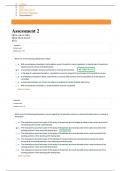
1. Which condition is characterized by destruction of
acetylcholine receptors at the neuromuscular
junction?
A. Guillain-Barré syndrome
B. Multiple sclerosis
C. Myasthenia gravis
D. ALS
Answer: C
Rationale: Myasthenia gravis is an autoimmune
disorder affecting neuromuscular transmission by
targeting ACh receptors.
2. What is the most common initial symptom of
colorectal cancer?
A. Diarrhea
B. Hematemesis
C. Change in bowel habits or occult bleeding
D. Weight gain
Answer: C
,Rationale: Colorectal cancer often presents
insidiously with altered bowel habits or blood in
stool.
3. In ARDS (Acute Respiratory Distress Syndrome),
what is the main pathophysiologic problem?
A. Bronchial hyperresponsiveness
B. Loss of alveolar surfactant and inflammation
C. Chronic mucus hypersecretion
D. Viral invasion of bronchial epithelium
Answer: B
Rationale: ARDS involves diffuse alveolar damage,
inflammation, and surfactant dysfunction causing
impaired gas exchange.
4. Which of the following best describes the
pathophysiology of asthma?
A. Loss of alveolar elasticity
B. Destruction of lung parenchyma
C. Chronic inflammation leading to
bronchoconstriction
D. Impaired surfactant production
, Answer: C
Rationale: Asthma involves chronic inflammation of
the airways, leading to hyperresponsiveness and
bronchoconstriction in response to various triggers.
5. Which condition involves a mutation in the HFE
gene?
A. Wilson’s disease
B. Hemochromatosis
C. Cystic fibrosis
D. Alpha-1 antitrypsin deficiency
Answer: B
Rationale: Hemochromatosis is caused by HFE gene
mutations, leading to iron overload.
6. In hyperaldosteronism, what electrolyte imbalance
is expected?
A. Hyperkalemia
B. Hyponatremia
C. Hypokalemia
D. Hypercalcemia
acetylcholine receptors at the neuromuscular
junction?
A. Guillain-Barré syndrome
B. Multiple sclerosis
C. Myasthenia gravis
D. ALS
Answer: C
Rationale: Myasthenia gravis is an autoimmune
disorder affecting neuromuscular transmission by
targeting ACh receptors.
2. What is the most common initial symptom of
colorectal cancer?
A. Diarrhea
B. Hematemesis
C. Change in bowel habits or occult bleeding
D. Weight gain
Answer: C
,Rationale: Colorectal cancer often presents
insidiously with altered bowel habits or blood in
stool.
3. In ARDS (Acute Respiratory Distress Syndrome),
what is the main pathophysiologic problem?
A. Bronchial hyperresponsiveness
B. Loss of alveolar surfactant and inflammation
C. Chronic mucus hypersecretion
D. Viral invasion of bronchial epithelium
Answer: B
Rationale: ARDS involves diffuse alveolar damage,
inflammation, and surfactant dysfunction causing
impaired gas exchange.
4. Which of the following best describes the
pathophysiology of asthma?
A. Loss of alveolar elasticity
B. Destruction of lung parenchyma
C. Chronic inflammation leading to
bronchoconstriction
D. Impaired surfactant production
, Answer: C
Rationale: Asthma involves chronic inflammation of
the airways, leading to hyperresponsiveness and
bronchoconstriction in response to various triggers.
5. Which condition involves a mutation in the HFE
gene?
A. Wilson’s disease
B. Hemochromatosis
C. Cystic fibrosis
D. Alpha-1 antitrypsin deficiency
Answer: B
Rationale: Hemochromatosis is caused by HFE gene
mutations, leading to iron overload.
6. In hyperaldosteronism, what electrolyte imbalance
is expected?
A. Hyperkalemia
B. Hyponatremia
C. Hypokalemia
D. Hypercalcemia