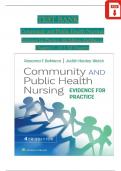
TEST BANK
Community and Public Health Nursing:
Evidence for Practice, 4th Edition (DeMarco),
Chapters 1 - 25 | All Chapters
,TABLE OF CONTENTS
dp dp
,Chapter 1: Public Health Nursing dp dp dp dp
1. A nurse is striving to practice patient-
dp dp dp dp dp dp
centered care at a hospital. Which action bestexemplifies providing patient-
dp dp dp dp dp dp dp d
p dp dp
centered care? dp
A) Having a client complete a self-dp dp dp dp dp
reported functional status indicator and thenreviewing it with the client
dp dp dp dp dp d
p dp dp dp dp
B) Explaining to a client the benefits of computer- dp dp dp dp dp dp dp
assisted robotic surgicaltechniques, which the hospital recently impleme
dp dp d
p dp dp dp dp dp
nted
C) Recording a client's signs and symptoms in an electronic health record
dp dp dp dp dp dp dp dp dp dp
D) Performing continuous glucose monitoring of a client while the client is in theh
dp dp dp dp dp dp dp dp dp dp dp dp d
p
ospital
ANSWER: A dp
Feedback:
Patient-
centered care considers cultural traditions, personal preferences, values, families, and life
dp dp dp dp dp dp dp dp dp dp
styles. Clients become active participants in their own care, and monitoring health becom
dp dp dp dp dp dp dp dp dp dp dp dp
es the client's responsibility. To help clients and their healthcare providers make better d
dp dp dp dp dp dp dp dp dp dp dp dp dp
ecisions, the Agency for Healthcare Research and Quality (AHRQ) has developed a seri
dp dp dp dp dp dp dp dp dp dp dp dp
es of tools that empower clients and assist providers in achieving desired outcomes, inclu
dp dp dp dp dp dp dp dp dp dp dp dp dp
ding client-reported functional status indicators. Computer-
dp dp dp dp dp
assisted robotic surgical techniques, electronic health records, andcontinuous glucose mo
dp dp dp dp dp dp dp d
p dp dp
nitoring in the hospital are all technological advances in healthcare, but they do not help
dp dp dp dp dp dp dp dp dp dp dp dp dp dp dp
the client become a more active participant in his or hercare, and thus are not good exa
dp dp dp dp dp dp dp dp dp dp d
p dp dp dp dp dp dp
mples of patient-centered care.
dp dp dp
Origin: Chapter 1- Public Health Nursing, 2
d p dp dp dp dp dp
2. A nurse is caring for an older client who is struggling to manage her type 2 diabetes me
dp dp dp dp dp dp dp dp dp dp dp dp dp dp dp dp dp
llitus. The nurse should recognize which social determinants of this client's health?(Sele
dp dp dp dp dp dp dp dp dp dp dp d
p
ct all that apply.)
dp dp dp
, A) Household income of $23,000 per year dp dp dp dp dp
B) Reading level of a third graderdp dp dp dp dp
C) Medication ineffective due to error in prescription
dp dp dp dp dp dp
D) Originally from Sudan dp dp
E) No family in the area
dp dp dp dp d
p
ANSWER: A, B, D, E F d p dp dp dp dp
eedback:
The social conditions in which people live, their income, social status, education, literacy
dp dp dp dp dp dp dp dp dp dp dp dp
, home and work environment, support networks, gender, culture, and availability of hea
dp dp dp dp dp dp dp dp dp dp dp dp
lth services are the social determinants of health. These conditions have an impact on th
dp dp dp dp dp dp dp dp dp dp dp dp dp dp
e extent to which a person or community possesses the physical, social, and personal res
dp dp dp dp dp dp dp dp dp dp dp dp dp dp
ources necessary to attain and maintain health. A medical erroron the part of the client's
dp dp dp dp dp dp dp dp dp d
p dp dp dp dp dp dp
primary care provider or nurse would not constitute a social determinant of the client's h
dp dp dp dp dp dp dp dp dp dp dp dp dp dp
ealth.
Community and Public Health Nursing:
Evidence for Practice, 4th Edition (DeMarco),
Chapters 1 - 25 | All Chapters
,TABLE OF CONTENTS
dp dp
,Chapter 1: Public Health Nursing dp dp dp dp
1. A nurse is striving to practice patient-
dp dp dp dp dp dp
centered care at a hospital. Which action bestexemplifies providing patient-
dp dp dp dp dp dp dp d
p dp dp
centered care? dp
A) Having a client complete a self-dp dp dp dp dp
reported functional status indicator and thenreviewing it with the client
dp dp dp dp dp d
p dp dp dp dp
B) Explaining to a client the benefits of computer- dp dp dp dp dp dp dp
assisted robotic surgicaltechniques, which the hospital recently impleme
dp dp d
p dp dp dp dp dp
nted
C) Recording a client's signs and symptoms in an electronic health record
dp dp dp dp dp dp dp dp dp dp
D) Performing continuous glucose monitoring of a client while the client is in theh
dp dp dp dp dp dp dp dp dp dp dp dp d
p
ospital
ANSWER: A dp
Feedback:
Patient-
centered care considers cultural traditions, personal preferences, values, families, and life
dp dp dp dp dp dp dp dp dp dp
styles. Clients become active participants in their own care, and monitoring health becom
dp dp dp dp dp dp dp dp dp dp dp dp
es the client's responsibility. To help clients and their healthcare providers make better d
dp dp dp dp dp dp dp dp dp dp dp dp dp
ecisions, the Agency for Healthcare Research and Quality (AHRQ) has developed a seri
dp dp dp dp dp dp dp dp dp dp dp dp
es of tools that empower clients and assist providers in achieving desired outcomes, inclu
dp dp dp dp dp dp dp dp dp dp dp dp dp
ding client-reported functional status indicators. Computer-
dp dp dp dp dp
assisted robotic surgical techniques, electronic health records, andcontinuous glucose mo
dp dp dp dp dp dp dp d
p dp dp
nitoring in the hospital are all technological advances in healthcare, but they do not help
dp dp dp dp dp dp dp dp dp dp dp dp dp dp dp
the client become a more active participant in his or hercare, and thus are not good exa
dp dp dp dp dp dp dp dp dp dp d
p dp dp dp dp dp dp
mples of patient-centered care.
dp dp dp
Origin: Chapter 1- Public Health Nursing, 2
d p dp dp dp dp dp
2. A nurse is caring for an older client who is struggling to manage her type 2 diabetes me
dp dp dp dp dp dp dp dp dp dp dp dp dp dp dp dp dp
llitus. The nurse should recognize which social determinants of this client's health?(Sele
dp dp dp dp dp dp dp dp dp dp dp d
p
ct all that apply.)
dp dp dp
, A) Household income of $23,000 per year dp dp dp dp dp
B) Reading level of a third graderdp dp dp dp dp
C) Medication ineffective due to error in prescription
dp dp dp dp dp dp
D) Originally from Sudan dp dp
E) No family in the area
dp dp dp dp d
p
ANSWER: A, B, D, E F d p dp dp dp dp
eedback:
The social conditions in which people live, their income, social status, education, literacy
dp dp dp dp dp dp dp dp dp dp dp dp
, home and work environment, support networks, gender, culture, and availability of hea
dp dp dp dp dp dp dp dp dp dp dp dp
lth services are the social determinants of health. These conditions have an impact on th
dp dp dp dp dp dp dp dp dp dp dp dp dp dp
e extent to which a person or community possesses the physical, social, and personal res
dp dp dp dp dp dp dp dp dp dp dp dp dp dp
ources necessary to attain and maintain health. A medical erroron the part of the client's
dp dp dp dp dp dp dp dp dp d
p dp dp dp dp dp dp
primary care provider or nurse would not constitute a social determinant of the client's h
dp dp dp dp dp dp dp dp dp dp dp dp dp dp
ealth.