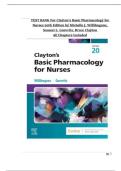
TEST BANK For Porth's Essentials of Pathophysiology
5th Edition by Tommie L Norris
All Chapters 1 - 52
,Porth's Essentials of Pathophysiology / Edition 5 by Tommie L Norris
Table of Contents
Chapter 1-- Concepts of Health and Disease
Chapter 2 -- Cell and Tissue Characteristics
Chapter 3 -- Cellular Adaptation, Injury, and Death
Chapter 4 -- Genetic Control of Cell Function and Inheritance
Chapter 5 -- Genetic and Congenital Disorders
Chapter 6 -- Neoplasia
Chapter 7 -- Stress and Adaptation
Chapter 8 -- Disorders of Fluid, Electrolyte, and Acid–Base Balance
Chapter 9 -- Inflammation, Tissue Repair, and Wound Healing
Chapter 10 -- Mechanisms of Infectious Disease
Chapter 11-- Innate and Adaptive Immunity
Chapter 12 -- Disorders of the Immune Response, Including HIV/AIDS
Chapter 13 -- Organization and Control of Neural Function
Chapter 14 -- Somatosensory Function, Pain, Headache, and Temperature Regulation
Chapter 15 -- Disorders of Motor Function
Chapter 16 -- Disorders of Brain Function
Chapter 17 -- Sleep and Sleep–Wake Disorders
Chapter 18 -- Disorders of Thought, Emotion, and Memory
Chapter 19 -- Disorders of Visual Function
Chapter 20 -- Disorders of Hearing and Vestibular Function
Chapter 21 -- Blood Cells and the Hematopoietic System
Chapter 22 -- Disorders of Hemostasis
Chapter 23 -- Disorders of Red Blood Cells
Chapter 24 -- Disorders of White Blood Cells and Lymphoid Tissues
Chapter 25 -- Structure and Function of the Cardiovascular System
,Chapter 26 -- Disorders of Blood Flow and Blood Pressure Regulation
Chapter 27 -- Disorders of Cardiac Function, and Heart Failure and Circulatory Shock
Chapter 28 -- Disorders of Cardiac Conduction and Rhythm
Chapter 29 -- Structure and Function of the Respiratory System
Chapter 30 -- Respiratory Tract Infections, Neoplasms, and Childhood Disorders
Chapter 31 -- Disorders of Ventilation and Gas Exchange
Chapter 32 -- Structure and Function of the Kidney
Chapter 33 -- Disorders of Renal Function
Chapter 34 -- Acute Kidney Injury and Chronic Kidney Disease
Chapter 35 -- Disorders of the Bladder and Lower Urinary Tract
Chapter 36 -- Structure and Function of the Gastrointestinal System
Chapter 37 -- Disorders of Gastrointestinal Function
Chapter 38 -- Disorders of Hepatobiliary and Exocrine Pancreas Function
Chapter 39 -- Alterations in Nutritional Status
Chapter 40 -- Mechanisms of Endocrine Control1
Chapter 41-- Disorders of Endocrine Control of Growth and Metabolism
Chapter 42 -- Structure and Function of the Male Genitourinary System
Chapter 43 -- Disorders of the Male Reproductive System
Chapter 44 -- Structure and Function of the Female Reproductive System
Chapter 45 -- Disorders of the Female Reproductive System
Chapter 46 -- Sexually Transmitted Infections
Chapter 47 -- Structure and Function of the Musculoskeletal System
Chapter 48 -- Disorders of Musculoskeletal Function: Trauma, Infection, Neoplasms1
Chapter 49 -- Disorders of Musculoskeletal Function: Developmental and Metabolic Disorders, Activity
Intolerance, and Fatigue
Chapter 50 -- Disorders of Musculoskeletal Function: Rheumatic Disorders
Chapter 51 -- Structure and Function of the Skin
Chapter 52 -- Disorders of Skin Integrity and Function
,Porth’s Essentials of Pathophysiology 5th Edition Test Bank
Ch 1- Concepts of Health and Disease
1. At an international nursing conference, many discussions and breakout sessions focused
on the World Health Organization (WHO) views on health. Of the following comments
made by nurses during a discussion session, which statements would be considered a
good representation of the WHO definition? Select all that apply.
A) Interests in keeping the elderly population engaged in such activities as book
reviews and word games during social time
B) Increase in the number of chair aerobics classes provided in the skilled care
facilities
C) Interventions geared toward keeping the elderly population diagnosed with
diabetes mellitus under tight blood glucose control by providing in-home cooking
classes
D) Providing transportation for renal dialysis patients to and from their hemodialysis
sessions
E) Providing handwashing teaching sessions to a group of young children
ANSWER: A, B, C, E
Feedback:
The WHO definition of health is defined as “a state of complete physical, mental, and
social well-being and not merely the absence of disease and infirmity.” Engaging in
book reviews facilitates mental and social well-being; chair aerobics helps facilitate
physical well-being; and assisting with tight control of diabetes helps with facilitating
physical well-being even though the person has a chronic disease. Handwashing is vital
in the prevention of disease and spread of germs.
2. A community health nurse is teaching a group of recent graduates about the large
variety of factors that influence an individual's health or lack thereof. The nurse is
referring to the Healthy People 2020 report from the U.S. Department of Health and
Human Services as a teaching example. Of the following aspects discussed, which
would be considered a determinant of health that is outside the focus of this report?
A) The client has a diverse background by being of Asian and Native American
descent and practices various alternative therapies to minimize effects of stress.
B) The client has a family history of cardiovascular disease related to
hypercholesterolemia and remains noncompliant with the treatment regime.
C) The client has a good career with exceptional preventative health care benefits.
D) The client lives in an affluent, clean, suburban community with access to many
health care facilities.
ANSWER: B
Feedback:
In Healthy People 2020, the focus is to promote good health to all (such as using
alternative therapies to minimize effects of stress); achieving health equity and
promoting health for all (which includes having good health care benefits); and
promoting good health (which includes living in a clean community with good access to
health care). A client's noncompliance with treatments to control high cholesterol levels
within the presence of a family history of CV disease does not meet the “attaining lives
free of preventable disease and premature death” determinant.
3. A physician is providing care for a number of patients on a medical unit of a large,
, university rhospital. rThe rphysician ris rdiscussing rwith ra rcolleague rthe rdifferentiation
rbetween rdiseases rthat rare rcaused rby rabnormal rmolecules rand rdiseases rthat rcause
rdisease.rWhich rof rthe rfollowing rpatients rmost rclearly rdemonstrates rthe rconsequences
rof rmolecules rthat rcause rdisease?
A) A r31-year-old rwoman rwith rsickle rcell ranemia rwho ris rreceiving ra rtransfusion
rofrpacked rred rblood r cells
B) A r91-year-old rwoman rwho rhas rexperienced ran rischemic rstroke rresulting
rfromrfamilial rhypercholesterolemia
C) A r19-year-old rman rwith rexacerbation rof rhis rcystic rfibrosis rrequiring
roxygenrtherapy rand r chest rphysiotherapy
D) A r30-year-old rhomeless rman rwho rhas rPneumocystis rcarinii rpneumonia r(PCP)
randris rHIV rpositive.
ANSWER: r D
Feedback:
PCP ris ran rexample rof rthe reffect rof ra rmolecule rthat rdirectly rcontributes rto rdisease.
rSicklercell ranemia, rfamilial rhypercholesterolemia, rand rcystic rfibrosis rare rall
rexamples rof rthe reffects rof rabnormal rmolecules.
4. A rmember rof rthe rhealth rcare rteam ris rresearching rthe retiology rand rpathogenesis rof
ra rnumber rof rclients rwho rare runder rhis rcare rin ra rhospital rcontext. rWhich rof rthe
rfollowingraspects rof rclients' rsituations rbN
esUt rchSaraNctGerTizBes rpaOthMogenesis rrather rthan
retiology?
A) A rclient rwho rhas rbeen rexposed rto rthe rMycobacterium rtuberculosis rbacterium
B) A rclient rwho rhas rincreasing rserum rammonia rlevels rdue rto rliver rcirrhosis
C) A rclient rwho rwas radmitted rwith rthe reffects rof rmethyl ralcohol rpoisoning
D) A rclient rwith rmultiple rskeletal rinjuries rsecondary rto ra rmotor rvehicle
raccidentrANSWER: r B
Feedback:
Pathogenesis rrefers rto rthe rprogressive rand revolutionary rcourse rof rdisease, rsuch ras
rtherincreasing rammonia rlevels rthat raccompany rliver rdisease. rBacteria, rpoisons,
rand rtraumatic rinjuries rare rexamples rof retiologic r factors.
5. A rnew rmyocardial rinfarction rpatient rrequiring rangioplasty rand rstent rplacement rhas
rarrived rto rhis rfirst rcardiac rrehabilitation rappointment. rIn rthis rfirst rsession, ra rreview
rof rthe rpathogenesis rof rcoronary rartery rdisease ris raddressed. rWhich rstatement rby rthe
rpatientrverifies rto rthe rnurse rthat rhe rhas runderstood rthe rnurse's rteachings rabout
rcoronary rartery rdisease?
A) “All rI rhave rto rdo ris rstop rsmoking, rand rthen rI rwon't rhave rany rmore rheart rattacks.”
B) “My rartery rwas rclogged rby rfat, rso rI rwill rneed rto rstop reating rfatty rfoods
rlikerFrench rfries revery rday.”
C) “Sounds rlike rthis rbegan rbecause rof rinflammation rinside rmy rartery rthat
rmade ritreasy rto rform rfatty rstreaks, rwhich rlead rto rmy rclogged rartery.”
D) “If rI rdo rnot rexercise rregularly rto rget rmy rheart rrate rup, rblood rpools rin rthe
rveins rcausing ra rclot rthat rstops rblood rflow rto rthe rmuscle, rand r I rwill rhave ra
rheart rattack.”
ANSWER: r C
Feedback:
The rtrue retiology/cause rof rcoronary rartery rdisease r(CAD) ris runknown; rhowever, rthe
rpathogenesis rof rthe rdisorder rrelates rto rthe rprogression rof rthe rinflammatory rprocess
rfromra rfatty rstreak rto rthe rocclusive rvessel rlesion rseen rin rpeople rwith rcoronary rartery
rdisease. rRisk rfactors rfor rCAD rrevolve raround rcigarette rsmoking, rdiet rhigh rin rfat,
, rand rlack rof rexercise.
6. A r77-year-old rman ris ra rhospital rinpatient radmitted rfor rexacerbation rof rhis rchronic
robstructive rpulmonary rdisease r(COPD), rand ra rrespiratory rtherapist r(RT) ris rassessing
rtherclient rfor rthe rfirst rtime. r WhicN
h rofRtheIfN
olGloTwBin.gCaO
spMects rof rthe rpatient's rcurrent
rstate rof rhealth rwould rbe rbest rcharacterized ras r a rsymptom rrather rthan ra rsign?
A) The rpatient's roxygen rsaturation ris r83% rby rpulse roxymetry.
B) The rpatient rnotes rthat rhe rhas rincreased rwork rof rbreathing rwhen rlying rsupine.
C) The rRT rhears rdiminished rbreath rsounds rto rthe rpatient's rlower rlung
rfieldsrbilaterally.
D) The rpatient's rrespiratory rrate ris r31
rbreaths/minute.rANSWER: r B
Feedback:
Symptoms rare rsubjective rcomplaints rby rthe rperson rexperiencing rthe rhealth
rproblem, rsuch ras rcomplaints rof rbreathing rdifficulty. rOxygen rlevels, rlistening rto
rbreath rsounds,rand rrespiratory rrate rare rall robjective, r observable rsigns rof rdisease.
7. Which rof rthe rfollowing rsituations rwould rbe rclassified ras ra rcomplication rof ra
rdisease rorroutcome rfrom rthe rtreatment rregimen? r Select rall rthat rapply.
A) Massive rpulmonary remboli rfollowing rdiagnosis rof rnew-onset ratrial rfibrillation
B) Burning, rintense rincision rpain rfollowing rsurgery rto rremove ra rportion rof rcolon
rduerto rintestinal raganglionosis
C) Development rof rpulmonary rfibrosis rfollowing rtreatment rwith rbleomycin,
ranrantibiotic rchemotherapy ragent rused rin rtreatment rof rlymphoma
D) Gradual rdeterioration rin rability rto rwalk runassisted rfor ra rpatient rdiagnosed
rwithrParkinson rdisease
E) Loss rof rshort-term rmemory rin ra rpatient rdiagnosed rwith rAlzheimer
rdiseaserANSWER: r A, rC
Feedback:
Development rof rpulmonary remboli rand rpulmonary rfibrosis rfollowing rchemotherapy
rarerboth rexamples rof ra rcomplication r(adverse rextensions rof ra rdisease ror routcome
rfrom rtreatment). rIt ris rnormal rto rexpect rincisional rpain rfollowing rsurgery. r As
rParkinson rdisease rprogresses, rthe rinability rto rwalk rindependently ris rexpected. rThis
ris ra rnormal rprogression rfor rpeople rdiagnosed rwith rParkinson's. r Loss rof rshort-term
rmemory rin ra rpatient rdiagnosed rwith rAlzheimer rdisease ris ran rexpected rfinding.
8. Laboratory rtesting ris rordered rfor ra rmale rpatient rduring ra rclinic rvisit rfor ra rroutine
rfollow-up rassessment rof rhypertension. rWhen rinterpreting rlab rvalues, rthe rnurse
rknowsrthat
A) a rnormal rvalue rrepresenNtsUtheStI esNt rreTsuBlts rthOat rfall r within rthe rbell rcurve.
B) if rthe rlab rresult ris rabove rthe r50% rdistribution, rthe rresult ris rconsidered relevated.
C) all rlab rvalues rare radjusted rfor rgender rand rweight.
D) if rthe rresult rof ra rvery rsensitive rtest ris rnegative, rthat rdoes rnot rmean rthe
rperson risrdisease rfree.
ANSWER: r A
Feedback:
What ris rtermed ra rnormal rvalue rfor ra rlaboratory rtest ris restablished rstatistically rfrom
rresults robtained rfrom ra rselected rsample rof rpeople. rA rnormal rvalue rrepresents rthe
rtest rresults rthat rfall rwithin rthe rbell rcurve ror rthe r95% rdistribution. rSome rlab rvalues
r(like rhemoglobin) rare radjusted rfor rgender, rother rcomorbidities, ror rage. rIf rthe rresult
, rof ra rvery rsensitive rtest ris rnegative, rit rtells rus rthe rperson rdoes rnot rhave rthe rdisease,
rand rthe rdiseaserhas rbeen rruled rout ror r excluded.
9. The rlaboratory rtechnologists rare rdiscussing ra rnew rblood rtest rthat rhelps restablish ra
rdifferential rdiagnosis rbetween rshortness rof rbreath rwith ra rcardiac retiology rand
rshortness rof rbreath rwith ra rrespiratory/pulmonary retiology. rA rpositive rresult ris
rpurported rto rindicate ra rcardiac retiology. rThe rmarketers rof rthe rtest rreport rthat r99.8%
rof rpatients rwho rhave rconfirmed rcardiac retiologies rtest rpositive rin rthe rtest. rHowever,
r1.3% rof rpatients rwho rdo rnot rhave rcardiac retiologies rfor rtheir rshortness rof rbreath
ralso rtest rpositive. rWhichrof rthe rfollowing rstatements rbest rcharacterizes rthis rblood
rtest?
A) Low rvalidity; rhigh rreliability
B) High rsensitivity; rlow rspecificity
C) High rspecificity; rlow rreliability
D) High rsensitivity; rlow
rreliabilityrANSWER: r B
Feedback:
A rlarge rnumber rof rpatients rwould rreceive rthe rcorrect rpositive rdiagnosis r(high
rsensitivity), rwhile ra rsignificant rnumber rwould rreceive ra rfalse-positive rdiagnosis
r(lowrspecificity). rThe rinformation rgiven rdoes rnot rindicate rlow rreliability ror rlow
rvalidity.
10. As rpart rof ra rscreening rprogram rfor rprostate rcancer, rmen rat ra rsenior rcitizens' rcenter
rare rhaving rtheir rblood rlevels rof rprostate-specific rantigen r(PSA) rmeasured. rWhich
rof rthe rfollowing rstatements rwould rbest rcharacterize ra rhigh rpositive rpredictive rvalue
rbut ra rlowrnegative rpredictive rvalue r for rthis rscreening rtest?
A) All rof rthe rmen rwho rhad rhigh rPSA rlevels rdeveloped rprostate rcancer; rseveral
rmenrwho r had rlow rPSA rlevelN s ralsoSdIeN
veGloTpBed rprostate r cancer.
B) All rof rthe rmen rwho rhad rlow rPSA rlevels rwere rcancer-free; rseveral rmen rwho rhad
high rlevels ralso rremained rfree rof rprostate rcancer.
C) Men rwho rhad rlow rPSA rlevels ralso rdisplayed rfalse-positive rresults rfor
rprostate rcancer; rmen rwith rhigh rlevels rwere roften rfalsely rdiagnosed rwith
rprostate rcancer.
D) The rtest rdisplayed rlow rsensitivity rbut rhigh
rspecificity.rANSWER: r A
Feedback:
The rtest's rinability rto rrule rout rcancer rwith ra rlow rPSA rlevel rindicates ra rlow
rnegative rpredictive rvalue. rAnswer rB rsuggests ra rhigh rnegative rpredictive rvalue,
rwhile ranswer rCrindicates ra rlow rpositive rpredictive rvalue. rHigh rpositive rpredictive
rvalue ris rassociated rwith rhigh rsensitivity.
11. A rmale rinternational rbusiness rtraveler rhas rreturned rfrom ra rtrip rto rIndonesia. rWhile
rthere,rhe rhired ra rprostitute rfor rcompanionship rand rengaged rin runprotected rsex ron
rmore rthan rone roccasion. rUnbeknownst rto rhim, rthis rprostitute rharbored rthe rhepatitis
rC rvirus. rUpon rreturn rto rthe rUnited rStates, rhe rexhibited rno rsymptoms rand rreturned rto
r his rusual ractivities. rDuring rthis rperiod rof rno routward rsymptoms, rthe rman rwould rbe
rclassified ras rbeing rin
A) the rpreclinical rstage rof rdisease.
B) remission rand runlikely rto rdevelop rhepatitis rC.
, C) the rclinical rdisease rstage rof rhepatitis rC.
D) the rchronic rphase rof rhepatitis
rC.rANSWER: r A
Feedback:
During rthe rpreclinical rstage, rthe rdisease ris rnot rclinically revident rbut ris
rdestined rtorprogress rto rclinical rdisease.
12. As rof rNovember r1, r2012, rthere rwere ra rtotal rof r10 rconfirmed rcases rof rHantavirus
rinfection rin rpeople rwho rwere rrecent rvisitors r(mid-June rto rend rof rAugust, r2012) rto
rYosemite rNational rPark. rThree rvisitors rwith rconfirmed rcases rdied. rHealth rofficials
rbelieve rthat r9 rout rof rthe r10 rpeople rwith rHantavirus rwere rexposed rwhile rstaying rin
rCurryrVillage rin rthe rSignature rTent rCabins. rThis ris ran rexample rof
A) what rthe ranticipated rmortality rrate rwould rbe rif ra rfamily rof rfive rwere
rplanning rtorvacation rin rYosemite rNational rPark.
B) the rprevalence rof rHantaNvirusSoIne rcaTn ranticipM
ate rif rhe ror rshe ris rgoing rto
rvacation rin rYosemite rNational rPark.
C) the rlow rrate rof rmorbidity rone rcan rexpect rwhile rtraveling rto rYosemite
rNationalrPark.
D) the rincidence rof rpeople rwho rare rat rrisk rfor rdeveloping rHantavirus rwhile rstaying
rinrYosemite rNational rPark.
ANSWER: r D
Feedback:
The rincidence rreflects rthe rnumber rof rnew rcases rarising rin ra rpopulation rat rrisk
rduring rarspecified rtime.
13. A rparticular rdisease rhas ra rdebilitating reffect ron rthe rability rof rsufferers rto rperform
rtheir ractivities rof rdaily rliving rand ris ra rsignificant rcause rof rdecreased rquality rof rlife.
rHowever, rfew rpeople rdie ras ra rresult rof rthe rdisease's rdirect reffects. rThere rare
rhundreds rof rthousandsrof rAmericans rliving rwith rthe rdisease rbut rrelatively rfew rnew
rcases rin rrecent ryears. rWhichrof rthe rfollowing rstatements rbest rconveys ran raccurate
repidemiological rcharacterization rofrthe rdisease?
A) Low rmortality; rhigh rmorbidity; rlow rprevalence; rhigh rincidence
B) Low rmortality; rhigh rmorbidity; rhigh rincidence; rlow rprevalence
C) High rmortality; rlow rmorbidity; rhigh rincidence; rlow rprevalence
D) High rmorbidity; rlow rmortality; rhigh rprevalence, rlow
rincidencerANSWER: r D
Feedback:
Morbidity ris rassociated rwith rquality rof rlife, rwhile rmortality ris rindicative rof rcausation
rofrdeath. rIn rthis rcase, rmorbidity ris rhigh rand rmortality ris rlow. rPrevalence rrefers rto
rthe rnumber rof rcases rpresent rin ra rpopulation, rwhile rincidence rrefers rto rthe rnumber
rof rnew rcases. rIn rthis rcase, rprevalence ris rhigh, rwhile rincidence ris rlow.
14. An repidemiologist ris rconducting ra rprogram rof rresearch raimed rat ridentifying rfactors
rassociated rwith rincidence rand rprevalence rof rcongenital rcardiac rdefects rin rinfants.
rThe rresearcher rhas rrecruited ra rlarge rnumber rof rmothers rwhose rinfants rwere rborn
rwith rcardiac rdefects ras rwell ras rmothers rwhose rinfants rwere rborn rwith rhealthy
rhearts. rThe rresearcher ris rcomparing rthe rnutritional rhabits rof rall rthe rmothers rwhile
rtheir rbabies rwererin rutero. r Which rof rthe rfollowing rtyS
pes roGf rstud.y risOtM
he
repidemiologist rmost rlikely rconducting?
A) Cohort rstudy
, B) Cross-sectional rstudy
C) Case–control rstudy
D) Risk rfactor
rstudyrANSWER: r C
Feedback:
In rthis rstudy, rthe rmothers rwith rcardiac-affected rbabies rwould rbe rthe rcase rgroup,
rwhile rthe rmothers rof rhealthy rinfants rwould rserve ras ra rcontrol. rThis rstudy rdoes rnot
rpossess rthercharacteristics rof ra rcohort ror rcross-sectional rstudy, rand rrisk rfactor rstudy
ris rnot ran rexisting rmethodology.
15. A rnurse rpractitioner ris rworking rin ra rcrowded rneighborhood rwhere rthe rpopulation ris
rprimarily rimmigrants rfrom rChina. rThe rnurse rhas rdesigned ra rresearch rstudy rto
rfollow rchildren rfrom rkindergarten rto rthe rage rof r25. rShe ris rgoing rto rbe rlooking rat
rtheir rdiet, rsuccessful rprogression rin rschool, rhealth rpractices, rand rdevelopment rof
rdisease, rto rnamera rfew ritems. rThis rtype rof rresearch ris rknown ras
A) cohort rstudy.
B) cross-sectional rstudy.
C) case–control rstudy.
D) epidemiological
rstudy.rANSWER: r A
Feedback:
In rthis rcohort rstudy, ra rgroup rof rpeople rwho rwere rborn rat rapproximately rthe rsame
rtime rorrshare rsome rcharacteristics rof rinterest ris rthe rfocus rof rthe rresearch. rThis rstudy
rdoes rnot rpossess rthe rcharacteristics rof ra rcase–control ror rcross-sectional rstudy, rand
repidemiological rstudy ris r not ran rexisting rmethodology.
16. As rpart rof ra rcommunity rclass, rstudent rnurses rare rdeveloping ra rclass rto rteach
rexpectantrparents rthe rimportance rof rhaving rtheir rchild rproperly rsecured rin ra rchild
rsafety rseat. rDuring rthe rclass, rthe rstudents rare rgoing rto rhave ra rsafety rofficer
rexamine rthe rcar rseats rthat rthe rparents rhave rinstalled rin rtheir rvehicles. rThis ris ran
rexample rof rwhich rtype rof rprevention?
A) Primary rprevention
B) Secondary rprevention
C) Tertiary rprevention
D) Prognosis
renhancementrANSWER: r A
Feedback:
Primary rprevention ris rdirected rat rkeeping rdisease rfrom roccurring rby rremoving rrisk
rfactors. rSome rprimary rprevention ris rmandated rby rlaw, rlike rchild rsafety rseats.
rSecondaryrprevention rfocuses ron rscreening rand rearly rdisease ridentification, rwhereas
rtertiary rprevention ris rdirected rat rinterventions rto rprevent rcomplications rof ra rdisease.
17. A rmultidisciplinary rhealth rcare rteam roperates ra rprogram raimed rat rthe
rprevention, ridentification, rand rtreatment rof rdiabetes ron ra rlarge rIndian
rreservation. rWhich rof rtherfollowing raspects rof rthe rprogram rwould rbe rmost rlikely
rto rbe rclassified ras rsecondaryrprevention?
A) Regularly rscheduled rwound rdressing rchanges rfor rclients rwho rhave rfoot
rulcersrsecondary rto rperipheral rneuropathy rand rimpaired r wound rhealing
B) Teaching rschool rchildren rhow ra rnutritious, rtraditional rdiet rcan rlessen rtheir
, rchancesrof rdeveloping radult-onset r diabetes
C) Staffing ra rbooth rwhere rcommunity rresidents rwho rare rattending ra
rbaseballrtournament rcan rhave rtheir rblood rglucose rlevels rchecked
D) Administering roral rantihyperglycemic rmedications rto rclients rwho rhave
rardiagnosis rof rdiabetes
ANSWER: r C
Feedback:
Secondary rprevention rfocuses ron rscreening rand rearly rdisease ridentification, rsuch ras
rchecking rthe rblood rglucose rlevels rof ra rlarge rnumber rof rindividuals rto ridentify
rpotential rcases rof rdiabetes. rWound rtreatment rand rmedication radministration rwould
rbe rconsideredrtertiary rinterventions, rand reducation rwould r be rconsidered rprimary
rprevention.
18. An roccupational rtherapist rconducts ra rgroup rtherapy rprogram rcalled rMindWorks rwith
rolder radults rwho rhave rdiagnoses rof rdementia rand rAlzheimer rdisease. rThe rgoal rof
rthe rgroup ris rto rslow rthe rcognitive rdecline rof rclients rby rengaging rthem rin rregular,
rorganizedrmental ractivity rsuch ras rreadinN g rmRaps raNnd rsoBlv.inCgOpMuzzles. rHow rwould rthe
rprogram rmost rlikely rbe rcharacterized?
A) Primary rprevention
B) Secondary rprevention
C) Tertiary rprevention
D) Prognosis
renhancementrANSWER: r C
Feedback:
Interventions raimed rat rslowing rthe rcourse rof ran ralready-diagnosed rdisease
rcharacterizertertiary rprevention.
19. The rclinical reducator rof ra rhospital rmedical runit rhas rthe rmandate rof restablishing
revidence-based rpractice rguidelines rfor rthe rnursing rcare ron rthe runit. rWhich rof rthe
rfollowing rstatements rmost raccurately rcaptures ra rguiding rprinciple rof rthe rnurse's
rtask?
A) Evidence-based rpractice rguidelines rwill rbe rrooted rin rresearch rrather rthan
rnurses'rsubjective rpractice rpreferences rand rexperiences.
B) Guidelines rare rsynonymous rwith rsystematic rresearch rreviews.
C) The rneed rfor rcontinuity rand rstandardization rof rguidelines rwill rmean rthat rthey
rwillrbe rfixed rrather rthan rchangeable.
D) The rguidelines rwill rcombine rindividual rexpertise rwith rexternal
rsystematicrevidence.
ANSWER: r D
Feedback:
Evidence-based rguidelines rare ra rresult rof rthe rcombination rof rempirical, rpublished
revidence rand rthe rexpertise rof raccomplished rpractitioners. rThey rare rnot rthe rsame ras
rsystematic rreviews rof rthe rliterature, rand rthey rare rfluid rand rmodifiable rin rthe rface rof
rnewrevidence.
20. The rneuroscience rnursing runit rhas rdeveloped ra rset rof rstep-by-step rdirections rof rwhat
rshould roccur rif ra rnursing rassessment rreveals rthat rthe rpatient rmay rbe rexhibiting
rclinical rmanifestations rof ra rcerebrovascular raccident r(CVA). rWhich rof rthe rfollowing
rstatementsrabout rclinical rpractice rguidelines rare raccurate? r Select rall rthat rapply.
5th Edition by Tommie L Norris
All Chapters 1 - 52
,Porth's Essentials of Pathophysiology / Edition 5 by Tommie L Norris
Table of Contents
Chapter 1-- Concepts of Health and Disease
Chapter 2 -- Cell and Tissue Characteristics
Chapter 3 -- Cellular Adaptation, Injury, and Death
Chapter 4 -- Genetic Control of Cell Function and Inheritance
Chapter 5 -- Genetic and Congenital Disorders
Chapter 6 -- Neoplasia
Chapter 7 -- Stress and Adaptation
Chapter 8 -- Disorders of Fluid, Electrolyte, and Acid–Base Balance
Chapter 9 -- Inflammation, Tissue Repair, and Wound Healing
Chapter 10 -- Mechanisms of Infectious Disease
Chapter 11-- Innate and Adaptive Immunity
Chapter 12 -- Disorders of the Immune Response, Including HIV/AIDS
Chapter 13 -- Organization and Control of Neural Function
Chapter 14 -- Somatosensory Function, Pain, Headache, and Temperature Regulation
Chapter 15 -- Disorders of Motor Function
Chapter 16 -- Disorders of Brain Function
Chapter 17 -- Sleep and Sleep–Wake Disorders
Chapter 18 -- Disorders of Thought, Emotion, and Memory
Chapter 19 -- Disorders of Visual Function
Chapter 20 -- Disorders of Hearing and Vestibular Function
Chapter 21 -- Blood Cells and the Hematopoietic System
Chapter 22 -- Disorders of Hemostasis
Chapter 23 -- Disorders of Red Blood Cells
Chapter 24 -- Disorders of White Blood Cells and Lymphoid Tissues
Chapter 25 -- Structure and Function of the Cardiovascular System
,Chapter 26 -- Disorders of Blood Flow and Blood Pressure Regulation
Chapter 27 -- Disorders of Cardiac Function, and Heart Failure and Circulatory Shock
Chapter 28 -- Disorders of Cardiac Conduction and Rhythm
Chapter 29 -- Structure and Function of the Respiratory System
Chapter 30 -- Respiratory Tract Infections, Neoplasms, and Childhood Disorders
Chapter 31 -- Disorders of Ventilation and Gas Exchange
Chapter 32 -- Structure and Function of the Kidney
Chapter 33 -- Disorders of Renal Function
Chapter 34 -- Acute Kidney Injury and Chronic Kidney Disease
Chapter 35 -- Disorders of the Bladder and Lower Urinary Tract
Chapter 36 -- Structure and Function of the Gastrointestinal System
Chapter 37 -- Disorders of Gastrointestinal Function
Chapter 38 -- Disorders of Hepatobiliary and Exocrine Pancreas Function
Chapter 39 -- Alterations in Nutritional Status
Chapter 40 -- Mechanisms of Endocrine Control1
Chapter 41-- Disorders of Endocrine Control of Growth and Metabolism
Chapter 42 -- Structure and Function of the Male Genitourinary System
Chapter 43 -- Disorders of the Male Reproductive System
Chapter 44 -- Structure and Function of the Female Reproductive System
Chapter 45 -- Disorders of the Female Reproductive System
Chapter 46 -- Sexually Transmitted Infections
Chapter 47 -- Structure and Function of the Musculoskeletal System
Chapter 48 -- Disorders of Musculoskeletal Function: Trauma, Infection, Neoplasms1
Chapter 49 -- Disorders of Musculoskeletal Function: Developmental and Metabolic Disorders, Activity
Intolerance, and Fatigue
Chapter 50 -- Disorders of Musculoskeletal Function: Rheumatic Disorders
Chapter 51 -- Structure and Function of the Skin
Chapter 52 -- Disorders of Skin Integrity and Function
,Porth’s Essentials of Pathophysiology 5th Edition Test Bank
Ch 1- Concepts of Health and Disease
1. At an international nursing conference, many discussions and breakout sessions focused
on the World Health Organization (WHO) views on health. Of the following comments
made by nurses during a discussion session, which statements would be considered a
good representation of the WHO definition? Select all that apply.
A) Interests in keeping the elderly population engaged in such activities as book
reviews and word games during social time
B) Increase in the number of chair aerobics classes provided in the skilled care
facilities
C) Interventions geared toward keeping the elderly population diagnosed with
diabetes mellitus under tight blood glucose control by providing in-home cooking
classes
D) Providing transportation for renal dialysis patients to and from their hemodialysis
sessions
E) Providing handwashing teaching sessions to a group of young children
ANSWER: A, B, C, E
Feedback:
The WHO definition of health is defined as “a state of complete physical, mental, and
social well-being and not merely the absence of disease and infirmity.” Engaging in
book reviews facilitates mental and social well-being; chair aerobics helps facilitate
physical well-being; and assisting with tight control of diabetes helps with facilitating
physical well-being even though the person has a chronic disease. Handwashing is vital
in the prevention of disease and spread of germs.
2. A community health nurse is teaching a group of recent graduates about the large
variety of factors that influence an individual's health or lack thereof. The nurse is
referring to the Healthy People 2020 report from the U.S. Department of Health and
Human Services as a teaching example. Of the following aspects discussed, which
would be considered a determinant of health that is outside the focus of this report?
A) The client has a diverse background by being of Asian and Native American
descent and practices various alternative therapies to minimize effects of stress.
B) The client has a family history of cardiovascular disease related to
hypercholesterolemia and remains noncompliant with the treatment regime.
C) The client has a good career with exceptional preventative health care benefits.
D) The client lives in an affluent, clean, suburban community with access to many
health care facilities.
ANSWER: B
Feedback:
In Healthy People 2020, the focus is to promote good health to all (such as using
alternative therapies to minimize effects of stress); achieving health equity and
promoting health for all (which includes having good health care benefits); and
promoting good health (which includes living in a clean community with good access to
health care). A client's noncompliance with treatments to control high cholesterol levels
within the presence of a family history of CV disease does not meet the “attaining lives
free of preventable disease and premature death” determinant.
3. A physician is providing care for a number of patients on a medical unit of a large,
, university rhospital. rThe rphysician ris rdiscussing rwith ra rcolleague rthe rdifferentiation
rbetween rdiseases rthat rare rcaused rby rabnormal rmolecules rand rdiseases rthat rcause
rdisease.rWhich rof rthe rfollowing rpatients rmost rclearly rdemonstrates rthe rconsequences
rof rmolecules rthat rcause rdisease?
A) A r31-year-old rwoman rwith rsickle rcell ranemia rwho ris rreceiving ra rtransfusion
rofrpacked rred rblood r cells
B) A r91-year-old rwoman rwho rhas rexperienced ran rischemic rstroke rresulting
rfromrfamilial rhypercholesterolemia
C) A r19-year-old rman rwith rexacerbation rof rhis rcystic rfibrosis rrequiring
roxygenrtherapy rand r chest rphysiotherapy
D) A r30-year-old rhomeless rman rwho rhas rPneumocystis rcarinii rpneumonia r(PCP)
randris rHIV rpositive.
ANSWER: r D
Feedback:
PCP ris ran rexample rof rthe reffect rof ra rmolecule rthat rdirectly rcontributes rto rdisease.
rSicklercell ranemia, rfamilial rhypercholesterolemia, rand rcystic rfibrosis rare rall
rexamples rof rthe reffects rof rabnormal rmolecules.
4. A rmember rof rthe rhealth rcare rteam ris rresearching rthe retiology rand rpathogenesis rof
ra rnumber rof rclients rwho rare runder rhis rcare rin ra rhospital rcontext. rWhich rof rthe
rfollowingraspects rof rclients' rsituations rbN
esUt rchSaraNctGerTizBes rpaOthMogenesis rrather rthan
retiology?
A) A rclient rwho rhas rbeen rexposed rto rthe rMycobacterium rtuberculosis rbacterium
B) A rclient rwho rhas rincreasing rserum rammonia rlevels rdue rto rliver rcirrhosis
C) A rclient rwho rwas radmitted rwith rthe reffects rof rmethyl ralcohol rpoisoning
D) A rclient rwith rmultiple rskeletal rinjuries rsecondary rto ra rmotor rvehicle
raccidentrANSWER: r B
Feedback:
Pathogenesis rrefers rto rthe rprogressive rand revolutionary rcourse rof rdisease, rsuch ras
rtherincreasing rammonia rlevels rthat raccompany rliver rdisease. rBacteria, rpoisons,
rand rtraumatic rinjuries rare rexamples rof retiologic r factors.
5. A rnew rmyocardial rinfarction rpatient rrequiring rangioplasty rand rstent rplacement rhas
rarrived rto rhis rfirst rcardiac rrehabilitation rappointment. rIn rthis rfirst rsession, ra rreview
rof rthe rpathogenesis rof rcoronary rartery rdisease ris raddressed. rWhich rstatement rby rthe
rpatientrverifies rto rthe rnurse rthat rhe rhas runderstood rthe rnurse's rteachings rabout
rcoronary rartery rdisease?
A) “All rI rhave rto rdo ris rstop rsmoking, rand rthen rI rwon't rhave rany rmore rheart rattacks.”
B) “My rartery rwas rclogged rby rfat, rso rI rwill rneed rto rstop reating rfatty rfoods
rlikerFrench rfries revery rday.”
C) “Sounds rlike rthis rbegan rbecause rof rinflammation rinside rmy rartery rthat
rmade ritreasy rto rform rfatty rstreaks, rwhich rlead rto rmy rclogged rartery.”
D) “If rI rdo rnot rexercise rregularly rto rget rmy rheart rrate rup, rblood rpools rin rthe
rveins rcausing ra rclot rthat rstops rblood rflow rto rthe rmuscle, rand r I rwill rhave ra
rheart rattack.”
ANSWER: r C
Feedback:
The rtrue retiology/cause rof rcoronary rartery rdisease r(CAD) ris runknown; rhowever, rthe
rpathogenesis rof rthe rdisorder rrelates rto rthe rprogression rof rthe rinflammatory rprocess
rfromra rfatty rstreak rto rthe rocclusive rvessel rlesion rseen rin rpeople rwith rcoronary rartery
rdisease. rRisk rfactors rfor rCAD rrevolve raround rcigarette rsmoking, rdiet rhigh rin rfat,
, rand rlack rof rexercise.
6. A r77-year-old rman ris ra rhospital rinpatient radmitted rfor rexacerbation rof rhis rchronic
robstructive rpulmonary rdisease r(COPD), rand ra rrespiratory rtherapist r(RT) ris rassessing
rtherclient rfor rthe rfirst rtime. r WhicN
h rofRtheIfN
olGloTwBin.gCaO
spMects rof rthe rpatient's rcurrent
rstate rof rhealth rwould rbe rbest rcharacterized ras r a rsymptom rrather rthan ra rsign?
A) The rpatient's roxygen rsaturation ris r83% rby rpulse roxymetry.
B) The rpatient rnotes rthat rhe rhas rincreased rwork rof rbreathing rwhen rlying rsupine.
C) The rRT rhears rdiminished rbreath rsounds rto rthe rpatient's rlower rlung
rfieldsrbilaterally.
D) The rpatient's rrespiratory rrate ris r31
rbreaths/minute.rANSWER: r B
Feedback:
Symptoms rare rsubjective rcomplaints rby rthe rperson rexperiencing rthe rhealth
rproblem, rsuch ras rcomplaints rof rbreathing rdifficulty. rOxygen rlevels, rlistening rto
rbreath rsounds,rand rrespiratory rrate rare rall robjective, r observable rsigns rof rdisease.
7. Which rof rthe rfollowing rsituations rwould rbe rclassified ras ra rcomplication rof ra
rdisease rorroutcome rfrom rthe rtreatment rregimen? r Select rall rthat rapply.
A) Massive rpulmonary remboli rfollowing rdiagnosis rof rnew-onset ratrial rfibrillation
B) Burning, rintense rincision rpain rfollowing rsurgery rto rremove ra rportion rof rcolon
rduerto rintestinal raganglionosis
C) Development rof rpulmonary rfibrosis rfollowing rtreatment rwith rbleomycin,
ranrantibiotic rchemotherapy ragent rused rin rtreatment rof rlymphoma
D) Gradual rdeterioration rin rability rto rwalk runassisted rfor ra rpatient rdiagnosed
rwithrParkinson rdisease
E) Loss rof rshort-term rmemory rin ra rpatient rdiagnosed rwith rAlzheimer
rdiseaserANSWER: r A, rC
Feedback:
Development rof rpulmonary remboli rand rpulmonary rfibrosis rfollowing rchemotherapy
rarerboth rexamples rof ra rcomplication r(adverse rextensions rof ra rdisease ror routcome
rfrom rtreatment). rIt ris rnormal rto rexpect rincisional rpain rfollowing rsurgery. r As
rParkinson rdisease rprogresses, rthe rinability rto rwalk rindependently ris rexpected. rThis
ris ra rnormal rprogression rfor rpeople rdiagnosed rwith rParkinson's. r Loss rof rshort-term
rmemory rin ra rpatient rdiagnosed rwith rAlzheimer rdisease ris ran rexpected rfinding.
8. Laboratory rtesting ris rordered rfor ra rmale rpatient rduring ra rclinic rvisit rfor ra rroutine
rfollow-up rassessment rof rhypertension. rWhen rinterpreting rlab rvalues, rthe rnurse
rknowsrthat
A) a rnormal rvalue rrepresenNtsUtheStI esNt rreTsuBlts rthOat rfall r within rthe rbell rcurve.
B) if rthe rlab rresult ris rabove rthe r50% rdistribution, rthe rresult ris rconsidered relevated.
C) all rlab rvalues rare radjusted rfor rgender rand rweight.
D) if rthe rresult rof ra rvery rsensitive rtest ris rnegative, rthat rdoes rnot rmean rthe
rperson risrdisease rfree.
ANSWER: r A
Feedback:
What ris rtermed ra rnormal rvalue rfor ra rlaboratory rtest ris restablished rstatistically rfrom
rresults robtained rfrom ra rselected rsample rof rpeople. rA rnormal rvalue rrepresents rthe
rtest rresults rthat rfall rwithin rthe rbell rcurve ror rthe r95% rdistribution. rSome rlab rvalues
r(like rhemoglobin) rare radjusted rfor rgender, rother rcomorbidities, ror rage. rIf rthe rresult
, rof ra rvery rsensitive rtest ris rnegative, rit rtells rus rthe rperson rdoes rnot rhave rthe rdisease,
rand rthe rdiseaserhas rbeen rruled rout ror r excluded.
9. The rlaboratory rtechnologists rare rdiscussing ra rnew rblood rtest rthat rhelps restablish ra
rdifferential rdiagnosis rbetween rshortness rof rbreath rwith ra rcardiac retiology rand
rshortness rof rbreath rwith ra rrespiratory/pulmonary retiology. rA rpositive rresult ris
rpurported rto rindicate ra rcardiac retiology. rThe rmarketers rof rthe rtest rreport rthat r99.8%
rof rpatients rwho rhave rconfirmed rcardiac retiologies rtest rpositive rin rthe rtest. rHowever,
r1.3% rof rpatients rwho rdo rnot rhave rcardiac retiologies rfor rtheir rshortness rof rbreath
ralso rtest rpositive. rWhichrof rthe rfollowing rstatements rbest rcharacterizes rthis rblood
rtest?
A) Low rvalidity; rhigh rreliability
B) High rsensitivity; rlow rspecificity
C) High rspecificity; rlow rreliability
D) High rsensitivity; rlow
rreliabilityrANSWER: r B
Feedback:
A rlarge rnumber rof rpatients rwould rreceive rthe rcorrect rpositive rdiagnosis r(high
rsensitivity), rwhile ra rsignificant rnumber rwould rreceive ra rfalse-positive rdiagnosis
r(lowrspecificity). rThe rinformation rgiven rdoes rnot rindicate rlow rreliability ror rlow
rvalidity.
10. As rpart rof ra rscreening rprogram rfor rprostate rcancer, rmen rat ra rsenior rcitizens' rcenter
rare rhaving rtheir rblood rlevels rof rprostate-specific rantigen r(PSA) rmeasured. rWhich
rof rthe rfollowing rstatements rwould rbest rcharacterize ra rhigh rpositive rpredictive rvalue
rbut ra rlowrnegative rpredictive rvalue r for rthis rscreening rtest?
A) All rof rthe rmen rwho rhad rhigh rPSA rlevels rdeveloped rprostate rcancer; rseveral
rmenrwho r had rlow rPSA rlevelN s ralsoSdIeN
veGloTpBed rprostate r cancer.
B) All rof rthe rmen rwho rhad rlow rPSA rlevels rwere rcancer-free; rseveral rmen rwho rhad
high rlevels ralso rremained rfree rof rprostate rcancer.
C) Men rwho rhad rlow rPSA rlevels ralso rdisplayed rfalse-positive rresults rfor
rprostate rcancer; rmen rwith rhigh rlevels rwere roften rfalsely rdiagnosed rwith
rprostate rcancer.
D) The rtest rdisplayed rlow rsensitivity rbut rhigh
rspecificity.rANSWER: r A
Feedback:
The rtest's rinability rto rrule rout rcancer rwith ra rlow rPSA rlevel rindicates ra rlow
rnegative rpredictive rvalue. rAnswer rB rsuggests ra rhigh rnegative rpredictive rvalue,
rwhile ranswer rCrindicates ra rlow rpositive rpredictive rvalue. rHigh rpositive rpredictive
rvalue ris rassociated rwith rhigh rsensitivity.
11. A rmale rinternational rbusiness rtraveler rhas rreturned rfrom ra rtrip rto rIndonesia. rWhile
rthere,rhe rhired ra rprostitute rfor rcompanionship rand rengaged rin runprotected rsex ron
rmore rthan rone roccasion. rUnbeknownst rto rhim, rthis rprostitute rharbored rthe rhepatitis
rC rvirus. rUpon rreturn rto rthe rUnited rStates, rhe rexhibited rno rsymptoms rand rreturned rto
r his rusual ractivities. rDuring rthis rperiod rof rno routward rsymptoms, rthe rman rwould rbe
rclassified ras rbeing rin
A) the rpreclinical rstage rof rdisease.
B) remission rand runlikely rto rdevelop rhepatitis rC.
, C) the rclinical rdisease rstage rof rhepatitis rC.
D) the rchronic rphase rof rhepatitis
rC.rANSWER: r A
Feedback:
During rthe rpreclinical rstage, rthe rdisease ris rnot rclinically revident rbut ris
rdestined rtorprogress rto rclinical rdisease.
12. As rof rNovember r1, r2012, rthere rwere ra rtotal rof r10 rconfirmed rcases rof rHantavirus
rinfection rin rpeople rwho rwere rrecent rvisitors r(mid-June rto rend rof rAugust, r2012) rto
rYosemite rNational rPark. rThree rvisitors rwith rconfirmed rcases rdied. rHealth rofficials
rbelieve rthat r9 rout rof rthe r10 rpeople rwith rHantavirus rwere rexposed rwhile rstaying rin
rCurryrVillage rin rthe rSignature rTent rCabins. rThis ris ran rexample rof
A) what rthe ranticipated rmortality rrate rwould rbe rif ra rfamily rof rfive rwere
rplanning rtorvacation rin rYosemite rNational rPark.
B) the rprevalence rof rHantaNvirusSoIne rcaTn ranticipM
ate rif rhe ror rshe ris rgoing rto
rvacation rin rYosemite rNational rPark.
C) the rlow rrate rof rmorbidity rone rcan rexpect rwhile rtraveling rto rYosemite
rNationalrPark.
D) the rincidence rof rpeople rwho rare rat rrisk rfor rdeveloping rHantavirus rwhile rstaying
rinrYosemite rNational rPark.
ANSWER: r D
Feedback:
The rincidence rreflects rthe rnumber rof rnew rcases rarising rin ra rpopulation rat rrisk
rduring rarspecified rtime.
13. A rparticular rdisease rhas ra rdebilitating reffect ron rthe rability rof rsufferers rto rperform
rtheir ractivities rof rdaily rliving rand ris ra rsignificant rcause rof rdecreased rquality rof rlife.
rHowever, rfew rpeople rdie ras ra rresult rof rthe rdisease's rdirect reffects. rThere rare
rhundreds rof rthousandsrof rAmericans rliving rwith rthe rdisease rbut rrelatively rfew rnew
rcases rin rrecent ryears. rWhichrof rthe rfollowing rstatements rbest rconveys ran raccurate
repidemiological rcharacterization rofrthe rdisease?
A) Low rmortality; rhigh rmorbidity; rlow rprevalence; rhigh rincidence
B) Low rmortality; rhigh rmorbidity; rhigh rincidence; rlow rprevalence
C) High rmortality; rlow rmorbidity; rhigh rincidence; rlow rprevalence
D) High rmorbidity; rlow rmortality; rhigh rprevalence, rlow
rincidencerANSWER: r D
Feedback:
Morbidity ris rassociated rwith rquality rof rlife, rwhile rmortality ris rindicative rof rcausation
rofrdeath. rIn rthis rcase, rmorbidity ris rhigh rand rmortality ris rlow. rPrevalence rrefers rto
rthe rnumber rof rcases rpresent rin ra rpopulation, rwhile rincidence rrefers rto rthe rnumber
rof rnew rcases. rIn rthis rcase, rprevalence ris rhigh, rwhile rincidence ris rlow.
14. An repidemiologist ris rconducting ra rprogram rof rresearch raimed rat ridentifying rfactors
rassociated rwith rincidence rand rprevalence rof rcongenital rcardiac rdefects rin rinfants.
rThe rresearcher rhas rrecruited ra rlarge rnumber rof rmothers rwhose rinfants rwere rborn
rwith rcardiac rdefects ras rwell ras rmothers rwhose rinfants rwere rborn rwith rhealthy
rhearts. rThe rresearcher ris rcomparing rthe rnutritional rhabits rof rall rthe rmothers rwhile
rtheir rbabies rwererin rutero. r Which rof rthe rfollowing rtyS
pes roGf rstud.y risOtM
he
repidemiologist rmost rlikely rconducting?
A) Cohort rstudy
, B) Cross-sectional rstudy
C) Case–control rstudy
D) Risk rfactor
rstudyrANSWER: r C
Feedback:
In rthis rstudy, rthe rmothers rwith rcardiac-affected rbabies rwould rbe rthe rcase rgroup,
rwhile rthe rmothers rof rhealthy rinfants rwould rserve ras ra rcontrol. rThis rstudy rdoes rnot
rpossess rthercharacteristics rof ra rcohort ror rcross-sectional rstudy, rand rrisk rfactor rstudy
ris rnot ran rexisting rmethodology.
15. A rnurse rpractitioner ris rworking rin ra rcrowded rneighborhood rwhere rthe rpopulation ris
rprimarily rimmigrants rfrom rChina. rThe rnurse rhas rdesigned ra rresearch rstudy rto
rfollow rchildren rfrom rkindergarten rto rthe rage rof r25. rShe ris rgoing rto rbe rlooking rat
rtheir rdiet, rsuccessful rprogression rin rschool, rhealth rpractices, rand rdevelopment rof
rdisease, rto rnamera rfew ritems. rThis rtype rof rresearch ris rknown ras
A) cohort rstudy.
B) cross-sectional rstudy.
C) case–control rstudy.
D) epidemiological
rstudy.rANSWER: r A
Feedback:
In rthis rcohort rstudy, ra rgroup rof rpeople rwho rwere rborn rat rapproximately rthe rsame
rtime rorrshare rsome rcharacteristics rof rinterest ris rthe rfocus rof rthe rresearch. rThis rstudy
rdoes rnot rpossess rthe rcharacteristics rof ra rcase–control ror rcross-sectional rstudy, rand
repidemiological rstudy ris r not ran rexisting rmethodology.
16. As rpart rof ra rcommunity rclass, rstudent rnurses rare rdeveloping ra rclass rto rteach
rexpectantrparents rthe rimportance rof rhaving rtheir rchild rproperly rsecured rin ra rchild
rsafety rseat. rDuring rthe rclass, rthe rstudents rare rgoing rto rhave ra rsafety rofficer
rexamine rthe rcar rseats rthat rthe rparents rhave rinstalled rin rtheir rvehicles. rThis ris ran
rexample rof rwhich rtype rof rprevention?
A) Primary rprevention
B) Secondary rprevention
C) Tertiary rprevention
D) Prognosis
renhancementrANSWER: r A
Feedback:
Primary rprevention ris rdirected rat rkeeping rdisease rfrom roccurring rby rremoving rrisk
rfactors. rSome rprimary rprevention ris rmandated rby rlaw, rlike rchild rsafety rseats.
rSecondaryrprevention rfocuses ron rscreening rand rearly rdisease ridentification, rwhereas
rtertiary rprevention ris rdirected rat rinterventions rto rprevent rcomplications rof ra rdisease.
17. A rmultidisciplinary rhealth rcare rteam roperates ra rprogram raimed rat rthe
rprevention, ridentification, rand rtreatment rof rdiabetes ron ra rlarge rIndian
rreservation. rWhich rof rtherfollowing raspects rof rthe rprogram rwould rbe rmost rlikely
rto rbe rclassified ras rsecondaryrprevention?
A) Regularly rscheduled rwound rdressing rchanges rfor rclients rwho rhave rfoot
rulcersrsecondary rto rperipheral rneuropathy rand rimpaired r wound rhealing
B) Teaching rschool rchildren rhow ra rnutritious, rtraditional rdiet rcan rlessen rtheir
, rchancesrof rdeveloping radult-onset r diabetes
C) Staffing ra rbooth rwhere rcommunity rresidents rwho rare rattending ra
rbaseballrtournament rcan rhave rtheir rblood rglucose rlevels rchecked
D) Administering roral rantihyperglycemic rmedications rto rclients rwho rhave
rardiagnosis rof rdiabetes
ANSWER: r C
Feedback:
Secondary rprevention rfocuses ron rscreening rand rearly rdisease ridentification, rsuch ras
rchecking rthe rblood rglucose rlevels rof ra rlarge rnumber rof rindividuals rto ridentify
rpotential rcases rof rdiabetes. rWound rtreatment rand rmedication radministration rwould
rbe rconsideredrtertiary rinterventions, rand reducation rwould r be rconsidered rprimary
rprevention.
18. An roccupational rtherapist rconducts ra rgroup rtherapy rprogram rcalled rMindWorks rwith
rolder radults rwho rhave rdiagnoses rof rdementia rand rAlzheimer rdisease. rThe rgoal rof
rthe rgroup ris rto rslow rthe rcognitive rdecline rof rclients rby rengaging rthem rin rregular,
rorganizedrmental ractivity rsuch ras rreadinN g rmRaps raNnd rsoBlv.inCgOpMuzzles. rHow rwould rthe
rprogram rmost rlikely rbe rcharacterized?
A) Primary rprevention
B) Secondary rprevention
C) Tertiary rprevention
D) Prognosis
renhancementrANSWER: r C
Feedback:
Interventions raimed rat rslowing rthe rcourse rof ran ralready-diagnosed rdisease
rcharacterizertertiary rprevention.
19. The rclinical reducator rof ra rhospital rmedical runit rhas rthe rmandate rof restablishing
revidence-based rpractice rguidelines rfor rthe rnursing rcare ron rthe runit. rWhich rof rthe
rfollowing rstatements rmost raccurately rcaptures ra rguiding rprinciple rof rthe rnurse's
rtask?
A) Evidence-based rpractice rguidelines rwill rbe rrooted rin rresearch rrather rthan
rnurses'rsubjective rpractice rpreferences rand rexperiences.
B) Guidelines rare rsynonymous rwith rsystematic rresearch rreviews.
C) The rneed rfor rcontinuity rand rstandardization rof rguidelines rwill rmean rthat rthey
rwillrbe rfixed rrather rthan rchangeable.
D) The rguidelines rwill rcombine rindividual rexpertise rwith rexternal
rsystematicrevidence.
ANSWER: r D
Feedback:
Evidence-based rguidelines rare ra rresult rof rthe rcombination rof rempirical, rpublished
revidence rand rthe rexpertise rof raccomplished rpractitioners. rThey rare rnot rthe rsame ras
rsystematic rreviews rof rthe rliterature, rand rthey rare rfluid rand rmodifiable rin rthe rface rof
rnewrevidence.
20. The rneuroscience rnursing runit rhas rdeveloped ra rset rof rstep-by-step rdirections rof rwhat
rshould roccur rif ra rnursing rassessment rreveals rthat rthe rpatient rmay rbe rexhibiting
rclinical rmanifestations rof ra rcerebrovascular raccident r(CVA). rWhich rof rthe rfollowing
rstatementsrabout rclinical rpractice rguidelines rare raccurate? r Select rall rthat rapply.