

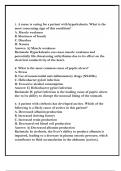
1. A nurse is caring for a patient with hyperkalemia. What is the
most concerning sign of this condition?
A. Muscle weakness
B. Shortness of breath
C. Diarrhea
D. Nausea
Answer: A) Muscle weakness
Rationale: Hyperkalemia can cause muscle weakness and
potentially life-threatening arrhythmias due to its effect on the
electrical conductivity of the heart.
2. What is the most common cause of peptic ulcers?
A. Stress
B. Use of nonsteroidal anti-inflammatory drugs (NSAIDs)
C. Helicobacter pylori infection
D. Excessive alcohol consumption
Answer: C) Helicobacter pylori infection
Rationale: H. pylori infection is the leading cause of peptic ulcers
due to its ability to disrupt the mucosal lining of the stomach.
3. A patient with cirrhosis has developed ascites. Which of the
following is a likely cause of ascites in this patient?
A. Decreased albumin production
B. Increased clotting factors
C. Increased renin production
D. Decreased red blood cell production
Answer: A) Decreased albumin production
Rationale: In cirrhosis, the liver's ability to produce albumin is
impaired, leading to a decrease in plasma oncotic pressure, which
contributes to fluid accumulation in the abdomen (ascites).
,4. Which of the following is a typical sign of hypoglycemia?
A. Increased thirst
B. Shaking and sweating
C. Increased urination
D. Elevated blood pressure
Answer: B) Shaking and sweating
Rationale: Hypoglycemia causes symptoms such as shaking,
sweating, and confusion due to the body's response to low blood
sugar levels.
5. What is a common sign of a urinary tract infection (UTI) in
older adults?
A. Fever and chills
B. Confusion and delirium
C. Painful urination
D. Excessive thirst
Answer: B) Confusion and delirium
Rationale: In older adults, UTIs may present with atypical
symptoms such as confusion, delirium, or agitation, rather than
the typical symptoms of fever and dysuria.
6. A patient with acute blood loss from a traumatic injury may
experience which of the following?
A. Decreased heart rate
B. Decreased respiratory rate
C. Increased blood pressure
D. Increased heart rate
Answer: D) Increased heart rate
Rationale: Acute blood loss leads to a decrease in circulating
blood volume, which triggers compensatory tachycardia
(increased heart rate) to maintain cardiac output.
7. Which electrolyte imbalance is most commonly associated with
, chronic alcoholism?
A. Hyperkalemia
B. Hypokalemia
C. Hypercalcemia
D. Hypomagnesemia
Answer: D) Hypomagnesemia
Rationale: Chronic alcoholism leads to malabsorption of nutrients,
including magnesium, resulting in hypomagnesemia.
8. A nurse is caring for a patient with rheumatoid arthritis. Which
of the following is a common manifestation of this condition?
A. Symmetrical joint pain and swelling
B. Morning dizziness and fatigue
C. Unilateral leg swelling
D. Chest pain
Answer: A) Symmetrical joint pain and swelling
Rationale: Rheumatoid arthritis typically causes symmetrical joint
pain, stiffness, and swelling, particularly in the hands and feet.
9. A patient with a diagnosis of schizophrenia may experience
which of the following symptoms?
A. Auditory hallucinations
B. Extreme fatigue
C. Increased blood pressure
D. Chronic cough
Answer: A) Auditory hallucinations
Rationale: Schizophrenia is often associated with psychotic
symptoms, including auditory hallucinations, delusions, and
disorganized thinking.
10. A patient with hypothyroidism is most likely to have which of
the following symptoms?
A. Weight loss
most concerning sign of this condition?
A. Muscle weakness
B. Shortness of breath
C. Diarrhea
D. Nausea
Answer: A) Muscle weakness
Rationale: Hyperkalemia can cause muscle weakness and
potentially life-threatening arrhythmias due to its effect on the
electrical conductivity of the heart.
2. What is the most common cause of peptic ulcers?
A. Stress
B. Use of nonsteroidal anti-inflammatory drugs (NSAIDs)
C. Helicobacter pylori infection
D. Excessive alcohol consumption
Answer: C) Helicobacter pylori infection
Rationale: H. pylori infection is the leading cause of peptic ulcers
due to its ability to disrupt the mucosal lining of the stomach.
3. A patient with cirrhosis has developed ascites. Which of the
following is a likely cause of ascites in this patient?
A. Decreased albumin production
B. Increased clotting factors
C. Increased renin production
D. Decreased red blood cell production
Answer: A) Decreased albumin production
Rationale: In cirrhosis, the liver's ability to produce albumin is
impaired, leading to a decrease in plasma oncotic pressure, which
contributes to fluid accumulation in the abdomen (ascites).
,4. Which of the following is a typical sign of hypoglycemia?
A. Increased thirst
B. Shaking and sweating
C. Increased urination
D. Elevated blood pressure
Answer: B) Shaking and sweating
Rationale: Hypoglycemia causes symptoms such as shaking,
sweating, and confusion due to the body's response to low blood
sugar levels.
5. What is a common sign of a urinary tract infection (UTI) in
older adults?
A. Fever and chills
B. Confusion and delirium
C. Painful urination
D. Excessive thirst
Answer: B) Confusion and delirium
Rationale: In older adults, UTIs may present with atypical
symptoms such as confusion, delirium, or agitation, rather than
the typical symptoms of fever and dysuria.
6. A patient with acute blood loss from a traumatic injury may
experience which of the following?
A. Decreased heart rate
B. Decreased respiratory rate
C. Increased blood pressure
D. Increased heart rate
Answer: D) Increased heart rate
Rationale: Acute blood loss leads to a decrease in circulating
blood volume, which triggers compensatory tachycardia
(increased heart rate) to maintain cardiac output.
7. Which electrolyte imbalance is most commonly associated with
, chronic alcoholism?
A. Hyperkalemia
B. Hypokalemia
C. Hypercalcemia
D. Hypomagnesemia
Answer: D) Hypomagnesemia
Rationale: Chronic alcoholism leads to malabsorption of nutrients,
including magnesium, resulting in hypomagnesemia.
8. A nurse is caring for a patient with rheumatoid arthritis. Which
of the following is a common manifestation of this condition?
A. Symmetrical joint pain and swelling
B. Morning dizziness and fatigue
C. Unilateral leg swelling
D. Chest pain
Answer: A) Symmetrical joint pain and swelling
Rationale: Rheumatoid arthritis typically causes symmetrical joint
pain, stiffness, and swelling, particularly in the hands and feet.
9. A patient with a diagnosis of schizophrenia may experience
which of the following symptoms?
A. Auditory hallucinations
B. Extreme fatigue
C. Increased blood pressure
D. Chronic cough
Answer: A) Auditory hallucinations
Rationale: Schizophrenia is often associated with psychotic
symptoms, including auditory hallucinations, delusions, and
disorganized thinking.
10. A patient with hypothyroidism is most likely to have which of
the following symptoms?
A. Weight loss


