

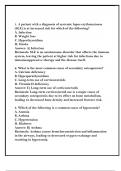
1. A patient with a diagnosis of systemic lupus erythematosus
(SLE) is at increased risk for which of the following?
A. Infection
B. Weight loss
C. Hyperthyroidism
D. Stroke
Answer: A) Infection
Rationale: SLE is an autoimmune disorder that affects the immune
system, leaving the patient at higher risk for infections due to
immunosuppressive therapy and the disease itself.
2. What is the most common cause of secondary osteoporosis?
A. Calcium deficiency
B. Hyperparathyroidism
C. Long-term use of corticosteroids
D. Vitamin D deficiency
Answer: C) Long-term use of corticosteroids
Rationale: Long-term corticosteroid use is a major cause of
secondary osteoporosis due to its effect on bone metabolism,
leading to decreased bone density and increased fracture risk.
3. Which of the following is a common cause of hypoxemia?
A. Anemia
B. Asthma
C. Hypertension
D. Diabetes
Answer: B) Asthma
Rationale: Asthma causes bronchoconstriction and inflammation
in the airways, leading to decreased oxygen exchange and
resulting in hypoxemia.
,4. Which of the following is the primary treatment goal for a
patient with acute myocardial infarction (MI)?
A. Increase fluid intake
B. Reduce heart rate and oxygen demand
C. Prevent deep vein thrombosis
D. Enhance gastrointestinal function
Answer: B) Reduce heart rate and oxygen demand
Rationale: The primary goal in managing MI is to reduce the
heart's workload by decreasing heart rate and oxygen demand to
prevent further damage to the heart muscle.
5. A patient with diabetes mellitus presents with polyuria,
polydipsia, and weight loss. What condition might these
symptoms indicate?
A. Diabetic ketoacidosis (DKA)
B. Hyperosmolar hyperglycemic state (HHS)
C. Hypoglycemia
D. Hypertension
Answer: A) Diabetic ketoacidosis (DKA)
Rationale: DKA occurs when insulin deficiency causes increased
glucose production and fat breakdown, leading to ketosis and
elevated blood glucose levels, which cause symptoms like
polyuria, polydipsia, and weight loss.
6. What is a common sign of a urinary tract infection (UTI) in
older adults?
A. Fever and chills
B. Confusion and delirium
C. Painful urination
D. Excessive thirst
Answer: B) Confusion and delirium
Rationale: In older adults, UTIs may present with atypical
symptoms such as confusion, delirium, or agitation, rather than
, the typical symptoms of fever and dysuria.
7. What is the primary cause of osteoarthritis?
A. Autoimmune reaction
B. Wear and tear on the joints
C. Bacterial infection
D. Vitamin D deficiency
Answer: B) Wear and tear on the joints
Rationale: Osteoarthritis is primarily caused by the degeneration
of cartilage due to repetitive use or aging, leading to joint pain
and stiffness.
8. A patient with a history of chronic pancreatitis is at increased
risk for which of the following complications?
A. Diabetes mellitus
B. Hypoglycemia
C. Hyperkalemia
D. Asthma
Answer: A) Diabetes mellitus
Rationale: Chronic pancreatitis can damage the pancreas' ability
to secrete insulin, leading to insulin resistance and an increased
risk of diabetes mellitus.
9. A patient with acute bacterial meningitis is likely to experience
which of the following?
A. Increased thirst and urination
B. Severe headache and neck stiffness
C. Joint pain and swelling
D. Abdominal pain and bloating
Answer: B) Severe headache and neck stiffness
Rationale: Acute bacterial meningitis causes inflammation of the
meninges, leading to symptoms like severe headache, neck
stiffness, photophobia, and fever.
(SLE) is at increased risk for which of the following?
A. Infection
B. Weight loss
C. Hyperthyroidism
D. Stroke
Answer: A) Infection
Rationale: SLE is an autoimmune disorder that affects the immune
system, leaving the patient at higher risk for infections due to
immunosuppressive therapy and the disease itself.
2. What is the most common cause of secondary osteoporosis?
A. Calcium deficiency
B. Hyperparathyroidism
C. Long-term use of corticosteroids
D. Vitamin D deficiency
Answer: C) Long-term use of corticosteroids
Rationale: Long-term corticosteroid use is a major cause of
secondary osteoporosis due to its effect on bone metabolism,
leading to decreased bone density and increased fracture risk.
3. Which of the following is a common cause of hypoxemia?
A. Anemia
B. Asthma
C. Hypertension
D. Diabetes
Answer: B) Asthma
Rationale: Asthma causes bronchoconstriction and inflammation
in the airways, leading to decreased oxygen exchange and
resulting in hypoxemia.
,4. Which of the following is the primary treatment goal for a
patient with acute myocardial infarction (MI)?
A. Increase fluid intake
B. Reduce heart rate and oxygen demand
C. Prevent deep vein thrombosis
D. Enhance gastrointestinal function
Answer: B) Reduce heart rate and oxygen demand
Rationale: The primary goal in managing MI is to reduce the
heart's workload by decreasing heart rate and oxygen demand to
prevent further damage to the heart muscle.
5. A patient with diabetes mellitus presents with polyuria,
polydipsia, and weight loss. What condition might these
symptoms indicate?
A. Diabetic ketoacidosis (DKA)
B. Hyperosmolar hyperglycemic state (HHS)
C. Hypoglycemia
D. Hypertension
Answer: A) Diabetic ketoacidosis (DKA)
Rationale: DKA occurs when insulin deficiency causes increased
glucose production and fat breakdown, leading to ketosis and
elevated blood glucose levels, which cause symptoms like
polyuria, polydipsia, and weight loss.
6. What is a common sign of a urinary tract infection (UTI) in
older adults?
A. Fever and chills
B. Confusion and delirium
C. Painful urination
D. Excessive thirst
Answer: B) Confusion and delirium
Rationale: In older adults, UTIs may present with atypical
symptoms such as confusion, delirium, or agitation, rather than
, the typical symptoms of fever and dysuria.
7. What is the primary cause of osteoarthritis?
A. Autoimmune reaction
B. Wear and tear on the joints
C. Bacterial infection
D. Vitamin D deficiency
Answer: B) Wear and tear on the joints
Rationale: Osteoarthritis is primarily caused by the degeneration
of cartilage due to repetitive use or aging, leading to joint pain
and stiffness.
8. A patient with a history of chronic pancreatitis is at increased
risk for which of the following complications?
A. Diabetes mellitus
B. Hypoglycemia
C. Hyperkalemia
D. Asthma
Answer: A) Diabetes mellitus
Rationale: Chronic pancreatitis can damage the pancreas' ability
to secrete insulin, leading to insulin resistance and an increased
risk of diabetes mellitus.
9. A patient with acute bacterial meningitis is likely to experience
which of the following?
A. Increased thirst and urination
B. Severe headache and neck stiffness
C. Joint pain and swelling
D. Abdominal pain and bloating
Answer: B) Severe headache and neck stiffness
Rationale: Acute bacterial meningitis causes inflammation of the
meninges, leading to symptoms like severe headache, neck
stiffness, photophobia, and fever.


