

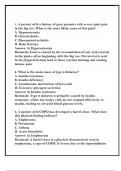
1. A patient with a history of gout presents with severe joint pain
in the big toe. What is the most likely cause of this pain?
A. Hyperuricemia
B. Osteoarthritis
C. Rheumatoid arthritis
D. Bone fracture
Answer: A) Hyperuricemia
Rationale: Gout is caused by the accumulation of uric acid crystals
in the joints, often beginning with the big toe. Elevated uric acid
levels (hyperuricemia) lead to these crystals forming and causing
intense pain.
2. What is the main cause of type 2 diabetes?
A. Insulin resistance
B. Insulin deficiency
C. Autoimmune destruction of beta cells
D. Excessive glucagon secretion
Answer: A) Insulin resistance
Rationale: Type 2 diabetes is primarily caused by insulin
resistance, where the body’s cells do not respond effectively to
insulin, leading to elevated blood glucose levels.
3. A patient with COPD has developed a barrel chest. What does
this physical finding indicate?
A. Emphysema
B. Pneumonia
C. Asthma
D. Acute bronchitis
Answer: A) Emphysema
Rationale: A barrel chest is a physical characteristic seen in
emphysema, a type of COPD. It occurs due to the hyperinflation
,of the lungs, which causes the chest to assume a rounded,
expanded shape.
4. A nurse is caring for a patient with hyperkalemia. What is the
most concerning sign of this condition?
A. Muscle weakness
B. Shortness of breath
C. Diarrhea
D. Nausea
Answer: A) Muscle weakness
Rationale: Hyperkalemia can cause muscle weakness and
potentially life-threatening arrhythmias due to its effect on the
electrical conductivity of the heart.
5. Which of the following is a classic sign of hyperthyroidism?
A. Weight gain
B. Cold intolerance
C. Tachycardia
D. Bradycardia
Answer: C) Tachycardia
Rationale: Hyperthyroidism is characterized by an overproduction
of thyroid hormones, leading to symptoms like tachycardia, heat
intolerance, and weight loss.
6. Which of the following factors is most likely to increase the
risk of deep vein thrombosis (DVT)?
A. Frequent physical activity
B. Use of oral contraceptives
C. Low body weight
D. Dehydration
Answer: B) Use of oral contraceptives
Rationale: Oral contraceptives can increase clotting factor
production, which elevates the risk of DVT.
, 7. What is a common sign of a urinary tract infection (UTI) in
older adults?
A. Fever and chills
B. Confusion and delirium
C. Painful urination
D. Excessive thirst
Answer: B) Confusion and delirium
Rationale: In older adults, UTIs may present with atypical
symptoms such as confusion, delirium, or agitation, rather than
the typical symptoms of fever and dysuria.
8. Which of the following would you expect in a patient with
Addison’s disease?
A. Increased blood pressure
B. Hyperkalemia
C. Weight gain
D. Increased appetite
Answer: B) Hyperkalemia
Rationale: Addison’s disease, a disorder of the adrenal glands,
leads to decreased cortisol and aldosterone production. This
results in fluid and sodium loss and potassium retention, causing
hyperkalemia.
9. A patient with acute blood loss from a traumatic injury may
experience which of the following?
A. Decreased heart rate
B. Decreased respiratory rate
C. Increased blood pressure
D. Increased heart rate
Answer: D) Increased heart rate
Rationale: Acute blood loss leads to a decrease in circulating
blood volume, which triggers compensatory tachycardia
in the big toe. What is the most likely cause of this pain?
A. Hyperuricemia
B. Osteoarthritis
C. Rheumatoid arthritis
D. Bone fracture
Answer: A) Hyperuricemia
Rationale: Gout is caused by the accumulation of uric acid crystals
in the joints, often beginning with the big toe. Elevated uric acid
levels (hyperuricemia) lead to these crystals forming and causing
intense pain.
2. What is the main cause of type 2 diabetes?
A. Insulin resistance
B. Insulin deficiency
C. Autoimmune destruction of beta cells
D. Excessive glucagon secretion
Answer: A) Insulin resistance
Rationale: Type 2 diabetes is primarily caused by insulin
resistance, where the body’s cells do not respond effectively to
insulin, leading to elevated blood glucose levels.
3. A patient with COPD has developed a barrel chest. What does
this physical finding indicate?
A. Emphysema
B. Pneumonia
C. Asthma
D. Acute bronchitis
Answer: A) Emphysema
Rationale: A barrel chest is a physical characteristic seen in
emphysema, a type of COPD. It occurs due to the hyperinflation
,of the lungs, which causes the chest to assume a rounded,
expanded shape.
4. A nurse is caring for a patient with hyperkalemia. What is the
most concerning sign of this condition?
A. Muscle weakness
B. Shortness of breath
C. Diarrhea
D. Nausea
Answer: A) Muscle weakness
Rationale: Hyperkalemia can cause muscle weakness and
potentially life-threatening arrhythmias due to its effect on the
electrical conductivity of the heart.
5. Which of the following is a classic sign of hyperthyroidism?
A. Weight gain
B. Cold intolerance
C. Tachycardia
D. Bradycardia
Answer: C) Tachycardia
Rationale: Hyperthyroidism is characterized by an overproduction
of thyroid hormones, leading to symptoms like tachycardia, heat
intolerance, and weight loss.
6. Which of the following factors is most likely to increase the
risk of deep vein thrombosis (DVT)?
A. Frequent physical activity
B. Use of oral contraceptives
C. Low body weight
D. Dehydration
Answer: B) Use of oral contraceptives
Rationale: Oral contraceptives can increase clotting factor
production, which elevates the risk of DVT.
, 7. What is a common sign of a urinary tract infection (UTI) in
older adults?
A. Fever and chills
B. Confusion and delirium
C. Painful urination
D. Excessive thirst
Answer: B) Confusion and delirium
Rationale: In older adults, UTIs may present with atypical
symptoms such as confusion, delirium, or agitation, rather than
the typical symptoms of fever and dysuria.
8. Which of the following would you expect in a patient with
Addison’s disease?
A. Increased blood pressure
B. Hyperkalemia
C. Weight gain
D. Increased appetite
Answer: B) Hyperkalemia
Rationale: Addison’s disease, a disorder of the adrenal glands,
leads to decreased cortisol and aldosterone production. This
results in fluid and sodium loss and potassium retention, causing
hyperkalemia.
9. A patient with acute blood loss from a traumatic injury may
experience which of the following?
A. Decreased heart rate
B. Decreased respiratory rate
C. Increased blood pressure
D. Increased heart rate
Answer: D) Increased heart rate
Rationale: Acute blood loss leads to a decrease in circulating
blood volume, which triggers compensatory tachycardia


