

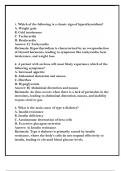
1. Which of the following is a classic sign of hyperthyroidism?
A. Weight gain
B. Cold intolerance
C. Tachycardia
D. Bradycardia
Answer: C) Tachycardia
Rationale: Hyperthyroidism is characterized by an overproduction
of thyroid hormones, leading to symptoms like tachycardia, heat
intolerance, and weight loss.
2. A patient with an ileus will most likely experience which of the
following symptoms?
A. Increased appetite
B. Abdominal distention and nausea
C. Diarrhea
D. Hypoglycemia
Answer: B) Abdominal distention and nausea
Rationale: An ileus occurs when there is a lack of peristalsis in the
intestines, leading to abdominal distention, nausea, and inability
to pass stool or gas.
3. What is the main cause of type 2 diabetes?
A. Insulin resistance
B. Insulin deficiency
C. Autoimmune destruction of beta cells
D. Excessive glucagon secretion
Answer: A) Insulin resistance
Rationale: Type 2 diabetes is primarily caused by insulin
resistance, where the body’s cells do not respond effectively to
insulin, leading to elevated blood glucose levels.
,4. A patient with acute bacterial meningitis is likely to experience
which of the following?
A. Increased thirst and urination
B. Severe headache and neck stiffness
C. Joint pain and swelling
D. Abdominal pain and bloating
Answer: B) Severe headache and neck stiffness
Rationale: Acute bacterial meningitis causes inflammation of the
meninges, leading to symptoms like severe headache, neck
stiffness, photophobia, and fever.
5. A patient is being treated for acute pancreatitis. What is a
common complication of this condition?
A. Renal failure
B. Chronic diarrhea
C. Hyperglycemia
D. Gallstones
Answer: A) Renal failure
Rationale: Acute pancreatitis can lead to systemic complications,
including renal failure, due to inflammation and the release of
digestive enzymes into the bloodstream.
6. A patient with a history of chronic pancreatitis is at increased
risk for which of the following complications?
A. Diabetes mellitus
B. Hypoglycemia
C. Hyperkalemia
D. Asthma
Answer: A) Diabetes mellitus
Rationale: Chronic pancreatitis can damage the pancreas' ability
to secrete insulin, leading to insulin resistance and an increased
risk of diabetes mellitus.
, 7. A patient with hypothyroidism is most likely to have which of
the following symptoms?
A. Weight loss
B. Increased heart rate
C. Cold intolerance
D. Heat intolerance
Answer: C) Cold intolerance
Rationale: Hypothyroidism leads to reduced metabolism, causing
symptoms such as cold intolerance, weight gain, and fatigue.
8. Which of the following is a typical sign of hypoglycemia?
A. Increased thirst
B. Shaking and sweating
C. Increased urination
D. Elevated blood pressure
Answer: B) Shaking and sweating
Rationale: Hypoglycemia causes symptoms such as shaking,
sweating, and confusion due to the body's response to low blood
sugar levels.
9. Which of the following is the most likely cause of anaphylactic
shock?
A. Blood loss
B. Allergic reaction
C. Bacterial infection
D. Spinal cord injury
Answer: B) Allergic reaction
Rationale: Anaphylactic shock is a severe allergic reaction that
causes vasodilation and fluid leakage, leading to hypotension and
shock.
10. What is the most common cause of secondary osteoporosis?
A. Calcium deficiency
A. Weight gain
B. Cold intolerance
C. Tachycardia
D. Bradycardia
Answer: C) Tachycardia
Rationale: Hyperthyroidism is characterized by an overproduction
of thyroid hormones, leading to symptoms like tachycardia, heat
intolerance, and weight loss.
2. A patient with an ileus will most likely experience which of the
following symptoms?
A. Increased appetite
B. Abdominal distention and nausea
C. Diarrhea
D. Hypoglycemia
Answer: B) Abdominal distention and nausea
Rationale: An ileus occurs when there is a lack of peristalsis in the
intestines, leading to abdominal distention, nausea, and inability
to pass stool or gas.
3. What is the main cause of type 2 diabetes?
A. Insulin resistance
B. Insulin deficiency
C. Autoimmune destruction of beta cells
D. Excessive glucagon secretion
Answer: A) Insulin resistance
Rationale: Type 2 diabetes is primarily caused by insulin
resistance, where the body’s cells do not respond effectively to
insulin, leading to elevated blood glucose levels.
,4. A patient with acute bacterial meningitis is likely to experience
which of the following?
A. Increased thirst and urination
B. Severe headache and neck stiffness
C. Joint pain and swelling
D. Abdominal pain and bloating
Answer: B) Severe headache and neck stiffness
Rationale: Acute bacterial meningitis causes inflammation of the
meninges, leading to symptoms like severe headache, neck
stiffness, photophobia, and fever.
5. A patient is being treated for acute pancreatitis. What is a
common complication of this condition?
A. Renal failure
B. Chronic diarrhea
C. Hyperglycemia
D. Gallstones
Answer: A) Renal failure
Rationale: Acute pancreatitis can lead to systemic complications,
including renal failure, due to inflammation and the release of
digestive enzymes into the bloodstream.
6. A patient with a history of chronic pancreatitis is at increased
risk for which of the following complications?
A. Diabetes mellitus
B. Hypoglycemia
C. Hyperkalemia
D. Asthma
Answer: A) Diabetes mellitus
Rationale: Chronic pancreatitis can damage the pancreas' ability
to secrete insulin, leading to insulin resistance and an increased
risk of diabetes mellitus.
, 7. A patient with hypothyroidism is most likely to have which of
the following symptoms?
A. Weight loss
B. Increased heart rate
C. Cold intolerance
D. Heat intolerance
Answer: C) Cold intolerance
Rationale: Hypothyroidism leads to reduced metabolism, causing
symptoms such as cold intolerance, weight gain, and fatigue.
8. Which of the following is a typical sign of hypoglycemia?
A. Increased thirst
B. Shaking and sweating
C. Increased urination
D. Elevated blood pressure
Answer: B) Shaking and sweating
Rationale: Hypoglycemia causes symptoms such as shaking,
sweating, and confusion due to the body's response to low blood
sugar levels.
9. Which of the following is the most likely cause of anaphylactic
shock?
A. Blood loss
B. Allergic reaction
C. Bacterial infection
D. Spinal cord injury
Answer: B) Allergic reaction
Rationale: Anaphylactic shock is a severe allergic reaction that
causes vasodilation and fluid leakage, leading to hypotension and
shock.
10. What is the most common cause of secondary osteoporosis?
A. Calcium deficiency


