

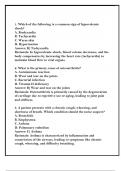
1. Which of the following is a common sign of hypovolemic
shock?
A. Bradycardia
B. Tachycardia
C. Warm skin
D. Hypertension
Answer: B) Tachycardia
Rationale: In hypovolemic shock, blood volume decreases, and the
body compensates by increasing the heart rate (tachycardia) to
maintain blood flow to vital organs.
2. What is the primary cause of osteoarthritis?
A. Autoimmune reaction
B. Wear and tear on the joints
C. Bacterial infection
D. Vitamin D deficiency
Answer: B) Wear and tear on the joints
Rationale: Osteoarthritis is primarily caused by the degeneration
of cartilage due to repetitive use or aging, leading to joint pain
and stiffness.
3. A patient presents with a chronic cough, wheezing, and
shortness of breath. Which condition should the nurse suspect?
A. Bronchitis
B. Emphysema
C. Asthma
D. Pulmonary embolism
Answer: C) Asthma
Rationale: Asthma is characterized by inflammation and
constriction of the airways, leading to symptoms like chronic
cough, wheezing, and difficulty breathing.
,4. What is the main cause of type 2 diabetes?
A. Insulin resistance
B. Insulin deficiency
C. Autoimmune destruction of beta cells
D. Excessive glucagon secretion
Answer: A) Insulin resistance
Rationale: Type 2 diabetes is primarily caused by insulin
resistance, where the body’s cells do not respond effectively to
insulin, leading to elevated blood glucose levels.
5. What is a key characteristic of Crohn's disease?
A. Continuous inflammation of the colon
B. Painless, non-bloody diarrhea
C. Skip lesions along the gastrointestinal tract
D. Gallstone formation
Answer: C) Skip lesions along the gastrointestinal tract
Rationale: Crohn’s disease is characterized by inflammation that
can occur in patches (skip lesions) throughout the gastrointestinal
tract, leading to symptoms like diarrhea, abdominal pain, and
weight loss.
6. Which of the following is the primary treatment goal for a
patient with acute myocardial infarction (MI)?
A. Increase fluid intake
B. Reduce heart rate and oxygen demand
C. Prevent deep vein thrombosis
D. Enhance gastrointestinal function
Answer: B) Reduce heart rate and oxygen demand
Rationale: The primary goal in managing MI is to reduce the
heart's workload by decreasing heart rate and oxygen demand to
prevent further damage to the heart muscle.
, 7. What is the most common cause of secondary hypertension?
A. Excessive salt intake
B. Renal disease
C. High cholesterol levels
D. Alcohol consumption
Answer: B) Renal disease
Rationale: Secondary hypertension is often caused by another
condition, with renal disease being a leading factor due to
impaired kidney function affecting fluid balance and blood
pressure regulation.
8. Which of the following is the most likely cause of anaphylactic
shock?
A. Blood loss
B. Allergic reaction
C. Bacterial infection
D. Spinal cord injury
Answer: B) Allergic reaction
Rationale: Anaphylactic shock is a severe allergic reaction that
causes vasodilation and fluid leakage, leading to hypotension and
shock.
9. What is a classic symptom of Parkinson’s disease?
A. Muscle rigidity
B. Hypotension
C. Polyuria
D. Weight gain
Answer: A) Muscle rigidity
Rationale: Parkinson’s disease is characterized by symptoms such
as muscle rigidity, tremors, and bradykinesia due to a loss of
dopaminergic neurons in the brain.
10. A nurse is caring for a patient with pneumonia. Which of the
shock?
A. Bradycardia
B. Tachycardia
C. Warm skin
D. Hypertension
Answer: B) Tachycardia
Rationale: In hypovolemic shock, blood volume decreases, and the
body compensates by increasing the heart rate (tachycardia) to
maintain blood flow to vital organs.
2. What is the primary cause of osteoarthritis?
A. Autoimmune reaction
B. Wear and tear on the joints
C. Bacterial infection
D. Vitamin D deficiency
Answer: B) Wear and tear on the joints
Rationale: Osteoarthritis is primarily caused by the degeneration
of cartilage due to repetitive use or aging, leading to joint pain
and stiffness.
3. A patient presents with a chronic cough, wheezing, and
shortness of breath. Which condition should the nurse suspect?
A. Bronchitis
B. Emphysema
C. Asthma
D. Pulmonary embolism
Answer: C) Asthma
Rationale: Asthma is characterized by inflammation and
constriction of the airways, leading to symptoms like chronic
cough, wheezing, and difficulty breathing.
,4. What is the main cause of type 2 diabetes?
A. Insulin resistance
B. Insulin deficiency
C. Autoimmune destruction of beta cells
D. Excessive glucagon secretion
Answer: A) Insulin resistance
Rationale: Type 2 diabetes is primarily caused by insulin
resistance, where the body’s cells do not respond effectively to
insulin, leading to elevated blood glucose levels.
5. What is a key characteristic of Crohn's disease?
A. Continuous inflammation of the colon
B. Painless, non-bloody diarrhea
C. Skip lesions along the gastrointestinal tract
D. Gallstone formation
Answer: C) Skip lesions along the gastrointestinal tract
Rationale: Crohn’s disease is characterized by inflammation that
can occur in patches (skip lesions) throughout the gastrointestinal
tract, leading to symptoms like diarrhea, abdominal pain, and
weight loss.
6. Which of the following is the primary treatment goal for a
patient with acute myocardial infarction (MI)?
A. Increase fluid intake
B. Reduce heart rate and oxygen demand
C. Prevent deep vein thrombosis
D. Enhance gastrointestinal function
Answer: B) Reduce heart rate and oxygen demand
Rationale: The primary goal in managing MI is to reduce the
heart's workload by decreasing heart rate and oxygen demand to
prevent further damage to the heart muscle.
, 7. What is the most common cause of secondary hypertension?
A. Excessive salt intake
B. Renal disease
C. High cholesterol levels
D. Alcohol consumption
Answer: B) Renal disease
Rationale: Secondary hypertension is often caused by another
condition, with renal disease being a leading factor due to
impaired kidney function affecting fluid balance and blood
pressure regulation.
8. Which of the following is the most likely cause of anaphylactic
shock?
A. Blood loss
B. Allergic reaction
C. Bacterial infection
D. Spinal cord injury
Answer: B) Allergic reaction
Rationale: Anaphylactic shock is a severe allergic reaction that
causes vasodilation and fluid leakage, leading to hypotension and
shock.
9. What is a classic symptom of Parkinson’s disease?
A. Muscle rigidity
B. Hypotension
C. Polyuria
D. Weight gain
Answer: A) Muscle rigidity
Rationale: Parkinson’s disease is characterized by symptoms such
as muscle rigidity, tremors, and bradykinesia due to a loss of
dopaminergic neurons in the brain.
10. A nurse is caring for a patient with pneumonia. Which of the


