

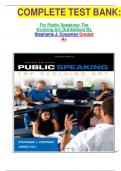
COMPLETE TEST BANK:
For Public Speaking: The
Evolving Art (3rd Edition) By
Stephanie J. Coopman Graded
A+
Page 1
,public speaking: the evolving art, 3th edition by stephanie j.
coopman
chapter 01: the evolving art of public speaking
1. good analytical thinking about the credibility of available information will help you give excellent speeches.
a. true
b. false
answer: true
points: 1
references: introduction
question type: true / false
has variables: false
learning objectives: pbsp lo11.2.1 - define credible as it applies to sources of information.
2. audiences don’t respond favorably to speakers who take a personal, conversational approach in their presentations.
a. true
b. false
answer: false
points: 1
references: the craft of public speaking
question type: true / false
has variables: false
learning objectives: pbsp lo1.3.5 - define participants in the context of a communication model.
3. setting a friendly and respectful tone for your conversation encourages your audience to respond.
a. true
b. false
answer: true
points: 1
references: the craft of public speaking
question type: true / false
has variables: false
learning objectives: pbsp lo1.3.5 - define participants in the context of a communication model.
4. effective public speaking is limited to delivery techniques.
a. true
b. false
answer: false
Page 2
,points: 1
references: foundations of public speaking
question type: true / false
has variables: false
learning objectives: pbsp lo1.3.4 - describe a model for communication.
5. the greek philosopher aristotle described the proof referred to as “mythos” as the way speakers use stories to elicit
support for their arguments.
a. true
Page 3
, Name: Class: Date:
Chapter 01: The Evolving Art of Public Speaking
b. false
answer: false
points: 1
references: foundations of public speaking
question type: true / false
has variables: false
learning objectives: pbsp lo1.1.1 - explain the earliest origins of human communication.
6. the following are transferable life skills learned in a public speaking course except:
a. critically analyzing a topic or idea
b. organizing ideas and information effectively
c. building your credibility
d. increasing your narrative thinking
answer: d
points: 1
references: storytelling
question type: multiple choice
has variables: false
learning objectives: pbsp lo1.5.1 - explain why public speaking is considered to be a life skill.
7. which of the following is the least interactive sphere of communication?
a. mediated personal communication
b. mass media
c. expressive technology
d. face to face
answer: b
points: 1
references: storytelling
question type: multiple choice
has variables: false
learning objectives: pbsp lo1.3.5 - define participants in the context of a communication model.
8. face-to-face speaking in the classroom requires the following except:
a. researching a topic
b. organizing the content
c. knowing how to come up with good ideas
d. delivering a less effective message
answer: d
points: 1
references: distance speaking
question type: multiple choice
has variables: false
learning objectives: pbsp lo1.3.5 - define participants in the context of a communication model.
Page
For Public Speaking: The
Evolving Art (3rd Edition) By
Stephanie J. Coopman Graded
A+
Page 1
,public speaking: the evolving art, 3th edition by stephanie j.
coopman
chapter 01: the evolving art of public speaking
1. good analytical thinking about the credibility of available information will help you give excellent speeches.
a. true
b. false
answer: true
points: 1
references: introduction
question type: true / false
has variables: false
learning objectives: pbsp lo11.2.1 - define credible as it applies to sources of information.
2. audiences don’t respond favorably to speakers who take a personal, conversational approach in their presentations.
a. true
b. false
answer: false
points: 1
references: the craft of public speaking
question type: true / false
has variables: false
learning objectives: pbsp lo1.3.5 - define participants in the context of a communication model.
3. setting a friendly and respectful tone for your conversation encourages your audience to respond.
a. true
b. false
answer: true
points: 1
references: the craft of public speaking
question type: true / false
has variables: false
learning objectives: pbsp lo1.3.5 - define participants in the context of a communication model.
4. effective public speaking is limited to delivery techniques.
a. true
b. false
answer: false
Page 2
,points: 1
references: foundations of public speaking
question type: true / false
has variables: false
learning objectives: pbsp lo1.3.4 - describe a model for communication.
5. the greek philosopher aristotle described the proof referred to as “mythos” as the way speakers use stories to elicit
support for their arguments.
a. true
Page 3
, Name: Class: Date:
Chapter 01: The Evolving Art of Public Speaking
b. false
answer: false
points: 1
references: foundations of public speaking
question type: true / false
has variables: false
learning objectives: pbsp lo1.1.1 - explain the earliest origins of human communication.
6. the following are transferable life skills learned in a public speaking course except:
a. critically analyzing a topic or idea
b. organizing ideas and information effectively
c. building your credibility
d. increasing your narrative thinking
answer: d
points: 1
references: storytelling
question type: multiple choice
has variables: false
learning objectives: pbsp lo1.5.1 - explain why public speaking is considered to be a life skill.
7. which of the following is the least interactive sphere of communication?
a. mediated personal communication
b. mass media
c. expressive technology
d. face to face
answer: b
points: 1
references: storytelling
question type: multiple choice
has variables: false
learning objectives: pbsp lo1.3.5 - define participants in the context of a communication model.
8. face-to-face speaking in the classroom requires the following except:
a. researching a topic
b. organizing the content
c. knowing how to come up with good ideas
d. delivering a less effective message
answer: d
points: 1
references: distance speaking
question type: multiple choice
has variables: false
learning objectives: pbsp lo1.3.5 - define participants in the context of a communication model.
Page


