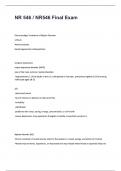
NR 546 / NR546 Final Exam Q&A.
Pharmacologic Treatment of Bipolar Disorder Lithium Anticonvulsants Second generation antipsychotics Unipolar depression major depressive disorder (MDD) one of the most common mental disorders -Approximately 7.1% of adults in the U.S. had episode in last year, prevalence highest (13.1%) among individuals aged 18-25 S/S -depressed mood -loss of interest or pleasure in daily activities -irritability -withdrawal -problems with sleep, eating, energy, concentration, or self-worth -severe depression: may experience thoughts of suicide or psychotic symptoms. Bipolar disorder (BD) Chronic condition characterized by extreme fluctuations in mood, energy, and ability to function -Moods may be manic, hypomanic, or depressed and may include mixed mood or psychotic features -many have only experienced only one manic episode in their lifetime -Mood fluctuations may be separated by periods of high stability or may cycle rapidly -diagnosed when a client has one or more episodes of mania or hypomania with a history of one or more major depressive episodes -high risk for suicide mania characterized by a persistently elevated, expansive, or irritable mood. Related symptoms may include inflated self-esteem, increased goal-directed activity or energy, including grandiosity, decreased need for sleep, excessive talkativeness, racing thoughts, flight of ideas (FOI), distractibility, psychomotor agitation, and a propensity to be involved in high-risk activities. Mania leads to significant functional impairment and may include psychotic features or necessitate hospitalization Bipolar Type I: requires at least one episode of mania for at least one week (or any duration if hospitalization due to symptoms is required) Bipolar Type II: diagnosis requires a current or past hypomanic episode and a current or past major depressive episode. Symptoms last for at least 4 days but fewer than seven. -Hypomanic symptoms are not of sufficient duration or severity to cause significant functional impairment, psychosis, or hospitalization. -Anger and irritability are common. -Clients often enjoy the elevation of mood and are reluctant to report these symptoms, making bipolar more difficult to diagnose if the client presents in the depression phase. Cyclothymia: involves the chronic presentation of hypomanic and depressive symptoms that do not meet the diagnostic criteria for a major depressive or manic/hypomanic episode. If bipolar depression is mistaken for MDD: antidepressant therapy may precipitate a manic episode or induce rapid-cycling bipolar depression -may contribute to the increased incidence of death by suicide in children and adults younger than 25 Antidepressants are used cautiously in clients with bipolar disorder and never as ________________. monotherapy -Antidepressants should be combined with a mood stabilizer to prevent th
Document information
- Uploaded on
- May 19, 2025
- Number of pages
- 108
- Written in
- 2024/2025
- Type
- Exam (elaborations)
- Contains
- Questions & answers