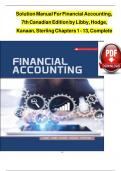
Solution Manual For Financial Accounting,
m m m m
7th Canadian Edition by Libby, Hodge,
m m m m m m
Kanaan, Sterling Chapters 1 - 13, Complete
m m m m m m m
1-1
,TABLE OF CONTENTS m m m
CHAPTER ONE m
Financial Statements and Business Decisions
m m m m
CHAPTER TWO m
Investing and Financing Decisions and the Accounting System
m m m m m m m
CHAPTER THREE m
Operating Decisions and the Accounting System
m m m m m
CHAPTER FOUR m
Adjustments, Financial Statements, and the Closing Process
m m m m m m
CHAPTER FIVE m
Reporting and Interpreting Sales Revenue, Receivables, and Cash
m m m m m m m
CHAPTER SIX m
Reporting and Interpreting Cost of Sales and Inventory
m m m m m m m
CHAPTER SEVEN m
Reporting and Interpreting Long-Lived Assets
m m m m
CHAPTER EIGHT m
Reporting and Interpreting Current Liabilities
m m m m
CHAPTER NINE m
Reporting and Interpreting Non-current Liabilities
m m m m
CHAPTER TEN m
Reporting and Interpreting Shareholders' Equity
m m m m
CHAPTER ELEVEN m
Statement of Cash Flows
m m m
CHAPTER TWELVE m
Communicating Accounting Information and Analyzing Financial Statements
m m m m m m
CHAPTER THIRTEEN m
Reporting and Interpreting Investments in Other Corporations
m m m m m m
1-2
,CHAPTER ONE m
Financial Statements and Business Decisions m m m m
ANSWERS TO QUESTIONS m m
1. Accounting is a system that collects and processes (analyzes, measures, and
m m m m m m m m m m
records) financial information about an organization and reports that information
m m m m m m m m m m
todecision makers.
m m m
2. Financial accounting involves preparation of the four basic financial statements
m m m m m m m m m
andrelated disclosures for external decision makers. Managerial accounting
m m m m m m m m m
involves the preparation of detailed plans, budgets, forecasts, and performance
m m m m m m m m m m
reports for internal decision makers.
m m m m m
3. Financial reports are used by both internal and external groups and individuals.
m m m m m m m m m m m
Theinternal groups are comprised of the various managers of the entity. The
m m m m m m m m m m m m m
external groups include the owners, investors, creditors, governmental agencies,
m m m m m m m m m
other interested parties, and the public at large.
m m m m m m m m
4. Investors purchase all or part of a business and hope to gain by receiving part of
m m m m m m m m m m m m m m m
what the company earns and/or selling the company in the future at a higher price
m m m m m m m m m m m m m m m
than they paid. Creditors lend money to a company for a specific length of time
m m m m m m m m m m m m m m m
andhope to gain by charging interest on the loan.
m m m m m m m m m m
5. In a society each organization can be defined as a separate accounting entity. An
m m m m m m m m m m m m m
accounting entity is the organization for which financial data are to be collected.
m m m m m m m m m m m m m
Typical accounting entities are a business, a church, a governmental unit, a
m m m m m m m m m m m m
university and other nonprofit organizations such as a hospital and a welfare
m m m m m m m m m m m m
organization. A business typically is defined and treated as a separate entity
m m m m m m m m m m m m
because the owners, creditors, investors, and other interested parties need to
m m m m m m m m m m m
evaluate its performance and its potential separately from other entities and from
m m m m m m m m m m m m
itsowners.
m m
1-3
, 6. Name of Statement
m m Alternative Title
m
(a) Income Statement
m (a) Statement of Earnings; Statement of
m m m m m
Income; Statement of Operations
m m m
(b) Balance Sheet m (b) Statement of Financial Position
m m m m
(c) Audit Report
m (c) Report of Independent Accountants
m m m m
1-4
m m m m
7th Canadian Edition by Libby, Hodge,
m m m m m m
Kanaan, Sterling Chapters 1 - 13, Complete
m m m m m m m
1-1
,TABLE OF CONTENTS m m m
CHAPTER ONE m
Financial Statements and Business Decisions
m m m m
CHAPTER TWO m
Investing and Financing Decisions and the Accounting System
m m m m m m m
CHAPTER THREE m
Operating Decisions and the Accounting System
m m m m m
CHAPTER FOUR m
Adjustments, Financial Statements, and the Closing Process
m m m m m m
CHAPTER FIVE m
Reporting and Interpreting Sales Revenue, Receivables, and Cash
m m m m m m m
CHAPTER SIX m
Reporting and Interpreting Cost of Sales and Inventory
m m m m m m m
CHAPTER SEVEN m
Reporting and Interpreting Long-Lived Assets
m m m m
CHAPTER EIGHT m
Reporting and Interpreting Current Liabilities
m m m m
CHAPTER NINE m
Reporting and Interpreting Non-current Liabilities
m m m m
CHAPTER TEN m
Reporting and Interpreting Shareholders' Equity
m m m m
CHAPTER ELEVEN m
Statement of Cash Flows
m m m
CHAPTER TWELVE m
Communicating Accounting Information and Analyzing Financial Statements
m m m m m m
CHAPTER THIRTEEN m
Reporting and Interpreting Investments in Other Corporations
m m m m m m
1-2
,CHAPTER ONE m
Financial Statements and Business Decisions m m m m
ANSWERS TO QUESTIONS m m
1. Accounting is a system that collects and processes (analyzes, measures, and
m m m m m m m m m m
records) financial information about an organization and reports that information
m m m m m m m m m m
todecision makers.
m m m
2. Financial accounting involves preparation of the four basic financial statements
m m m m m m m m m
andrelated disclosures for external decision makers. Managerial accounting
m m m m m m m m m
involves the preparation of detailed plans, budgets, forecasts, and performance
m m m m m m m m m m
reports for internal decision makers.
m m m m m
3. Financial reports are used by both internal and external groups and individuals.
m m m m m m m m m m m
Theinternal groups are comprised of the various managers of the entity. The
m m m m m m m m m m m m m
external groups include the owners, investors, creditors, governmental agencies,
m m m m m m m m m
other interested parties, and the public at large.
m m m m m m m m
4. Investors purchase all or part of a business and hope to gain by receiving part of
m m m m m m m m m m m m m m m
what the company earns and/or selling the company in the future at a higher price
m m m m m m m m m m m m m m m
than they paid. Creditors lend money to a company for a specific length of time
m m m m m m m m m m m m m m m
andhope to gain by charging interest on the loan.
m m m m m m m m m m
5. In a society each organization can be defined as a separate accounting entity. An
m m m m m m m m m m m m m
accounting entity is the organization for which financial data are to be collected.
m m m m m m m m m m m m m
Typical accounting entities are a business, a church, a governmental unit, a
m m m m m m m m m m m m
university and other nonprofit organizations such as a hospital and a welfare
m m m m m m m m m m m m
organization. A business typically is defined and treated as a separate entity
m m m m m m m m m m m m
because the owners, creditors, investors, and other interested parties need to
m m m m m m m m m m m
evaluate its performance and its potential separately from other entities and from
m m m m m m m m m m m m
itsowners.
m m
1-3
, 6. Name of Statement
m m Alternative Title
m
(a) Income Statement
m (a) Statement of Earnings; Statement of
m m m m m
Income; Statement of Operations
m m m
(b) Balance Sheet m (b) Statement of Financial Position
m m m m
(c) Audit Report
m (c) Report of Independent Accountants
m m m m
1-4