
Unit 11A
DNA and RNA are made up of organic molecules called nucleotides. Also, they are involved in
cell signaling, and enzyme reactions. A nucleotide consists of three parts: a phosphate group, a
nitrogenous base, and a 5-carbon sugar. The four nitrogenous bases that make up DNA are
adenine, cysteine, guanine, and thymine. RNA contains uracil rather than thymine. The genetic
information of every known living thing is composed of chains of nucleotides. Apart from
retaining genetic data, they also function as messengers and molecules that transfer energy.
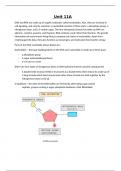
Parts of the DNA nucleotide shown below are:
Nucleotides – the basic building blocks of the DNA each nucleotide is made up of three parts
- a phosphate group
- A sugar molecule(deoxyribose)
- A nitrogenous base
(there are four types of nitrogenous bases in DNA (adenine thymine cytosine and guanine)
- A double helix structure-DNA is structured as a double helix which means its made up of
2 long strands which twist around each other these strands are held together by the
nitrogenous bases (a-t((c-g)
A backbone – the sides of the DNA ladder are formed by alternating sugar and ph
osphate groups creating a sugar phosphate backbone. DNA Structure
,DNA molecules are made of two polynucleotide strands that are antiparallel to one another and
are arranged side by side to travel in opposite directions.
Each DNA polynucleotide strand has a sugar-phosphate backbone made up of phosphate
groups and alternating deoxyribose sugars that are joined together. Among the various kinds of
covalent bonds are phosphodiester bonds.
Phosphodiester bonds bind the phosphate group of the same nucleotide to the five-carbon
deoxyribose sugar molecule. Another phosphodiester bond then joins the phosphate group to
the 3-carbon deoxyribose sugar molecule of the next nucleotide in the strand. It is believed that
the carbons on the pentose sugar that could bond with another nucleotide correspond to the 3'
and 5' ends of each DNA polynucleotide strand. Because they run in opposite directions and are
antiparallel, one strand is referred to as the 5' to 3' strand and the other as the 3' to 5' strand.
The nitrogenous bases of each nucleotide extend from the double-stranded DNA molecule's
backbone toward its interior.
Structure of DNA – DNA is a type of nucleotide; a nucleotide is a polymer
(many small units linked together) DNA is a deoxyribonucleic acid.it has a
double helix structure phosphodiester with hydrogen bonds.
- Nucleotide structure –it composes of three component which are the
following
- *Pentose sugar (which is a ribosome in DNA)
- * Phosphoric acid
- *Organic base (which always has nitrogen, purine and pyrimidine)
- Function of the nucleotide: As coenzymes, nucleotides are needed for many
of the metabolic reactions that enzymes catalyze.
- Our bodies store energy as ATP. They are changed into ADP or AMP when energy is
required. Moreover, ATP functions as a cofactor for NAD, NADDP is a necessary
component of many redox reactions and serves as an electron transporter, and cAMP
facilitates the transfer of chemical signals and the control of metabolism.
, `
Labelled structure of RNA nucleotide
An rna molecule has three main parts a ribose sugar, phosphate group and
nitrogenous bases
- Ribose sugar-five carbon sugar that forms at the backbone
- Phosphate group-it connects the nucleotides together
- Nitrogenous bases-these are adenine,guanine,cystosine and uracil
- All these parts work and collaborate to form the RNA
bonding of hydrogen
, The nitrogenous bases in the DNA molecule form hydrogen bonds that hold
the two antiparallel DNA polynucleotide strands together.
The same base pairs consistently form these hydrogen bonds:
Every time the pyrimidine thymine (T) and purine adenine (A) couple, two
hydrogen bonds are created between the two bases.
Three hydrogen bonds are created when the pyrimidine cytosine (C) and
purine guanine (G) hook up every time.
The term "complementary base pairing" describes this.
DNA base pairs are what these pairs are called.
Type of base purine pyrimidine
DNA and RNA are made up of organic molecules called nucleotides. Also, they are involved in
cell signaling, and enzyme reactions. A nucleotide consists of three parts: a phosphate group, a
nitrogenous base, and a 5-carbon sugar. The four nitrogenous bases that make up DNA are
adenine, cysteine, guanine, and thymine. RNA contains uracil rather than thymine. The genetic
information of every known living thing is composed of chains of nucleotides. Apart from
retaining genetic data, they also function as messengers and molecules that transfer energy.
Parts of the DNA nucleotide shown below are:
Nucleotides – the basic building blocks of the DNA each nucleotide is made up of three parts
- a phosphate group
- A sugar molecule(deoxyribose)
- A nitrogenous base
(there are four types of nitrogenous bases in DNA (adenine thymine cytosine and guanine)
- A double helix structure-DNA is structured as a double helix which means its made up of
2 long strands which twist around each other these strands are held together by the
nitrogenous bases (a-t((c-g)
A backbone – the sides of the DNA ladder are formed by alternating sugar and ph
osphate groups creating a sugar phosphate backbone. DNA Structure
,DNA molecules are made of two polynucleotide strands that are antiparallel to one another and
are arranged side by side to travel in opposite directions.
Each DNA polynucleotide strand has a sugar-phosphate backbone made up of phosphate
groups and alternating deoxyribose sugars that are joined together. Among the various kinds of
covalent bonds are phosphodiester bonds.
Phosphodiester bonds bind the phosphate group of the same nucleotide to the five-carbon
deoxyribose sugar molecule. Another phosphodiester bond then joins the phosphate group to
the 3-carbon deoxyribose sugar molecule of the next nucleotide in the strand. It is believed that
the carbons on the pentose sugar that could bond with another nucleotide correspond to the 3'
and 5' ends of each DNA polynucleotide strand. Because they run in opposite directions and are
antiparallel, one strand is referred to as the 5' to 3' strand and the other as the 3' to 5' strand.
The nitrogenous bases of each nucleotide extend from the double-stranded DNA molecule's
backbone toward its interior.
Structure of DNA – DNA is a type of nucleotide; a nucleotide is a polymer
(many small units linked together) DNA is a deoxyribonucleic acid.it has a
double helix structure phosphodiester with hydrogen bonds.
- Nucleotide structure –it composes of three component which are the
following
- *Pentose sugar (which is a ribosome in DNA)
- * Phosphoric acid
- *Organic base (which always has nitrogen, purine and pyrimidine)
- Function of the nucleotide: As coenzymes, nucleotides are needed for many
of the metabolic reactions that enzymes catalyze.
- Our bodies store energy as ATP. They are changed into ADP or AMP when energy is
required. Moreover, ATP functions as a cofactor for NAD, NADDP is a necessary
component of many redox reactions and serves as an electron transporter, and cAMP
facilitates the transfer of chemical signals and the control of metabolism.
, `
Labelled structure of RNA nucleotide
An rna molecule has three main parts a ribose sugar, phosphate group and
nitrogenous bases
- Ribose sugar-five carbon sugar that forms at the backbone
- Phosphate group-it connects the nucleotides together
- Nitrogenous bases-these are adenine,guanine,cystosine and uracil
- All these parts work and collaborate to form the RNA
bonding of hydrogen
, The nitrogenous bases in the DNA molecule form hydrogen bonds that hold
the two antiparallel DNA polynucleotide strands together.
The same base pairs consistently form these hydrogen bonds:
Every time the pyrimidine thymine (T) and purine adenine (A) couple, two
hydrogen bonds are created between the two bases.
Three hydrogen bonds are created when the pyrimidine cytosine (C) and
purine guanine (G) hook up every time.
The term "complementary base pairing" describes this.
DNA base pairs are what these pairs are called.
Type of base purine pyrimidine


