
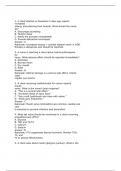
1. A client started on fluoxetine 5 days ago reports
increased
energy and planning their funeral. What should the nurse
do?
A. Encourage journaling
B. Monitor sleep
C. Notify the provider immediately
D. Provide distraction techniques
Answer: C
Rationale: Increased energy + suicidal ideation early in SSRI
therapy is dangerous and should be reported.
2. A nurse is teaching a client about hydroxychloroquine
for
lupus. What adverse effect should be reported immediately?
A. Dizziness
B. Blurred vision
C. Dry mouth
D. Rash
Answer: B
Rationale: Retinal damage is a serious side effect. Clients
need
regular eye exams.
3. A client receiving methotrexate for cancer reports
mouth
sores. What is the nurse's best response?
A. “This is a normal side effect.”
B. “Increase intake of spicy food.”
C. “Use a soft toothbrush and rinse with saline.”
D. “Chew gum frequently.”
Answer: C
Rationale: Mouth sores (stomatitis) are common. Gentle oral
care
is essential to prevent infection and discomfort.
4. What lab value should be monitored in a client receiving
propylthiouracil (PTU)?
A. Glucose
B. TSH and T3/T4
C. Calcium
D. Sodium
Answer: B
Rationale: PTU suppresses thyroid hormone. Monitor TSH,
T3, and
T4 to assess effectiveness.
5. A client asks about insulin glargine (Lantus). What is the
, correct response?
A. “It works immediately.”
B. “It peaks in 4 hours.”
C. “It has no peak and lasts 24 hours.”
D. “It must be mixed with regular insulin.”
Answer: C
Rationale: Glargine is a long-acting insulin with no
pronounced
peak, providing steady glucose control.
6. A client is using a scopolamine patch for motion sickness.
What side effect should the nurse monitor?
A. Diarrhea
B. Blurred vision and dry mouth
C. Rash
D. Hearing loss
Answer: B
Rationale: Scopolamine has anticholinergic effects like dry
mouth,
blurred vision, and urinary retention.
7. Which lab value should be monitored regularly for a
client on
statins?
A. BUN
B. AST and ALT
C. Sodium
D. Hematocrit
Answer: B
Rationale: Statins can cause liver damage. Monitor liver
enzymes
(AST/ALT).
8. A client with a penicillin allergy is prescribed
cephalexin. What
is the nurse’s priority?
A. Administer as ordered
B. Ask about previous reaction type
C. Hold the dose for 30 minutes
D. Give with food
Answer: B
Rationale: Cross-sensitivity may occur. Ask if the client had
A. true
anaphylactic reaction before administering.
9. A nurse is reviewing a client’s chart who is prescribed
gentamicin. Which finding should concern the nurse most?
A. Tinnitus
B. WBC 10,000
C. Urine output 50 mL/hr
increased
energy and planning their funeral. What should the nurse
do?
A. Encourage journaling
B. Monitor sleep
C. Notify the provider immediately
D. Provide distraction techniques
Answer: C
Rationale: Increased energy + suicidal ideation early in SSRI
therapy is dangerous and should be reported.
2. A nurse is teaching a client about hydroxychloroquine
for
lupus. What adverse effect should be reported immediately?
A. Dizziness
B. Blurred vision
C. Dry mouth
D. Rash
Answer: B
Rationale: Retinal damage is a serious side effect. Clients
need
regular eye exams.
3. A client receiving methotrexate for cancer reports
mouth
sores. What is the nurse's best response?
A. “This is a normal side effect.”
B. “Increase intake of spicy food.”
C. “Use a soft toothbrush and rinse with saline.”
D. “Chew gum frequently.”
Answer: C
Rationale: Mouth sores (stomatitis) are common. Gentle oral
care
is essential to prevent infection and discomfort.
4. What lab value should be monitored in a client receiving
propylthiouracil (PTU)?
A. Glucose
B. TSH and T3/T4
C. Calcium
D. Sodium
Answer: B
Rationale: PTU suppresses thyroid hormone. Monitor TSH,
T3, and
T4 to assess effectiveness.
5. A client asks about insulin glargine (Lantus). What is the
, correct response?
A. “It works immediately.”
B. “It peaks in 4 hours.”
C. “It has no peak and lasts 24 hours.”
D. “It must be mixed with regular insulin.”
Answer: C
Rationale: Glargine is a long-acting insulin with no
pronounced
peak, providing steady glucose control.
6. A client is using a scopolamine patch for motion sickness.
What side effect should the nurse monitor?
A. Diarrhea
B. Blurred vision and dry mouth
C. Rash
D. Hearing loss
Answer: B
Rationale: Scopolamine has anticholinergic effects like dry
mouth,
blurred vision, and urinary retention.
7. Which lab value should be monitored regularly for a
client on
statins?
A. BUN
B. AST and ALT
C. Sodium
D. Hematocrit
Answer: B
Rationale: Statins can cause liver damage. Monitor liver
enzymes
(AST/ALT).
8. A client with a penicillin allergy is prescribed
cephalexin. What
is the nurse’s priority?
A. Administer as ordered
B. Ask about previous reaction type
C. Hold the dose for 30 minutes
D. Give with food
Answer: B
Rationale: Cross-sensitivity may occur. Ask if the client had
A. true
anaphylactic reaction before administering.
9. A nurse is reviewing a client’s chart who is prescribed
gentamicin. Which finding should concern the nurse most?
A. Tinnitus
B. WBC 10,000
C. Urine output 50 mL/hr


