
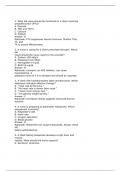
1. What lab value should be monitored in a client receiving
propylthiouracil (PTU)?
A. Glucose
B. TSH and T3/T4
C. Calcium
D. Sodium
Answer: B
Rationale: PTU suppresses thyroid hormone. Monitor TSH,
T3, and
T4 to assess effectiveness.
2. A nurse is caring for a client prescribed lisinopril. Which
lab
result should the nurse report to the provider?
A. Sodium 138 mEq/L
B. Potassium 5.8 mEq/L
C. Hemoglobin 14 g/dL
D. BUN 18 mg/dL
Answer: B
Rationale: Lisinopril, an ACE inhibitor, can cause
hyperkalemia. A
potassium level of 5.8 is elevated and should be reported.
3. A client with hypothyroidism takes levothyroxine. Which
statement indicates effective therapy?
A. “I feel cold all the time.”
B. “My heart rate is slower than usual.”
C. “I have more energy now.”
D. “I’m gaining weight quickly.”
Answer: C
Rationale: Increased energy suggests improved thyroid
function.
4. A nurse is preparing to administer metoprolol. Which
assessment is priority?
A. Respiratory rate
B. Heart rate
C. Oxygen saturation
D. Blood glucose
Answer: B
Rationale: Metoprolol can cause bradycardia. Always check
HR
before administering.
5. A client taking haloperidol develops a high fever and
muscle
rigidity. What should the nurse suspect?
A. Serotonin syndrome
, B. Neuroleptic malignant syndrome (NMS)
C. Tardive dyskinesia
D. Extrapyramidal symptoms (EPS)
Answer: B
Rationale: NMS is a rare but fatal reaction to antipsychotics.
Requires immediate intervention.
6. A client with chronic constipation uses magnesium
citrate
daily. What risk should the nurse discuss?
A. Hypertension
B. Hypernatremia
C. Electrolyte imbalance
D. Dehydration
Answer: C
Rationale: Chronic laxative use, especially osmotic types
like
magnesium citrate, causes fluid and electrolyte imbalances.
7. A client receiving amphotericin B develops chills and
fever.
What should the nurse do?
A. Stop the infusion
B. Document findings
C. Pre-medicate with acetaminophen
D. Increase infusion rate
Answer: C
Rationale: Infusion reactions are common. Premedication
with
acetaminophen or diphenhydramine is standard.
8. A client is prescribed exenatide. What is a common side
effect?
A. Hyperglycemia
B. Constipation
C. Nausea
D. Tachycardia
Answer: C
Rationale: Exenatide can cause nausea, especially when
initiating
therapy. It’s an injectable incretin mimetic.
9. What should the nurse include when teaching a client
taking
ferrous sulfate?
A. Take with milk
B. Take with food if GI upset occurs
C. Expect pale stools
D. Avoid vitamin C
Answer: B
propylthiouracil (PTU)?
A. Glucose
B. TSH and T3/T4
C. Calcium
D. Sodium
Answer: B
Rationale: PTU suppresses thyroid hormone. Monitor TSH,
T3, and
T4 to assess effectiveness.
2. A nurse is caring for a client prescribed lisinopril. Which
lab
result should the nurse report to the provider?
A. Sodium 138 mEq/L
B. Potassium 5.8 mEq/L
C. Hemoglobin 14 g/dL
D. BUN 18 mg/dL
Answer: B
Rationale: Lisinopril, an ACE inhibitor, can cause
hyperkalemia. A
potassium level of 5.8 is elevated and should be reported.
3. A client with hypothyroidism takes levothyroxine. Which
statement indicates effective therapy?
A. “I feel cold all the time.”
B. “My heart rate is slower than usual.”
C. “I have more energy now.”
D. “I’m gaining weight quickly.”
Answer: C
Rationale: Increased energy suggests improved thyroid
function.
4. A nurse is preparing to administer metoprolol. Which
assessment is priority?
A. Respiratory rate
B. Heart rate
C. Oxygen saturation
D. Blood glucose
Answer: B
Rationale: Metoprolol can cause bradycardia. Always check
HR
before administering.
5. A client taking haloperidol develops a high fever and
muscle
rigidity. What should the nurse suspect?
A. Serotonin syndrome
, B. Neuroleptic malignant syndrome (NMS)
C. Tardive dyskinesia
D. Extrapyramidal symptoms (EPS)
Answer: B
Rationale: NMS is a rare but fatal reaction to antipsychotics.
Requires immediate intervention.
6. A client with chronic constipation uses magnesium
citrate
daily. What risk should the nurse discuss?
A. Hypertension
B. Hypernatremia
C. Electrolyte imbalance
D. Dehydration
Answer: C
Rationale: Chronic laxative use, especially osmotic types
like
magnesium citrate, causes fluid and electrolyte imbalances.
7. A client receiving amphotericin B develops chills and
fever.
What should the nurse do?
A. Stop the infusion
B. Document findings
C. Pre-medicate with acetaminophen
D. Increase infusion rate
Answer: C
Rationale: Infusion reactions are common. Premedication
with
acetaminophen or diphenhydramine is standard.
8. A client is prescribed exenatide. What is a common side
effect?
A. Hyperglycemia
B. Constipation
C. Nausea
D. Tachycardia
Answer: C
Rationale: Exenatide can cause nausea, especially when
initiating
therapy. It’s an injectable incretin mimetic.
9. What should the nurse include when teaching a client
taking
ferrous sulfate?
A. Take with milk
B. Take with food if GI upset occurs
C. Expect pale stools
D. Avoid vitamin C
Answer: B


