
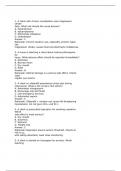
1. A client with chronic constipation uses magnesium
citrate
daily. What risk should the nurse discuss?
A. Hypertension
B. Hypernatremia
C. Electrolyte imbalance
D. Dehydration
Answer: C
Rationale: Chronic laxative use, especially osmotic types
like
magnesium citrate, causes fluid and electrolyte imbalances.
2. A nurse is teaching a client about hydroxychloroquine
for
lupus. What adverse effect should be reported immediately?
A. Dizziness
B. Blurred vision
C. Dry mouth
D. Rash
Answer: B
Rationale: Retinal damage is a serious side effect. Clients
need
regular eye exams.
3. A client on sildenafil experiences chest pain during
intercourse. What is the nurse’s next action?
A. Administer nitroglycerin
B. Encourage rest and fluids
C. Call emergency services
D. Administer aspirin
Answer: C
Rationale: Sildenafil + nitrates can cause life-threatening
hypotension. Do not give nitro—call 911.
4. A client is prescribed bupropion for smoking cessation.
Which
side effect is most serious?
A. Dry mouth
B. Insomnia
C. Seizures
D. Weight loss
Answer: C
Rationale: Bupropion lowers seizure threshold. Clients at
risk (e.g.,
with eating disorders) need close monitoring.
5. A client is started on lorazepam for anxiety. Which
teaching
, point is essential?
A. “Avoid grapefruit juice.”
B. “Take with NSAIDs.”
C. “Do not stop abruptly.”
D. “It may take weeks to work.”
Answer: C
Rationale: Benzodiazepines must be tapered to prevent
withdrawal symptoms and seizures.
6. A client is using a scopolamine patch for motion sickness.
What side effect should the nurse monitor?
A. Diarrhea
B. Blurred vision and dry mouth
C. Rash
D. Hearing loss
Answer: B
Rationale: Scopolamine has anticholinergic effects like dry
mouth,
blurred vision, and urinary retention.
7. A nurse teaches a client taking cyclobenzaprine. Which
statement indicates understanding?
A. “I will take this long-term.”
B. “I can drink alcohol in moderation.”
C. “I should avoid driving until I know how it affects me.”
D. “It will help my heart condition.”
Answer: C
Rationale: Cyclobenzaprine causes drowsiness. Clients
should
avoid driving or alcohol initially.
8. Which lab value should be monitored regularly for a
client on
statins?
A. BUN
B. AST and ALT
C. Sodium
D. Hematocrit
Answer: B
Rationale: Statins can cause liver damage. Monitor liver
enzymes
(AST/ALT).
9. A client on sertraline reports increased restlessness
and
confusion. What should the nurse suspect?
A. Extrapyramidal symptoms
B. Lithium toxicity
C. Serotonin syndrome
D. Neuroleptic malignant syndrome
citrate
daily. What risk should the nurse discuss?
A. Hypertension
B. Hypernatremia
C. Electrolyte imbalance
D. Dehydration
Answer: C
Rationale: Chronic laxative use, especially osmotic types
like
magnesium citrate, causes fluid and electrolyte imbalances.
2. A nurse is teaching a client about hydroxychloroquine
for
lupus. What adverse effect should be reported immediately?
A. Dizziness
B. Blurred vision
C. Dry mouth
D. Rash
Answer: B
Rationale: Retinal damage is a serious side effect. Clients
need
regular eye exams.
3. A client on sildenafil experiences chest pain during
intercourse. What is the nurse’s next action?
A. Administer nitroglycerin
B. Encourage rest and fluids
C. Call emergency services
D. Administer aspirin
Answer: C
Rationale: Sildenafil + nitrates can cause life-threatening
hypotension. Do not give nitro—call 911.
4. A client is prescribed bupropion for smoking cessation.
Which
side effect is most serious?
A. Dry mouth
B. Insomnia
C. Seizures
D. Weight loss
Answer: C
Rationale: Bupropion lowers seizure threshold. Clients at
risk (e.g.,
with eating disorders) need close monitoring.
5. A client is started on lorazepam for anxiety. Which
teaching
, point is essential?
A. “Avoid grapefruit juice.”
B. “Take with NSAIDs.”
C. “Do not stop abruptly.”
D. “It may take weeks to work.”
Answer: C
Rationale: Benzodiazepines must be tapered to prevent
withdrawal symptoms and seizures.
6. A client is using a scopolamine patch for motion sickness.
What side effect should the nurse monitor?
A. Diarrhea
B. Blurred vision and dry mouth
C. Rash
D. Hearing loss
Answer: B
Rationale: Scopolamine has anticholinergic effects like dry
mouth,
blurred vision, and urinary retention.
7. A nurse teaches a client taking cyclobenzaprine. Which
statement indicates understanding?
A. “I will take this long-term.”
B. “I can drink alcohol in moderation.”
C. “I should avoid driving until I know how it affects me.”
D. “It will help my heart condition.”
Answer: C
Rationale: Cyclobenzaprine causes drowsiness. Clients
should
avoid driving or alcohol initially.
8. Which lab value should be monitored regularly for a
client on
statins?
A. BUN
B. AST and ALT
C. Sodium
D. Hematocrit
Answer: B
Rationale: Statins can cause liver damage. Monitor liver
enzymes
(AST/ALT).
9. A client on sertraline reports increased restlessness
and
confusion. What should the nurse suspect?
A. Extrapyramidal symptoms
B. Lithium toxicity
C. Serotonin syndrome
D. Neuroleptic malignant syndrome


