
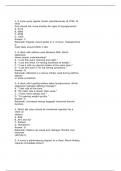
1. A nurse gives regular insulin subcutaneously at 0700. At
what
time should the nurse monitor for signs of hypoglycemia?
A. 0715
B. 0800
C. 0930
D. 1200
Answer: C
Rationale: Regular insulin peaks in 2–4 hours. Hypoglycemia
is
most likely around 0930–1100.
2. A client with asthma uses albuterol PRN. Which
statement
shows proper understanding?
A. “I use this every morning and night.”
B. “I use this when I’m having shortness of breath.”
C. “I use it with my steroid inhaler at the same time.”
D. “I use this even if I’m not having symptoms.”
Answer: B
Rationale: Albuterol is a rescue inhaler used during asthma
attacks
or acute symptoms.
3. A client with hypothyroidism takes levothyroxine. Which
statement indicates effective therapy?
A. “I feel cold all the time.”
B. “My heart rate is slower than usual.”
C. “I have more energy now.”
D. “I’m gaining weight quickly.”
Answer: C
Rationale: Increased energy suggests improved thyroid
function.
4. Which lab value should be monitored regularly for a
client on
statins?
A. BUN
B. AST and ALT
C. Sodium
D. Hematocrit
Answer: B
Rationale: Statins can cause liver damage. Monitor liver
enzymes
(AST/ALT).
5. A nurse is administering digoxin to a client. Which finding
requires immediate action?
, A. HR 62 bpm
B. Blurred vision with yellow halos
C. BP 140/88 mmHg
D. Urine output 400 mL in 8 hours
Answer: B
Rationale: Visual disturbances and halos are signs of
digoxin
toxicity, especially when paired with bradycardia.
6. A client is prescribed loratadine for seasonal allergies.
What is
A. key difference from diphenhydramine?
A. Loratadine causes more drowsiness
B. Loratadine causes GI upset
C. Loratadine is non-sedating
D. Loratadine is only available IV
Answer: C
Rationale: Second-generation antihistamines like loratadine
are
non-sedating.
7. A client with myasthenia gravis is prescribed
neostigmine.
Which finding indicates underdosing?
A. Bradycardia
B. Muscle weakness
C. Diarrhea
D. Excessive salivation
Answer: B
Rationale: Muscle weakness could indicate myasthenic
crisis,
requiring dosage adjustment.
8. A client is prescribed exenatide. What is a common side
effect?
A. Hyperglycemia
B. Constipation
C. Nausea
D. Tachycardia
Answer: C
Rationale: Exenatide can cause nausea, especially when
initiating
therapy. It’s an injectable incretin mimetic.
9. A nurse is caring for a client prescribed lisinopril. Which
lab
result should the nurse report to the provider?
A. Sodium 138 mEq/L
B. Potassium 5.8 mEq/L
C. Hemoglobin 14 g/dL
what
time should the nurse monitor for signs of hypoglycemia?
A. 0715
B. 0800
C. 0930
D. 1200
Answer: C
Rationale: Regular insulin peaks in 2–4 hours. Hypoglycemia
is
most likely around 0930–1100.
2. A client with asthma uses albuterol PRN. Which
statement
shows proper understanding?
A. “I use this every morning and night.”
B. “I use this when I’m having shortness of breath.”
C. “I use it with my steroid inhaler at the same time.”
D. “I use this even if I’m not having symptoms.”
Answer: B
Rationale: Albuterol is a rescue inhaler used during asthma
attacks
or acute symptoms.
3. A client with hypothyroidism takes levothyroxine. Which
statement indicates effective therapy?
A. “I feel cold all the time.”
B. “My heart rate is slower than usual.”
C. “I have more energy now.”
D. “I’m gaining weight quickly.”
Answer: C
Rationale: Increased energy suggests improved thyroid
function.
4. Which lab value should be monitored regularly for a
client on
statins?
A. BUN
B. AST and ALT
C. Sodium
D. Hematocrit
Answer: B
Rationale: Statins can cause liver damage. Monitor liver
enzymes
(AST/ALT).
5. A nurse is administering digoxin to a client. Which finding
requires immediate action?
, A. HR 62 bpm
B. Blurred vision with yellow halos
C. BP 140/88 mmHg
D. Urine output 400 mL in 8 hours
Answer: B
Rationale: Visual disturbances and halos are signs of
digoxin
toxicity, especially when paired with bradycardia.
6. A client is prescribed loratadine for seasonal allergies.
What is
A. key difference from diphenhydramine?
A. Loratadine causes more drowsiness
B. Loratadine causes GI upset
C. Loratadine is non-sedating
D. Loratadine is only available IV
Answer: C
Rationale: Second-generation antihistamines like loratadine
are
non-sedating.
7. A client with myasthenia gravis is prescribed
neostigmine.
Which finding indicates underdosing?
A. Bradycardia
B. Muscle weakness
C. Diarrhea
D. Excessive salivation
Answer: B
Rationale: Muscle weakness could indicate myasthenic
crisis,
requiring dosage adjustment.
8. A client is prescribed exenatide. What is a common side
effect?
A. Hyperglycemia
B. Constipation
C. Nausea
D. Tachycardia
Answer: C
Rationale: Exenatide can cause nausea, especially when
initiating
therapy. It’s an injectable incretin mimetic.
9. A nurse is caring for a client prescribed lisinopril. Which
lab
result should the nurse report to the provider?
A. Sodium 138 mEq/L
B. Potassium 5.8 mEq/L
C. Hemoglobin 14 g/dL


