
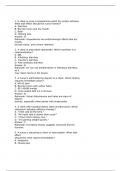
1. A client is using a scopolamine patch for motion sickness.
What side effect should the nurse monitor?
A. Diarrhea
B. Blurred vision and dry mouth
C. Rash
D. Hearing loss
Answer: B
Rationale: Scopolamine has anticholinergic effects like dry
mouth,
blurred vision, and urinary retention.
2. A client is prescribed loperamide. Which condition is a
contraindication?
A. IBS
B. Infectious diarrhea
C. Traveler’s diarrhea
D. Post-antibiotic diarrhea
Answer: B
Rationale: Do not use antidiarrheals in infectious diarrhea,
as it
may retain toxins in the bowel.
3. A nurse is administering digoxin to a client. Which finding
requires immediate action?
A. HR 62 bpm
B. Blurred vision with yellow halos
C. BP 140/88 mmHg
D. Urine output 400 mL in 8 hours
Answer: B
Rationale: Visual disturbances and halos are signs of
digoxin
toxicity, especially when paired with bradycardia.
4. A client with hypothyroidism takes levothyroxine. Which
statement indicates effective therapy?
A. “I feel cold all the time.”
B. “My heart rate is slower than usual.”
C. “I have more energy now.”
D. “I’m gaining weight quickly.”
Answer: C
Rationale: Increased energy suggests improved thyroid
function.
5. A nurse is educating a client on atorvastatin. What side
effect
should the client report immediately?
A. Headache
B. Muscle pain
, C. Drowsiness
D. Constipation
Answer: B
Rationale: Myopathy can occur with statins and may
progress to
rhabdomyolysis. Report muscle pain immediately.
6. A client with asthma uses albuterol PRN. Which
statement
shows proper understanding?
A. “I use this every morning and night.”
B. “I use this when I’m having shortness of breath.”
C. “I use it with my steroid inhaler at the same time.”
D. “I use this even if I’m not having symptoms.”
Answer: B
Rationale: Albuterol is a rescue inhaler used during asthma
attacks
or acute symptoms.
7. A client taking carbidopa/levodopa reports facial
twitching
and eye spasms. What should the nurse do?
A. Reassure the client this is expected
B. Hold the dose and notify the provider
C. Administer diphenhydramine
D. Document and continue monitoring
Answer: B
Rationale: Facial twitching and spasms are signs of toxicity.
Notify
the provider to adjust dosage.
8. A client is started on lorazepam for anxiety. Which
teaching
point is essential?
A. “Avoid grapefruit juice.”
B. “Take with NSAIDs.”
C. “Do not stop abruptly.”
D. “It may take weeks to work.”
Answer: C
Rationale: Benzodiazepines must be tapered to prevent
withdrawal symptoms and seizures.
9. A client with a penicillin allergy is prescribed
cephalexin. What
is the nurse’s priority?
A. Administer as ordered
B. Ask about previous reaction type
C. Hold the dose for 30 minutes
D. Give with food
Answer: B
What side effect should the nurse monitor?
A. Diarrhea
B. Blurred vision and dry mouth
C. Rash
D. Hearing loss
Answer: B
Rationale: Scopolamine has anticholinergic effects like dry
mouth,
blurred vision, and urinary retention.
2. A client is prescribed loperamide. Which condition is a
contraindication?
A. IBS
B. Infectious diarrhea
C. Traveler’s diarrhea
D. Post-antibiotic diarrhea
Answer: B
Rationale: Do not use antidiarrheals in infectious diarrhea,
as it
may retain toxins in the bowel.
3. A nurse is administering digoxin to a client. Which finding
requires immediate action?
A. HR 62 bpm
B. Blurred vision with yellow halos
C. BP 140/88 mmHg
D. Urine output 400 mL in 8 hours
Answer: B
Rationale: Visual disturbances and halos are signs of
digoxin
toxicity, especially when paired with bradycardia.
4. A client with hypothyroidism takes levothyroxine. Which
statement indicates effective therapy?
A. “I feel cold all the time.”
B. “My heart rate is slower than usual.”
C. “I have more energy now.”
D. “I’m gaining weight quickly.”
Answer: C
Rationale: Increased energy suggests improved thyroid
function.
5. A nurse is educating a client on atorvastatin. What side
effect
should the client report immediately?
A. Headache
B. Muscle pain
, C. Drowsiness
D. Constipation
Answer: B
Rationale: Myopathy can occur with statins and may
progress to
rhabdomyolysis. Report muscle pain immediately.
6. A client with asthma uses albuterol PRN. Which
statement
shows proper understanding?
A. “I use this every morning and night.”
B. “I use this when I’m having shortness of breath.”
C. “I use it with my steroid inhaler at the same time.”
D. “I use this even if I’m not having symptoms.”
Answer: B
Rationale: Albuterol is a rescue inhaler used during asthma
attacks
or acute symptoms.
7. A client taking carbidopa/levodopa reports facial
twitching
and eye spasms. What should the nurse do?
A. Reassure the client this is expected
B. Hold the dose and notify the provider
C. Administer diphenhydramine
D. Document and continue monitoring
Answer: B
Rationale: Facial twitching and spasms are signs of toxicity.
Notify
the provider to adjust dosage.
8. A client is started on lorazepam for anxiety. Which
teaching
point is essential?
A. “Avoid grapefruit juice.”
B. “Take with NSAIDs.”
C. “Do not stop abruptly.”
D. “It may take weeks to work.”
Answer: C
Rationale: Benzodiazepines must be tapered to prevent
withdrawal symptoms and seizures.
9. A client with a penicillin allergy is prescribed
cephalexin. What
is the nurse’s priority?
A. Administer as ordered
B. Ask about previous reaction type
C. Hold the dose for 30 minutes
D. Give with food
Answer: B


