
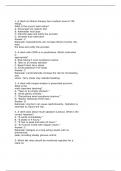
1. A client on lithium therapy has a sodium level of 128
mEq/L.
What is the nurse's best action?
A. Encourage low-sodium diet
B. Administer next dose
C. Hold the dose and notify the provider
D. Increase fluid restriction
Answer: C
Rationale: Hyponatremia can increase lithium toxicity risk.
Hold
the dose and notify the provider.
2. A client with COPD is on prednisone. Which instruction
is
appropriate?
A. Stop taking it once symptoms resolve
B. Take on an empty stomach
C. Report black tarry stools
D. Avoid potassium-rich foods
Answer: C
Rationale: Corticosteroids increase the risk for GI bleeding
and
ulcers. Tarry stools may indicate bleeding.
3. A client with herpes simplex is prescribed acyclovir.
What is the
most important teaching?
A. "Take on an empty stomach."
B. "Drink plenty of fluids."
C. "Discontinue when symptoms improve."
D. "Expect yellowing of the eyes."
Answer: B
Rationale: Acyclovir can cause nephrotoxicity. Hydration is
essential to reduce the risk.
4. A client asks about insulin glargine (Lantus). What is the
correct response?
A. “It works immediately.”
B. “It peaks in 4 hours.”
C. “It has no peak and lasts 24 hours.”
D. “It must be mixed with regular insulin.”
Answer: C
Rationale: Glargine is a long-acting insulin with no
pronounced
peak, providing steady glucose control.
5. Which lab value should be monitored regularly for a
client on
, statins?
A. BUN
B. AST and ALT
C. Sodium
D. Hematocrit
Answer: B
Rationale: Statins can cause liver damage. Monitor liver
enzymes
(AST/ALT).
6. A nurse monitors a client taking lamotrigine. What
adverse
effect should prompt discontinuation?
A. Rash
B. Constipation
C. Nausea
D. Drowsiness
Answer: A
Rationale: Lamotrigine can cause a life-threatening rash
(e.g.,
Stevens-Johnson syndrome). Report immediately.
7. A child prescribed methylphenidate for ADHD should be
monitored for which effect?
A. Drowsiness
B. Increased appetite
C. Weight loss and insomnia
D. Bradycardia
Answer: C
Rationale: Stimulants like methylphenidate commonly cause
decreased appetite, insomnia, and weight loss.
8. A nurse is teaching a client about hydroxychloroquine
for
lupus. What adverse effect should be reported immediately?
A. Dizziness
B. Blurred vision
C. Dry mouth
D. Rash
Answer: B
Rationale: Retinal damage is a serious side effect. Clients
need
regular eye exams.
9. A client taking haloperidol develops a high fever and
muscle
rigidity. What should the nurse suspect?
A. Serotonin syndrome
B. Neuroleptic malignant syndrome (NMS)
C. Tardive dyskinesia
mEq/L.
What is the nurse's best action?
A. Encourage low-sodium diet
B. Administer next dose
C. Hold the dose and notify the provider
D. Increase fluid restriction
Answer: C
Rationale: Hyponatremia can increase lithium toxicity risk.
Hold
the dose and notify the provider.
2. A client with COPD is on prednisone. Which instruction
is
appropriate?
A. Stop taking it once symptoms resolve
B. Take on an empty stomach
C. Report black tarry stools
D. Avoid potassium-rich foods
Answer: C
Rationale: Corticosteroids increase the risk for GI bleeding
and
ulcers. Tarry stools may indicate bleeding.
3. A client with herpes simplex is prescribed acyclovir.
What is the
most important teaching?
A. "Take on an empty stomach."
B. "Drink plenty of fluids."
C. "Discontinue when symptoms improve."
D. "Expect yellowing of the eyes."
Answer: B
Rationale: Acyclovir can cause nephrotoxicity. Hydration is
essential to reduce the risk.
4. A client asks about insulin glargine (Lantus). What is the
correct response?
A. “It works immediately.”
B. “It peaks in 4 hours.”
C. “It has no peak and lasts 24 hours.”
D. “It must be mixed with regular insulin.”
Answer: C
Rationale: Glargine is a long-acting insulin with no
pronounced
peak, providing steady glucose control.
5. Which lab value should be monitored regularly for a
client on
, statins?
A. BUN
B. AST and ALT
C. Sodium
D. Hematocrit
Answer: B
Rationale: Statins can cause liver damage. Monitor liver
enzymes
(AST/ALT).
6. A nurse monitors a client taking lamotrigine. What
adverse
effect should prompt discontinuation?
A. Rash
B. Constipation
C. Nausea
D. Drowsiness
Answer: A
Rationale: Lamotrigine can cause a life-threatening rash
(e.g.,
Stevens-Johnson syndrome). Report immediately.
7. A child prescribed methylphenidate for ADHD should be
monitored for which effect?
A. Drowsiness
B. Increased appetite
C. Weight loss and insomnia
D. Bradycardia
Answer: C
Rationale: Stimulants like methylphenidate commonly cause
decreased appetite, insomnia, and weight loss.
8. A nurse is teaching a client about hydroxychloroquine
for
lupus. What adverse effect should be reported immediately?
A. Dizziness
B. Blurred vision
C. Dry mouth
D. Rash
Answer: B
Rationale: Retinal damage is a serious side effect. Clients
need
regular eye exams.
9. A client taking haloperidol develops a high fever and
muscle
rigidity. What should the nurse suspect?
A. Serotonin syndrome
B. Neuroleptic malignant syndrome (NMS)
C. Tardive dyskinesia


