
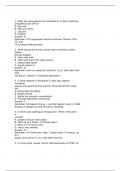
1. What lab value should be monitored in a client receiving
propylthiouracil (PTU)?
A. Glucose
B. TSH and T3/T4
C. Calcium
D. Sodium
Answer: B
Rationale: PTU suppresses thyroid hormone. Monitor TSH,
T3, and
T4 to assess effectiveness.
2. What should the nurse include when teaching a client
taking
ferrous sulfate?
A. Take with milk
B. Take with food if GI upset occurs
C. Expect pale stools
D. Avoid vitamin C
Answer: B
Rationale: Iron can upset the stomach. If so, take with food
(but
not dairy). Vitamin C increases absorption.
3. A client started on fluoxetine 5 days ago reports
increased
energy and planning their funeral. What should the nurse
do?
A. Encourage journaling
B. Monitor sleep
C. Notify the provider immediately
D. Provide distraction techniques
Answer: C
Rationale: Increased energy + suicidal ideation early in SSRI
therapy is dangerous and should be reported.
4. A client uses sublingual nitroglycerin. Which instruction
is
correct?
A. Swallow the pill with water
B. Take up to 3 doses, 5 minutes apart
C. Store it in a warm area
D. Use it once weekly
Answer: B
Rationale: For chest pain, take 1 tablet every 5 minutes, up
to 3
doses, and call 911 if no relief after the first.
5. A nurse gives regular insulin subcutaneously at 0700. At
, what
time should the nurse monitor for signs of hypoglycemia?
A. 0715
B. 0800
C. 0930
D. 1200
Answer: C
Rationale: Regular insulin peaks in 2–4 hours. Hypoglycemia
is
most likely around 0930–1100.
6. A client taking isoniazid (INH) for tuberculosis develops
numbness and tingling in their hands and feet. What should
the
nurse anticipate?
A. The need for increased calcium
B. Administration of pyridoxine (vitamin B6)
C. Discontinuation of therapy
D. Addition of prednisone
Answer: B
Rationale: Isoniazid can cause peripheral neuropathy, often
prevented or treated with vitamin B6.
7. A client receiving amphotericin B develops chills and
fever.
What should the nurse do?
A. Stop the infusion
B. Document findings
C. Pre-medicate with acetaminophen
D. Increase infusion rate
Answer: C
Rationale: Infusion reactions are common. Premedication
with
acetaminophen or diphenhydramine is standard.
8. A client receiving methotrexate for cancer reports
mouth
sores. What is the nurse's best response?
A. “This is a normal side effect.”
B. “Increase intake of spicy food.”
C. “Use a soft toothbrush and rinse with saline.”
D. “Chew gum frequently.”
Answer: C
Rationale: Mouth sores (stomatitis) are common. Gentle oral
care
is essential to prevent infection and discomfort.
9. A nurse is teaching a client about hydroxychloroquine
for
lupus. What adverse effect should be reported immediately?
propylthiouracil (PTU)?
A. Glucose
B. TSH and T3/T4
C. Calcium
D. Sodium
Answer: B
Rationale: PTU suppresses thyroid hormone. Monitor TSH,
T3, and
T4 to assess effectiveness.
2. What should the nurse include when teaching a client
taking
ferrous sulfate?
A. Take with milk
B. Take with food if GI upset occurs
C. Expect pale stools
D. Avoid vitamin C
Answer: B
Rationale: Iron can upset the stomach. If so, take with food
(but
not dairy). Vitamin C increases absorption.
3. A client started on fluoxetine 5 days ago reports
increased
energy and planning their funeral. What should the nurse
do?
A. Encourage journaling
B. Monitor sleep
C. Notify the provider immediately
D. Provide distraction techniques
Answer: C
Rationale: Increased energy + suicidal ideation early in SSRI
therapy is dangerous and should be reported.
4. A client uses sublingual nitroglycerin. Which instruction
is
correct?
A. Swallow the pill with water
B. Take up to 3 doses, 5 minutes apart
C. Store it in a warm area
D. Use it once weekly
Answer: B
Rationale: For chest pain, take 1 tablet every 5 minutes, up
to 3
doses, and call 911 if no relief after the first.
5. A nurse gives regular insulin subcutaneously at 0700. At
, what
time should the nurse monitor for signs of hypoglycemia?
A. 0715
B. 0800
C. 0930
D. 1200
Answer: C
Rationale: Regular insulin peaks in 2–4 hours. Hypoglycemia
is
most likely around 0930–1100.
6. A client taking isoniazid (INH) for tuberculosis develops
numbness and tingling in their hands and feet. What should
the
nurse anticipate?
A. The need for increased calcium
B. Administration of pyridoxine (vitamin B6)
C. Discontinuation of therapy
D. Addition of prednisone
Answer: B
Rationale: Isoniazid can cause peripheral neuropathy, often
prevented or treated with vitamin B6.
7. A client receiving amphotericin B develops chills and
fever.
What should the nurse do?
A. Stop the infusion
B. Document findings
C. Pre-medicate with acetaminophen
D. Increase infusion rate
Answer: C
Rationale: Infusion reactions are common. Premedication
with
acetaminophen or diphenhydramine is standard.
8. A client receiving methotrexate for cancer reports
mouth
sores. What is the nurse's best response?
A. “This is a normal side effect.”
B. “Increase intake of spicy food.”
C. “Use a soft toothbrush and rinse with saline.”
D. “Chew gum frequently.”
Answer: C
Rationale: Mouth sores (stomatitis) are common. Gentle oral
care
is essential to prevent infection and discomfort.
9. A nurse is teaching a client about hydroxychloroquine
for
lupus. What adverse effect should be reported immediately?


