
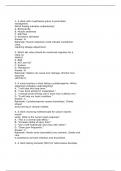
1. A client with myasthenia gravis is prescribed
neostigmine.
Which finding indicates underdosing?
A. Bradycardia
B. Muscle weakness
C. Diarrhea
D. Excessive salivation
Answer: B
Rationale: Muscle weakness could indicate myasthenic
crisis,
requiring dosage adjustment.
2. Which lab value should be monitored regularly for a
client on
statins?
A. BUN
B. AST and ALT
C. Sodium
D. Hematocrit
Answer: B
Rationale: Statins can cause liver damage. Monitor liver
enzymes
(AST/ALT).
3. A nurse teaches a client taking cyclobenzaprine. Which
statement indicates understanding?
A. “I will take this long-term.”
B. “I can drink alcohol in moderation.”
C. “I should avoid driving until I know how it affects me.”
D. “It will help my heart condition.”
Answer: C
Rationale: Cyclobenzaprine causes drowsiness. Clients
should
avoid driving or alcohol initially.
4. A client receiving methotrexate for cancer reports
mouth
sores. What is the nurse's best response?
A. “This is a normal side effect.”
B. “Increase intake of spicy food.”
C. “Use a soft toothbrush and rinse with saline.”
D. “Chew gum frequently.”
Answer: C
Rationale: Mouth sores (stomatitis) are common. Gentle oral
care
is essential to prevent infection and discomfort.
5. A client taking isoniazid (INH) for tuberculosis develops
, numbness and tingling in their hands and feet. What should
the
nurse anticipate?
A. The need for increased calcium
B. Administration of pyridoxine (vitamin B6)
C. Discontinuation of therapy
D. Addition of prednisone
Answer: B
Rationale: Isoniazid can cause peripheral neuropathy, often
prevented or treated with vitamin B6.
6. What should the nurse include when teaching a client
taking
ferrous sulfate?
A. Take with milk
B. Take with food if GI upset occurs
C. Expect pale stools
D. Avoid vitamin C
Answer: B
Rationale: Iron can upset the stomach. If so, take with food
(but
not dairy). Vitamin C increases absorption.
7. A nurse is caring for a client prescribed lisinopril. Which
lab
result should the nurse report to the provider?
A. Sodium 138 mEq/L
B. Potassium 5.8 mEq/L
C. Hemoglobin 14 g/dL
D. BUN 18 mg/dL
Answer: B
Rationale: Lisinopril, an ACE inhibitor, can cause
hyperkalemia. A
potassium level of 5.8 is elevated and should be reported.
8. A client asks about insulin glargine (Lantus). What is the
correct response?
A. “It works immediately.”
B. “It peaks in 4 hours.”
C. “It has no peak and lasts 24 hours.”
D. “It must be mixed with regular insulin.”
Answer: C
Rationale: Glargine is a long-acting insulin with no
pronounced
peak, providing steady glucose control.
9. A client taking warfarin has an INR of 4.2. Which action
should
the nurse take?
A. Administer the next dose of warfarin
neostigmine.
Which finding indicates underdosing?
A. Bradycardia
B. Muscle weakness
C. Diarrhea
D. Excessive salivation
Answer: B
Rationale: Muscle weakness could indicate myasthenic
crisis,
requiring dosage adjustment.
2. Which lab value should be monitored regularly for a
client on
statins?
A. BUN
B. AST and ALT
C. Sodium
D. Hematocrit
Answer: B
Rationale: Statins can cause liver damage. Monitor liver
enzymes
(AST/ALT).
3. A nurse teaches a client taking cyclobenzaprine. Which
statement indicates understanding?
A. “I will take this long-term.”
B. “I can drink alcohol in moderation.”
C. “I should avoid driving until I know how it affects me.”
D. “It will help my heart condition.”
Answer: C
Rationale: Cyclobenzaprine causes drowsiness. Clients
should
avoid driving or alcohol initially.
4. A client receiving methotrexate for cancer reports
mouth
sores. What is the nurse's best response?
A. “This is a normal side effect.”
B. “Increase intake of spicy food.”
C. “Use a soft toothbrush and rinse with saline.”
D. “Chew gum frequently.”
Answer: C
Rationale: Mouth sores (stomatitis) are common. Gentle oral
care
is essential to prevent infection and discomfort.
5. A client taking isoniazid (INH) for tuberculosis develops
, numbness and tingling in their hands and feet. What should
the
nurse anticipate?
A. The need for increased calcium
B. Administration of pyridoxine (vitamin B6)
C. Discontinuation of therapy
D. Addition of prednisone
Answer: B
Rationale: Isoniazid can cause peripheral neuropathy, often
prevented or treated with vitamin B6.
6. What should the nurse include when teaching a client
taking
ferrous sulfate?
A. Take with milk
B. Take with food if GI upset occurs
C. Expect pale stools
D. Avoid vitamin C
Answer: B
Rationale: Iron can upset the stomach. If so, take with food
(but
not dairy). Vitamin C increases absorption.
7. A nurse is caring for a client prescribed lisinopril. Which
lab
result should the nurse report to the provider?
A. Sodium 138 mEq/L
B. Potassium 5.8 mEq/L
C. Hemoglobin 14 g/dL
D. BUN 18 mg/dL
Answer: B
Rationale: Lisinopril, an ACE inhibitor, can cause
hyperkalemia. A
potassium level of 5.8 is elevated and should be reported.
8. A client asks about insulin glargine (Lantus). What is the
correct response?
A. “It works immediately.”
B. “It peaks in 4 hours.”
C. “It has no peak and lasts 24 hours.”
D. “It must be mixed with regular insulin.”
Answer: C
Rationale: Glargine is a long-acting insulin with no
pronounced
peak, providing steady glucose control.
9. A client taking warfarin has an INR of 4.2. Which action
should
the nurse take?
A. Administer the next dose of warfarin


