
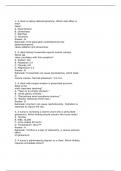
1. A client is taking diphenhydramine. Which side effect is
most
likely?
A. Hypertension
B. Drowsiness
C. Diarrhea
D. Insomnia
Answer: B
Rationale: First-generation antihistamines like
diphenhydramine
cause sedation and drowsiness.
2. A client taking furosemide reports muscle cramps.
Which lab
value correlates with this symptom?
A. Sodium 142
B. Potassium 2.9
C. Chloride 101
D. Magnesium 2.0
Answer: B
Rationale: Furosemide can cause hypokalemia, which leads
to
muscle cramps. Normal potassium: 3.5–5.0.
3. A client with herpes simplex is prescribed acyclovir.
What is the
most important teaching?
A. "Take on an empty stomach."
B. "Drink plenty of fluids."
C. "Discontinue when symptoms improve."
D. "Expect yellowing of the eyes."
Answer: B
Rationale: Acyclovir can cause nephrotoxicity. Hydration is
essential to reduce the risk.
4. A nurse is reviewing a client’s chart who is prescribed
gentamicin. Which finding should concern the nurse most?
A. Tinnitus
B. WBC 10,000
C. Urine output 50 mL/hr
D. Temperature 100.2°F
Answer: A
Rationale: Tinnitus is a sign of ototoxicity, a serious adverse
effect
of gentamicin.
5. A nurse is administering digoxin to a client. Which finding
requires immediate action?
, A. HR 62 bpm
B. Blurred vision with yellow halos
C. BP 140/88 mmHg
D. Urine output 400 mL in 8 hours
Answer: B
Rationale: Visual disturbances and halos are signs of
digoxin
toxicity, especially when paired with bradycardia.
6. A client is started on lorazepam for anxiety. Which
teaching
point is essential?
A. “Avoid grapefruit juice.”
B. “Take with NSAIDs.”
C. “Do not stop abruptly.”
D. “It may take weeks to work.”
Answer: C
Rationale: Benzodiazepines must be tapered to prevent
withdrawal symptoms and seizures.
7. A nurse is educating a client on atorvastatin. What side
effect
should the client report immediately?
A. Headache
B. Muscle pain
C. Drowsiness
D. Constipation
Answer: B
Rationale: Myopathy can occur with statins and may
progress to
rhabdomyolysis. Report muscle pain immediately.
8. A client is prescribed exenatide. What is a common side
effect?
A. Hyperglycemia
B. Constipation
C. Nausea
D. Tachycardia
Answer: C
Rationale: Exenatide can cause nausea, especially when
initiating
therapy. It’s an injectable incretin mimetic.
9. A client taking phenytoin shows swollen, bleeding gums.
What
should the nurse recommend?
A. Discontinue the drug
B. Increase fluid intake
C. Practice good oral hygiene
D. Reduce dietary sugar
most
likely?
A. Hypertension
B. Drowsiness
C. Diarrhea
D. Insomnia
Answer: B
Rationale: First-generation antihistamines like
diphenhydramine
cause sedation and drowsiness.
2. A client taking furosemide reports muscle cramps.
Which lab
value correlates with this symptom?
A. Sodium 142
B. Potassium 2.9
C. Chloride 101
D. Magnesium 2.0
Answer: B
Rationale: Furosemide can cause hypokalemia, which leads
to
muscle cramps. Normal potassium: 3.5–5.0.
3. A client with herpes simplex is prescribed acyclovir.
What is the
most important teaching?
A. "Take on an empty stomach."
B. "Drink plenty of fluids."
C. "Discontinue when symptoms improve."
D. "Expect yellowing of the eyes."
Answer: B
Rationale: Acyclovir can cause nephrotoxicity. Hydration is
essential to reduce the risk.
4. A nurse is reviewing a client’s chart who is prescribed
gentamicin. Which finding should concern the nurse most?
A. Tinnitus
B. WBC 10,000
C. Urine output 50 mL/hr
D. Temperature 100.2°F
Answer: A
Rationale: Tinnitus is a sign of ototoxicity, a serious adverse
effect
of gentamicin.
5. A nurse is administering digoxin to a client. Which finding
requires immediate action?
, A. HR 62 bpm
B. Blurred vision with yellow halos
C. BP 140/88 mmHg
D. Urine output 400 mL in 8 hours
Answer: B
Rationale: Visual disturbances and halos are signs of
digoxin
toxicity, especially when paired with bradycardia.
6. A client is started on lorazepam for anxiety. Which
teaching
point is essential?
A. “Avoid grapefruit juice.”
B. “Take with NSAIDs.”
C. “Do not stop abruptly.”
D. “It may take weeks to work.”
Answer: C
Rationale: Benzodiazepines must be tapered to prevent
withdrawal symptoms and seizures.
7. A nurse is educating a client on atorvastatin. What side
effect
should the client report immediately?
A. Headache
B. Muscle pain
C. Drowsiness
D. Constipation
Answer: B
Rationale: Myopathy can occur with statins and may
progress to
rhabdomyolysis. Report muscle pain immediately.
8. A client is prescribed exenatide. What is a common side
effect?
A. Hyperglycemia
B. Constipation
C. Nausea
D. Tachycardia
Answer: C
Rationale: Exenatide can cause nausea, especially when
initiating
therapy. It’s an injectable incretin mimetic.
9. A client taking phenytoin shows swollen, bleeding gums.
What
should the nurse recommend?
A. Discontinue the drug
B. Increase fluid intake
C. Practice good oral hygiene
D. Reduce dietary sugar


