
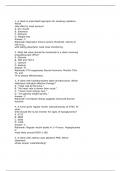
1. A client is prescribed bupropion for smoking cessation.
Which
side effect is most serious?
A. Dry mouth
B. Insomnia
C. Seizures
D. Weight loss
Answer: C
Rationale: Bupropion lowers seizure threshold. Clients at
risk (e.g.,
with eating disorders) need close monitoring.
2. What lab value should be monitored in a client receiving
propylthiouracil (PTU)?
A. Glucose
B. TSH and T3/T4
C. Calcium
D. Sodium
Answer: B
Rationale: PTU suppresses thyroid hormone. Monitor TSH,
T3, and
T4 to assess effectiveness.
3. A client with hypothyroidism takes levothyroxine. Which
statement indicates effective therapy?
A. “I feel cold all the time.”
B. “My heart rate is slower than usual.”
C. “I have more energy now.”
D. “I’m gaining weight quickly.”
Answer: C
Rationale: Increased energy suggests improved thyroid
function.
4. A nurse gives regular insulin subcutaneously at 0700. At
what
time should the nurse monitor for signs of hypoglycemia?
A. 0715
B. 0800
C. 0930
D. 1200
Answer: C
Rationale: Regular insulin peaks in 2–4 hours. Hypoglycemia
is
most likely around 0930–1100.
5. A client with asthma uses albuterol PRN. Which
statement
shows proper understanding?
, A. “I use this every morning and night.”
B. “I use this when I’m having shortness of breath.”
C. “I use it with my steroid inhaler at the same time.”
D. “I use this even if I’m not having symptoms.”
Answer: B
Rationale: Albuterol is a rescue inhaler used during asthma
attacks
or acute symptoms.
6. Which statement indicates proper understanding of
enoxaparin (Lovenox) administration?
A. “I will inject it into my thigh muscle.”
B. “I will rub the site after injection.”
C. “I will inject it into my belly fat.”
D. “I must monitor my INR daily.”
Answer: C
Rationale: Enoxaparin is given subcutaneously, preferably
in the
abdomen, and INR monitoring is not required.
7. A client receiving methotrexate for cancer reports
mouth
sores. What is the nurse's best response?
A. “This is a normal side effect.”
B. “Increase intake of spicy food.”
C. “Use a soft toothbrush and rinse with saline.”
D. “Chew gum frequently.”
Answer: C
Rationale: Mouth sores (stomatitis) are common. Gentle oral
care
is essential to prevent infection and discomfort.
8. A client taking carbidopa/levodopa reports facial
twitching
and eye spasms. What should the nurse do?
A. Reassure the client this is expected
B. Hold the dose and notify the provider
C. Administer diphenhydramine
D. Document and continue monitoring
Answer: B
Rationale: Facial twitching and spasms are signs of toxicity.
Notify
the provider to adjust dosage.
9. A nurse is teaching a client how to apply clotrimazole
vaginal
cream. What instruction is correct?
A. Use during menstruation
B. Stop once symptoms go away
C. Use applicator at bedtime
Which
side effect is most serious?
A. Dry mouth
B. Insomnia
C. Seizures
D. Weight loss
Answer: C
Rationale: Bupropion lowers seizure threshold. Clients at
risk (e.g.,
with eating disorders) need close monitoring.
2. What lab value should be monitored in a client receiving
propylthiouracil (PTU)?
A. Glucose
B. TSH and T3/T4
C. Calcium
D. Sodium
Answer: B
Rationale: PTU suppresses thyroid hormone. Monitor TSH,
T3, and
T4 to assess effectiveness.
3. A client with hypothyroidism takes levothyroxine. Which
statement indicates effective therapy?
A. “I feel cold all the time.”
B. “My heart rate is slower than usual.”
C. “I have more energy now.”
D. “I’m gaining weight quickly.”
Answer: C
Rationale: Increased energy suggests improved thyroid
function.
4. A nurse gives regular insulin subcutaneously at 0700. At
what
time should the nurse monitor for signs of hypoglycemia?
A. 0715
B. 0800
C. 0930
D. 1200
Answer: C
Rationale: Regular insulin peaks in 2–4 hours. Hypoglycemia
is
most likely around 0930–1100.
5. A client with asthma uses albuterol PRN. Which
statement
shows proper understanding?
, A. “I use this every morning and night.”
B. “I use this when I’m having shortness of breath.”
C. “I use it with my steroid inhaler at the same time.”
D. “I use this even if I’m not having symptoms.”
Answer: B
Rationale: Albuterol is a rescue inhaler used during asthma
attacks
or acute symptoms.
6. Which statement indicates proper understanding of
enoxaparin (Lovenox) administration?
A. “I will inject it into my thigh muscle.”
B. “I will rub the site after injection.”
C. “I will inject it into my belly fat.”
D. “I must monitor my INR daily.”
Answer: C
Rationale: Enoxaparin is given subcutaneously, preferably
in the
abdomen, and INR monitoring is not required.
7. A client receiving methotrexate for cancer reports
mouth
sores. What is the nurse's best response?
A. “This is a normal side effect.”
B. “Increase intake of spicy food.”
C. “Use a soft toothbrush and rinse with saline.”
D. “Chew gum frequently.”
Answer: C
Rationale: Mouth sores (stomatitis) are common. Gentle oral
care
is essential to prevent infection and discomfort.
8. A client taking carbidopa/levodopa reports facial
twitching
and eye spasms. What should the nurse do?
A. Reassure the client this is expected
B. Hold the dose and notify the provider
C. Administer diphenhydramine
D. Document and continue monitoring
Answer: B
Rationale: Facial twitching and spasms are signs of toxicity.
Notify
the provider to adjust dosage.
9. A nurse is teaching a client how to apply clotrimazole
vaginal
cream. What instruction is correct?
A. Use during menstruation
B. Stop once symptoms go away
C. Use applicator at bedtime


