
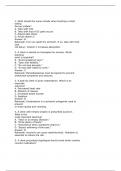
1. What should the nurse include when teaching a client
taking
ferrous sulfate?
A. Take with milk
B. Take with food if GI upset occurs
C. Expect pale stools
D. Avoid vitamin C
Answer: B
Rationale: Iron can upset the stomach. If so, take with food
(but
not dairy). Vitamin C increases absorption.
2. A client is started on lorazepam for anxiety. Which
teaching
point is essential?
A. “Avoid grapefruit juice.”
B. “Take with NSAIDs.”
C. “Do not stop abruptly.”
D. “It may take weeks to work.”
Answer: C
Rationale: Benzodiazepines must be tapered to prevent
withdrawal symptoms and seizures.
3. A post-op client is given ondansetron. Which is an
expected
outcome?
A. Decreased heart rate
B. Absence of nausea
C. Increased bowel sounds
D. Sedation
Answer: B
Rationale: Ondansetron is a serotonin antagonist used to
prevent
or treat nausea and vomiting.
4. A client with herpes simplex is prescribed acyclovir.
What is the
most important teaching?
A. "Take on an empty stomach."
B. "Drink plenty of fluids."
C. "Discontinue when symptoms improve."
D. "Expect yellowing of the eyes."
Answer: B
Rationale: Acyclovir can cause nephrotoxicity. Hydration is
essential to reduce the risk.
5. A client prescribed clopidogrel should avoid which overthe
counter medication?
, A. Acetaminophen
B. Ibuprofen
C. Famotidine
D. Guaifenesin
Answer: B
Rationale: NSAIDs like ibuprofen increase bleeding risk
when
combined with antiplatelet agents like clopidogrel.
6. A client is receiving morphine IV post-op. Which finding
is the
priority?
A. Nausea
B. Respiratory rate of 8/min
C. Itching
D. Sedation score of 2
Answer: B
Rationale: Respiratory depression (<12/min) is the most life
threatening side effect of opioids.
7. A client is prescribed loratadine for seasonal allergies.
What is
A. key difference from diphenhydramine?
A. Loratadine causes more drowsiness
B. Loratadine causes GI upset
C. Loratadine is non-sedating
D. Loratadine is only available IV
Answer: C
Rationale: Second-generation antihistamines like loratadine
are
non-sedating.
8. A client taking omeprazole asks why it is prescribed.
Which
response is correct?
A. "It coats the lining of the stomach."
B. "It neutralizes gastric acid."
C. "It blocks acid production."
D. "It stimulates protective mucus production."
Answer: C
Rationale: Omeprazole is a proton pump inhibitor (PPI) that
blocks gastric acid secretion.
9. A client receiving amphotericin B develops chills and
fever.
What should the nurse do?
A. Stop the infusion
B. Document findings
C. Pre-medicate with acetaminophen
D. Increase infusion rate
taking
ferrous sulfate?
A. Take with milk
B. Take with food if GI upset occurs
C. Expect pale stools
D. Avoid vitamin C
Answer: B
Rationale: Iron can upset the stomach. If so, take with food
(but
not dairy). Vitamin C increases absorption.
2. A client is started on lorazepam for anxiety. Which
teaching
point is essential?
A. “Avoid grapefruit juice.”
B. “Take with NSAIDs.”
C. “Do not stop abruptly.”
D. “It may take weeks to work.”
Answer: C
Rationale: Benzodiazepines must be tapered to prevent
withdrawal symptoms and seizures.
3. A post-op client is given ondansetron. Which is an
expected
outcome?
A. Decreased heart rate
B. Absence of nausea
C. Increased bowel sounds
D. Sedation
Answer: B
Rationale: Ondansetron is a serotonin antagonist used to
prevent
or treat nausea and vomiting.
4. A client with herpes simplex is prescribed acyclovir.
What is the
most important teaching?
A. "Take on an empty stomach."
B. "Drink plenty of fluids."
C. "Discontinue when symptoms improve."
D. "Expect yellowing of the eyes."
Answer: B
Rationale: Acyclovir can cause nephrotoxicity. Hydration is
essential to reduce the risk.
5. A client prescribed clopidogrel should avoid which overthe
counter medication?
, A. Acetaminophen
B. Ibuprofen
C. Famotidine
D. Guaifenesin
Answer: B
Rationale: NSAIDs like ibuprofen increase bleeding risk
when
combined with antiplatelet agents like clopidogrel.
6. A client is receiving morphine IV post-op. Which finding
is the
priority?
A. Nausea
B. Respiratory rate of 8/min
C. Itching
D. Sedation score of 2
Answer: B
Rationale: Respiratory depression (<12/min) is the most life
threatening side effect of opioids.
7. A client is prescribed loratadine for seasonal allergies.
What is
A. key difference from diphenhydramine?
A. Loratadine causes more drowsiness
B. Loratadine causes GI upset
C. Loratadine is non-sedating
D. Loratadine is only available IV
Answer: C
Rationale: Second-generation antihistamines like loratadine
are
non-sedating.
8. A client taking omeprazole asks why it is prescribed.
Which
response is correct?
A. "It coats the lining of the stomach."
B. "It neutralizes gastric acid."
C. "It blocks acid production."
D. "It stimulates protective mucus production."
Answer: C
Rationale: Omeprazole is a proton pump inhibitor (PPI) that
blocks gastric acid secretion.
9. A client receiving amphotericin B develops chills and
fever.
What should the nurse do?
A. Stop the infusion
B. Document findings
C. Pre-medicate with acetaminophen
D. Increase infusion rate


