
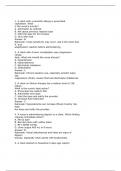
1. A client with a penicillin allergy is prescribed
cephalexin. What
is the nurse’s priority?
A. Administer as ordered
B. Ask about previous reaction type
C. Hold the dose for 30 minutes
D. Give with food
Answer: B
Rationale: Cross-sensitivity may occur. Ask if the client had
A. true
anaphylactic reaction before administering.
2. A client with chronic constipation uses magnesium
citrate
daily. What risk should the nurse discuss?
A. Hypertension
B. Hypernatremia
C. Electrolyte imbalance
D. Dehydration
Answer: C
Rationale: Chronic laxative use, especially osmotic types
like
magnesium citrate, causes fluid and electrolyte imbalances.
3. A client on lithium therapy has a sodium level of 128
mEq/L.
What is the nurse's best action?
A. Encourage low-sodium diet
B. Administer next dose
C. Hold the dose and notify the provider
D. Increase fluid restriction
Answer: C
Rationale: Hyponatremia can increase lithium toxicity risk.
Hold
the dose and notify the provider.
4. A nurse is administering digoxin to a client. Which finding
requires immediate action?
A. HR 62 bpm
B. Blurred vision with yellow halos
C. BP 140/88 mmHg
D. Urine output 400 mL in 8 hours
Answer: B
Rationale: Visual disturbances and halos are signs of
digoxin
toxicity, especially when paired with bradycardia.
5. A client started on fluoxetine 5 days ago reports
, increased
energy and planning their funeral. What should the nurse
do?
A. Encourage journaling
B. Monitor sleep
C. Notify the provider immediately
D. Provide distraction techniques
Answer: C
Rationale: Increased energy + suicidal ideation early in SSRI
therapy is dangerous and should be reported.
6. A nurse is caring for a client prescribed lisinopril. Which
lab
result should the nurse report to the provider?
A. Sodium 138 mEq/L
B. Potassium 5.8 mEq/L
C. Hemoglobin 14 g/dL
D. BUN 18 mg/dL
Answer: B
Rationale: Lisinopril, an ACE inhibitor, can cause
hyperkalemia. A
potassium level of 5.8 is elevated and should be reported.
7. A client taking phenytoin shows swollen, bleeding gums.
What
should the nurse recommend?
A. Discontinue the drug
B. Increase fluid intake
C. Practice good oral hygiene
D. Reduce dietary sugar
Answer: C
Rationale: Gingival hyperplasia is a known side effect.
Encourage
oral care, not discontinuation.
8. A child prescribed methylphenidate for ADHD should be
monitored for which effect?
A. Drowsiness
B. Increased appetite
C. Weight loss and insomnia
D. Bradycardia
Answer: C
Rationale: Stimulants like methylphenidate commonly cause
decreased appetite, insomnia, and weight loss.
9. A client uses sublingual nitroglycerin. Which instruction
is
correct?
A. Swallow the pill with water
B. Take up to 3 doses, 5 minutes apart
cephalexin. What
is the nurse’s priority?
A. Administer as ordered
B. Ask about previous reaction type
C. Hold the dose for 30 minutes
D. Give with food
Answer: B
Rationale: Cross-sensitivity may occur. Ask if the client had
A. true
anaphylactic reaction before administering.
2. A client with chronic constipation uses magnesium
citrate
daily. What risk should the nurse discuss?
A. Hypertension
B. Hypernatremia
C. Electrolyte imbalance
D. Dehydration
Answer: C
Rationale: Chronic laxative use, especially osmotic types
like
magnesium citrate, causes fluid and electrolyte imbalances.
3. A client on lithium therapy has a sodium level of 128
mEq/L.
What is the nurse's best action?
A. Encourage low-sodium diet
B. Administer next dose
C. Hold the dose and notify the provider
D. Increase fluid restriction
Answer: C
Rationale: Hyponatremia can increase lithium toxicity risk.
Hold
the dose and notify the provider.
4. A nurse is administering digoxin to a client. Which finding
requires immediate action?
A. HR 62 bpm
B. Blurred vision with yellow halos
C. BP 140/88 mmHg
D. Urine output 400 mL in 8 hours
Answer: B
Rationale: Visual disturbances and halos are signs of
digoxin
toxicity, especially when paired with bradycardia.
5. A client started on fluoxetine 5 days ago reports
, increased
energy and planning their funeral. What should the nurse
do?
A. Encourage journaling
B. Monitor sleep
C. Notify the provider immediately
D. Provide distraction techniques
Answer: C
Rationale: Increased energy + suicidal ideation early in SSRI
therapy is dangerous and should be reported.
6. A nurse is caring for a client prescribed lisinopril. Which
lab
result should the nurse report to the provider?
A. Sodium 138 mEq/L
B. Potassium 5.8 mEq/L
C. Hemoglobin 14 g/dL
D. BUN 18 mg/dL
Answer: B
Rationale: Lisinopril, an ACE inhibitor, can cause
hyperkalemia. A
potassium level of 5.8 is elevated and should be reported.
7. A client taking phenytoin shows swollen, bleeding gums.
What
should the nurse recommend?
A. Discontinue the drug
B. Increase fluid intake
C. Practice good oral hygiene
D. Reduce dietary sugar
Answer: C
Rationale: Gingival hyperplasia is a known side effect.
Encourage
oral care, not discontinuation.
8. A child prescribed methylphenidate for ADHD should be
monitored for which effect?
A. Drowsiness
B. Increased appetite
C. Weight loss and insomnia
D. Bradycardia
Answer: C
Rationale: Stimulants like methylphenidate commonly cause
decreased appetite, insomnia, and weight loss.
9. A client uses sublingual nitroglycerin. Which instruction
is
correct?
A. Swallow the pill with water
B. Take up to 3 doses, 5 minutes apart


