
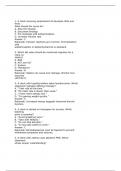
1. A client receiving amphotericin B develops chills and
fever.
What should the nurse do?
A. Stop the infusion
B. Document findings
C. Pre-medicate with acetaminophen
D. Increase infusion rate
Answer: C
Rationale: Infusion reactions are common. Premedication
with
acetaminophen or diphenhydramine is standard.
2. Which lab value should be monitored regularly for a
client on
statins?
A. BUN
B. AST and ALT
C. Sodium
D. Hematocrit
Answer: B
Rationale: Statins can cause liver damage. Monitor liver
enzymes
(AST/ALT).
3. A client with hypothyroidism takes levothyroxine. Which
statement indicates effective therapy?
A. “I feel cold all the time.”
B. “My heart rate is slower than usual.”
C. “I have more energy now.”
D. “I’m gaining weight quickly.”
Answer: C
Rationale: Increased energy suggests improved thyroid
function.
4. A client is started on lorazepam for anxiety. Which
teaching
point is essential?
A. “Avoid grapefruit juice.”
B. “Take with NSAIDs.”
C. “Do not stop abruptly.”
D. “It may take weeks to work.”
Answer: C
Rationale: Benzodiazepines must be tapered to prevent
withdrawal symptoms and seizures.
5. A client with asthma uses albuterol PRN. Which
statement
shows proper understanding?
, A. “I use this every morning and night.”
B. “I use this when I’m having shortness of breath.”
C. “I use it with my steroid inhaler at the same time.”
D. “I use this even if I’m not having symptoms.”
Answer: B
Rationale: Albuterol is a rescue inhaler used during asthma
attacks
or acute symptoms.
6. A post-op client is given ondansetron. Which is an
expected
outcome?
A. Decreased heart rate
B. Absence of nausea
C. Increased bowel sounds
D. Sedation
Answer: B
Rationale: Ondansetron is a serotonin antagonist used to
prevent
or treat nausea and vomiting.
7. A client taking furosemide reports muscle cramps.
Which lab
value correlates with this symptom?
A. Sodium 142
B. Potassium 2.9
C. Chloride 101
D. Magnesium 2.0
Answer: B
Rationale: Furosemide can cause hypokalemia, which leads
to
muscle cramps. Normal potassium: 3.5–5.0.
8. A nurse teaches a client taking cyclobenzaprine. Which
statement indicates understanding?
A. “I will take this long-term.”
B. “I can drink alcohol in moderation.”
C. “I should avoid driving until I know how it affects me.”
D. “It will help my heart condition.”
Answer: C
Rationale: Cyclobenzaprine causes drowsiness. Clients
should
avoid driving or alcohol initially.
9. A client is taking diphenhydramine. Which side effect is
most
likely?
A. Hypertension
B. Drowsiness
C. Diarrhea
fever.
What should the nurse do?
A. Stop the infusion
B. Document findings
C. Pre-medicate with acetaminophen
D. Increase infusion rate
Answer: C
Rationale: Infusion reactions are common. Premedication
with
acetaminophen or diphenhydramine is standard.
2. Which lab value should be monitored regularly for a
client on
statins?
A. BUN
B. AST and ALT
C. Sodium
D. Hematocrit
Answer: B
Rationale: Statins can cause liver damage. Monitor liver
enzymes
(AST/ALT).
3. A client with hypothyroidism takes levothyroxine. Which
statement indicates effective therapy?
A. “I feel cold all the time.”
B. “My heart rate is slower than usual.”
C. “I have more energy now.”
D. “I’m gaining weight quickly.”
Answer: C
Rationale: Increased energy suggests improved thyroid
function.
4. A client is started on lorazepam for anxiety. Which
teaching
point is essential?
A. “Avoid grapefruit juice.”
B. “Take with NSAIDs.”
C. “Do not stop abruptly.”
D. “It may take weeks to work.”
Answer: C
Rationale: Benzodiazepines must be tapered to prevent
withdrawal symptoms and seizures.
5. A client with asthma uses albuterol PRN. Which
statement
shows proper understanding?
, A. “I use this every morning and night.”
B. “I use this when I’m having shortness of breath.”
C. “I use it with my steroid inhaler at the same time.”
D. “I use this even if I’m not having symptoms.”
Answer: B
Rationale: Albuterol is a rescue inhaler used during asthma
attacks
or acute symptoms.
6. A post-op client is given ondansetron. Which is an
expected
outcome?
A. Decreased heart rate
B. Absence of nausea
C. Increased bowel sounds
D. Sedation
Answer: B
Rationale: Ondansetron is a serotonin antagonist used to
prevent
or treat nausea and vomiting.
7. A client taking furosemide reports muscle cramps.
Which lab
value correlates with this symptom?
A. Sodium 142
B. Potassium 2.9
C. Chloride 101
D. Magnesium 2.0
Answer: B
Rationale: Furosemide can cause hypokalemia, which leads
to
muscle cramps. Normal potassium: 3.5–5.0.
8. A nurse teaches a client taking cyclobenzaprine. Which
statement indicates understanding?
A. “I will take this long-term.”
B. “I can drink alcohol in moderation.”
C. “I should avoid driving until I know how it affects me.”
D. “It will help my heart condition.”
Answer: C
Rationale: Cyclobenzaprine causes drowsiness. Clients
should
avoid driving or alcohol initially.
9. A client is taking diphenhydramine. Which side effect is
most
likely?
A. Hypertension
B. Drowsiness
C. Diarrhea


