
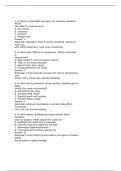
1. A client is prescribed bupropion for smoking cessation.
Which
side effect is most serious?
A. Dry mouth
B. Insomnia
C. Seizures
D. Weight loss
Answer: C
Rationale: Bupropion lowers seizure threshold. Clients at
risk (e.g.,
with eating disorders) need close monitoring.
2. A client with COPD is on prednisone. Which instruction
is
appropriate?
A. Stop taking it once symptoms resolve
B. Take on an empty stomach
C. Report black tarry stools
D. Avoid potassium-rich foods
Answer: C
Rationale: Corticosteroids increase the risk for GI bleeding
and
ulcers. Tarry stools may indicate bleeding.
3. A client taking phenytoin shows swollen, bleeding gums.
What
should the nurse recommend?
A. Discontinue the drug
B. Increase fluid intake
C. Practice good oral hygiene
D. Reduce dietary sugar
Answer: C
Rationale: Gingival hyperplasia is a known side effect.
Encourage
oral care, not discontinuation.
4. A client taking carbidopa/levodopa reports facial
twitching
and eye spasms. What should the nurse do?
A. Reassure the client this is expected
B. Hold the dose and notify the provider
C. Administer diphenhydramine
D. Document and continue monitoring
Answer: B
Rationale: Facial twitching and spasms are signs of toxicity.
Notify
the provider to adjust dosage.
, 5. A client on sildenafil experiences chest pain during
intercourse. What is the nurse’s next action?
A. Administer nitroglycerin
B. Encourage rest and fluids
C. Call emergency services
D. Administer aspirin
Answer: C
Rationale: Sildenafil + nitrates can cause life-threatening
hypotension. Do not give nitro—call 911.
6. A client is receiving morphine IV post-op. Which finding
is the
priority?
A. Nausea
B. Respiratory rate of 8/min
C. Itching
D. Sedation score of 2
Answer: B
Rationale: Respiratory depression (<12/min) is the most life
threatening side effect of opioids.
7. A client asks about insulin glargine (Lantus). What is the
correct response?
A. “It works immediately.”
B. “It peaks in 4 hours.”
C. “It has no peak and lasts 24 hours.”
D. “It must be mixed with regular insulin.”
Answer: C
Rationale: Glargine is a long-acting insulin with no
pronounced
peak, providing steady glucose control.
8. A client receiving amphotericin B develops chills and
fever.
What should the nurse do?
A. Stop the infusion
B. Document findings
C. Pre-medicate with acetaminophen
D. Increase infusion rate
Answer: C
Rationale: Infusion reactions are common. Premedication
with
acetaminophen or diphenhydramine is standard.
9. A client taking furosemide reports muscle cramps.
Which lab
value correlates with this symptom?
A. Sodium 142
B. Potassium 2.9
C. Chloride 101
Which
side effect is most serious?
A. Dry mouth
B. Insomnia
C. Seizures
D. Weight loss
Answer: C
Rationale: Bupropion lowers seizure threshold. Clients at
risk (e.g.,
with eating disorders) need close monitoring.
2. A client with COPD is on prednisone. Which instruction
is
appropriate?
A. Stop taking it once symptoms resolve
B. Take on an empty stomach
C. Report black tarry stools
D. Avoid potassium-rich foods
Answer: C
Rationale: Corticosteroids increase the risk for GI bleeding
and
ulcers. Tarry stools may indicate bleeding.
3. A client taking phenytoin shows swollen, bleeding gums.
What
should the nurse recommend?
A. Discontinue the drug
B. Increase fluid intake
C. Practice good oral hygiene
D. Reduce dietary sugar
Answer: C
Rationale: Gingival hyperplasia is a known side effect.
Encourage
oral care, not discontinuation.
4. A client taking carbidopa/levodopa reports facial
twitching
and eye spasms. What should the nurse do?
A. Reassure the client this is expected
B. Hold the dose and notify the provider
C. Administer diphenhydramine
D. Document and continue monitoring
Answer: B
Rationale: Facial twitching and spasms are signs of toxicity.
Notify
the provider to adjust dosage.
, 5. A client on sildenafil experiences chest pain during
intercourse. What is the nurse’s next action?
A. Administer nitroglycerin
B. Encourage rest and fluids
C. Call emergency services
D. Administer aspirin
Answer: C
Rationale: Sildenafil + nitrates can cause life-threatening
hypotension. Do not give nitro—call 911.
6. A client is receiving morphine IV post-op. Which finding
is the
priority?
A. Nausea
B. Respiratory rate of 8/min
C. Itching
D. Sedation score of 2
Answer: B
Rationale: Respiratory depression (<12/min) is the most life
threatening side effect of opioids.
7. A client asks about insulin glargine (Lantus). What is the
correct response?
A. “It works immediately.”
B. “It peaks in 4 hours.”
C. “It has no peak and lasts 24 hours.”
D. “It must be mixed with regular insulin.”
Answer: C
Rationale: Glargine is a long-acting insulin with no
pronounced
peak, providing steady glucose control.
8. A client receiving amphotericin B develops chills and
fever.
What should the nurse do?
A. Stop the infusion
B. Document findings
C. Pre-medicate with acetaminophen
D. Increase infusion rate
Answer: C
Rationale: Infusion reactions are common. Premedication
with
acetaminophen or diphenhydramine is standard.
9. A client taking furosemide reports muscle cramps.
Which lab
value correlates with this symptom?
A. Sodium 142
B. Potassium 2.9
C. Chloride 101


