
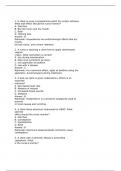
1. A client is using a scopolamine patch for motion sickness.
What side effect should the nurse monitor?
A. Diarrhea
B. Blurred vision and dry mouth
C. Rash
D. Hearing loss
Answer: B
Rationale: Scopolamine has anticholinergic effects like dry
mouth,
blurred vision, and urinary retention.
2. A nurse is teaching a client how to apply clotrimazole
vaginal
cream. What instruction is correct?
A. Use during menstruation
B. Stop once symptoms go away
C. Use applicator at bedtime
D. Use with a tampon
Answer: C
Rationale: For maximum effect, apply at bedtime using the
applicator. Avoid tampons during treatment.
3. A post-op client is given ondansetron. Which is an
expected
outcome?
A. Decreased heart rate
B. Absence of nausea
C. Increased bowel sounds
D. Sedation
Answer: B
Rationale: Ondansetron is a serotonin antagonist used to
prevent
or treat nausea and vomiting.
4. A client takes aluminum hydroxide for GERD. What
adverse
effect should the nurse monitor?
A. Diarrhea
B. Constipation
C. Hypokalemia
D. Rash
Answer: B
Rationale: Aluminum-based antacids commonly cause
constipation.
5. A client with a penicillin allergy is prescribed
cephalexin. What
is the nurse’s priority?
, A. Administer as ordered
B. Ask about previous reaction type
C. Hold the dose for 30 minutes
D. Give with food
Answer: B
Rationale: Cross-sensitivity may occur. Ask if the client had
A. true
anaphylactic reaction before administering.
6. A client taking haloperidol develops a high fever and
muscle
rigidity. What should the nurse suspect?
A. Serotonin syndrome
B. Neuroleptic malignant syndrome (NMS)
C. Tardive dyskinesia
D. Extrapyramidal symptoms (EPS)
Answer: B
Rationale: NMS is a rare but fatal reaction to antipsychotics.
Requires immediate intervention.
7. Which statement indicates proper understanding of
enoxaparin (Lovenox) administration?
A. “I will inject it into my thigh muscle.”
B. “I will rub the site after injection.”
C. “I will inject it into my belly fat.”
D. “I must monitor my INR daily.”
Answer: C
Rationale: Enoxaparin is given subcutaneously, preferably
in the
abdomen, and INR monitoring is not required.
8. A client taking furosemide reports muscle cramps.
Which lab
value correlates with this symptom?
A. Sodium 142
B. Potassium 2.9
C. Chloride 101
D. Magnesium 2.0
Answer: B
Rationale: Furosemide can cause hypokalemia, which leads
to
muscle cramps. Normal potassium: 3.5–5.0.
9. A client with hypothyroidism takes levothyroxine. Which
statement indicates effective therapy?
A. “I feel cold all the time.”
B. “My heart rate is slower than usual.”
C. “I have more energy now.”
D. “I’m gaining weight quickly.”
Answer: C
What side effect should the nurse monitor?
A. Diarrhea
B. Blurred vision and dry mouth
C. Rash
D. Hearing loss
Answer: B
Rationale: Scopolamine has anticholinergic effects like dry
mouth,
blurred vision, and urinary retention.
2. A nurse is teaching a client how to apply clotrimazole
vaginal
cream. What instruction is correct?
A. Use during menstruation
B. Stop once symptoms go away
C. Use applicator at bedtime
D. Use with a tampon
Answer: C
Rationale: For maximum effect, apply at bedtime using the
applicator. Avoid tampons during treatment.
3. A post-op client is given ondansetron. Which is an
expected
outcome?
A. Decreased heart rate
B. Absence of nausea
C. Increased bowel sounds
D. Sedation
Answer: B
Rationale: Ondansetron is a serotonin antagonist used to
prevent
or treat nausea and vomiting.
4. A client takes aluminum hydroxide for GERD. What
adverse
effect should the nurse monitor?
A. Diarrhea
B. Constipation
C. Hypokalemia
D. Rash
Answer: B
Rationale: Aluminum-based antacids commonly cause
constipation.
5. A client with a penicillin allergy is prescribed
cephalexin. What
is the nurse’s priority?
, A. Administer as ordered
B. Ask about previous reaction type
C. Hold the dose for 30 minutes
D. Give with food
Answer: B
Rationale: Cross-sensitivity may occur. Ask if the client had
A. true
anaphylactic reaction before administering.
6. A client taking haloperidol develops a high fever and
muscle
rigidity. What should the nurse suspect?
A. Serotonin syndrome
B. Neuroleptic malignant syndrome (NMS)
C. Tardive dyskinesia
D. Extrapyramidal symptoms (EPS)
Answer: B
Rationale: NMS is a rare but fatal reaction to antipsychotics.
Requires immediate intervention.
7. Which statement indicates proper understanding of
enoxaparin (Lovenox) administration?
A. “I will inject it into my thigh muscle.”
B. “I will rub the site after injection.”
C. “I will inject it into my belly fat.”
D. “I must monitor my INR daily.”
Answer: C
Rationale: Enoxaparin is given subcutaneously, preferably
in the
abdomen, and INR monitoring is not required.
8. A client taking furosemide reports muscle cramps.
Which lab
value correlates with this symptom?
A. Sodium 142
B. Potassium 2.9
C. Chloride 101
D. Magnesium 2.0
Answer: B
Rationale: Furosemide can cause hypokalemia, which leads
to
muscle cramps. Normal potassium: 3.5–5.0.
9. A client with hypothyroidism takes levothyroxine. Which
statement indicates effective therapy?
A. “I feel cold all the time.”
B. “My heart rate is slower than usual.”
C. “I have more energy now.”
D. “I’m gaining weight quickly.”
Answer: C


