

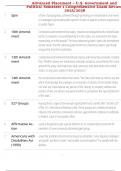
1. Spin a form of propaganda, achieved through providing an interpretation of an event
or campaign to persuade public opinion in favor or against a certain organization
or public �gure.
2. 10th Amend- Constitutional Amendment that states, "powers not delegated to the United States
ment by the Constitution, nor prohibited by it to the states, are reserved to the states
respectively, or to the people." For those advocating states' rights, the amendment
clearly means that the national government has only those powers speci�cally
assigned to it by the Constitution.
3. 13th Amend- Constitutional amendment that forbade slavery and involuntary servitude. It stated
ment that, "Neither slavery nor involuntary servitude, except as a punishment for crime
whereof the party shall have been duly convicted, shall exist within the United
States, or any place subject to their jurisdiction."
4. 14th Amend- the constitutional amendment that states, "No State shall make or enforce any law
ment which shall abridge the privileges or immunities of citizens of the United States;
nor shall any State deprive any person of life, liberty, or property, without due
process of law; nor deny to any person within its jurisdiction the equal protection
of the laws."
5. 527 Groups A group that is a type of tax-exempt organization that is named after "Section 527"
of the U.S. International Revenue code. These groups are created primarily to
in uence the selection, nomination, election, appointment or defeat of candidates
to federal, state or local public o ce.
6. A�rmative Ac- a policy designed to give special attention to or compensatory treatment for
tion members of some previously disadvantaged group.
7. Americans with a law that prohibits discrimination based on disability. It also requires employers
Disabilities Act and public facilities to make "reasonable accommodations" for people with dis-
(1990) abilities.
,8. Bandwagon ef- a political phrase that refers to the e ect that occurs when some people vote for
fect those candidates or parties who are likely to succeed (or are proclaimed as such
by the media, polls, etc).
9. Beats speci�c locations from which news frequently emanates, such as Congress or the
White House.
10. Bill of Rights the �rst ten amendments to the U.S. Constitution, which de�nes the basic liberties
like freedom of religion, free speech and press, and the guarantee of defendant's
rights.
11. Block Grants federal grants given more or less automatically to states that have no strings
attached, no speci�c condition on how to spend the money.
12. Broadcast media term that a wide spectrum of di erent communication methods such as television,
radio, newspapers, magazines and any other materials supplied by the media and
press.
13. Brown vs. Board _____ vs. ____ _______ _______ was a 1954 Supreme Court decision that held
of Education that school segregation was inherently unconstitutional because it violated the
(1954) Fourteenth Amendment's guarantee of equal protection. The case was famous
because it marked the end of legal segregation.
14. California Board ____ _______ ____ _______ vs ______ forbid rigid racial quotas for medical
of Regents vs. school admissions. It did not forbid the practice of considering race as a factor
Bakke (1978) when deciding admissions.
15. Categorical federal grants that can be used only for speci�c purposes. They come with strings
Grants attached, such as nondiscrimination provisions.
16. Caucus a meeting of all state party leaders for selecting delegates to the national party
convention.
17. Census
, a requirement by the US Constitution, saying that the government must take an
actual enumeration of the population every 10 years.
18. Civil liberties The legal constitutional protections against government. Our civil liberties are
formally layed out in the Bill of Rights, the courts, the police, and the legislatures
which de�ne their meaning.
19. Civil rights policies that are meant to protect people against arbitrary or discriminatory
treatment by governmental o cials or individuals.
20. Civil Rights Act of a landmark piece of legislation that made discrimination against any group in
1964 hotels, motels, and restaurants illegal. It also forbade many forms of job discrim-
ination.
21. Closed primary election in which voters choose from candidates only from the party in which they
are registered.
22. Coalition an agreement for cooperation between di erent political parties on common
political agenda.
23. Conservative political ideology that supports a less active scope of government that gives freer
(qualities) reign to the private sector, the belief in maintaining peace through strength (when
it comes to military spending), want to keep taxes low, and oppose a rmative
action.
24. Cooperative Fed- a system of government in which powers and policy assignments are shared
eralism between states and the national government. They may also share costs, admin-
istration, and even blame for programs that work poorly.
25. De facto segrega- racial separation that occurs "as a matter of fact." For example, it can occur by
tion housing patterns (where one lives) or by school enrollment (where one goes to
school).
26.
or campaign to persuade public opinion in favor or against a certain organization
or public �gure.
2. 10th Amend- Constitutional Amendment that states, "powers not delegated to the United States
ment by the Constitution, nor prohibited by it to the states, are reserved to the states
respectively, or to the people." For those advocating states' rights, the amendment
clearly means that the national government has only those powers speci�cally
assigned to it by the Constitution.
3. 13th Amend- Constitutional amendment that forbade slavery and involuntary servitude. It stated
ment that, "Neither slavery nor involuntary servitude, except as a punishment for crime
whereof the party shall have been duly convicted, shall exist within the United
States, or any place subject to their jurisdiction."
4. 14th Amend- the constitutional amendment that states, "No State shall make or enforce any law
ment which shall abridge the privileges or immunities of citizens of the United States;
nor shall any State deprive any person of life, liberty, or property, without due
process of law; nor deny to any person within its jurisdiction the equal protection
of the laws."
5. 527 Groups A group that is a type of tax-exempt organization that is named after "Section 527"
of the U.S. International Revenue code. These groups are created primarily to
in uence the selection, nomination, election, appointment or defeat of candidates
to federal, state or local public o ce.
6. A�rmative Ac- a policy designed to give special attention to or compensatory treatment for
tion members of some previously disadvantaged group.
7. Americans with a law that prohibits discrimination based on disability. It also requires employers
Disabilities Act and public facilities to make "reasonable accommodations" for people with dis-
(1990) abilities.
,8. Bandwagon ef- a political phrase that refers to the e ect that occurs when some people vote for
fect those candidates or parties who are likely to succeed (or are proclaimed as such
by the media, polls, etc).
9. Beats speci�c locations from which news frequently emanates, such as Congress or the
White House.
10. Bill of Rights the �rst ten amendments to the U.S. Constitution, which de�nes the basic liberties
like freedom of religion, free speech and press, and the guarantee of defendant's
rights.
11. Block Grants federal grants given more or less automatically to states that have no strings
attached, no speci�c condition on how to spend the money.
12. Broadcast media term that a wide spectrum of di erent communication methods such as television,
radio, newspapers, magazines and any other materials supplied by the media and
press.
13. Brown vs. Board _____ vs. ____ _______ _______ was a 1954 Supreme Court decision that held
of Education that school segregation was inherently unconstitutional because it violated the
(1954) Fourteenth Amendment's guarantee of equal protection. The case was famous
because it marked the end of legal segregation.
14. California Board ____ _______ ____ _______ vs ______ forbid rigid racial quotas for medical
of Regents vs. school admissions. It did not forbid the practice of considering race as a factor
Bakke (1978) when deciding admissions.
15. Categorical federal grants that can be used only for speci�c purposes. They come with strings
Grants attached, such as nondiscrimination provisions.
16. Caucus a meeting of all state party leaders for selecting delegates to the national party
convention.
17. Census
, a requirement by the US Constitution, saying that the government must take an
actual enumeration of the population every 10 years.
18. Civil liberties The legal constitutional protections against government. Our civil liberties are
formally layed out in the Bill of Rights, the courts, the police, and the legislatures
which de�ne their meaning.
19. Civil rights policies that are meant to protect people against arbitrary or discriminatory
treatment by governmental o cials or individuals.
20. Civil Rights Act of a landmark piece of legislation that made discrimination against any group in
1964 hotels, motels, and restaurants illegal. It also forbade many forms of job discrim-
ination.
21. Closed primary election in which voters choose from candidates only from the party in which they
are registered.
22. Coalition an agreement for cooperation between di erent political parties on common
political agenda.
23. Conservative political ideology that supports a less active scope of government that gives freer
(qualities) reign to the private sector, the belief in maintaining peace through strength (when
it comes to military spending), want to keep taxes low, and oppose a rmative
action.
24. Cooperative Fed- a system of government in which powers and policy assignments are shared
eralism between states and the national government. They may also share costs, admin-
istration, and even blame for programs that work poorly.
25. De facto segrega- racial separation that occurs "as a matter of fact." For example, it can occur by
tion housing patterns (where one lives) or by school enrollment (where one goes to
school).
26.


