
1
Clinical Reasoning Cycle (CRC)
Clinical reasoning is a core nursing competency that makes safe, effective, and person-centred
care possible. It is a structured process of obtaining and analysing patients' data to make informed
decisions and nursing interventions. One commonly used method is the Clinical Reasoning Cycle (CRC),
a reflective systematic model nurses can use to assess, plan, implement, and evaluate care.
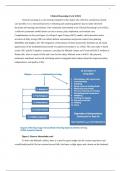
Complimentary to this (see Figure 1) is Roper-Logan-Tierney (RLT) model, which describes twelve
activities of daily living (ADLs) to inform holistic assessments and person-centred care planning
(McMillan and Hughes, 201 The integration of the patterns of these frameworks facilitates an all-round
appreciation of the multidimensional needs of a patient (Grossman et al., 2018). This case study is based
on the CRC and RLT model to construct a care plan for Michael Gomez an 87-year-old RACF resident of
Honeyville. After a couple of falls and a fear for his safety, Michael went to RACF. His physical,
emotional, nutritional, and social well-being must be integrated and evidence-based for improved safety,
independence, and quality of life.
Figure 1 (Source: Nurseslabs.com)
To deal with Michael's affairs, there is a need for great insight into his current experience and
overall health profile. He has received several falls, the latest a slight injury and a bruise on the forehead.


