
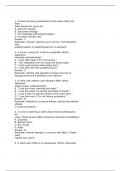
1. A client receiving amphotericin B develops chills and
fever.
What should the nurse do?
A. Stop the infusion
B. Document findings
C. Pre-medicate with acetaminophen
D. Increase infusion rate
Answer: C
Rationale: Infusion reactions are common. Premedication
with
acetaminophen or diphenhydramine is standard.
2. A nurse is caring for a client on glipizide. Which
statement
indicates understanding?
A. “I can skip meals if I’m not hungry.”
B. “This medication will not cause low blood sugar.”
C. “I will avoid alcohol while taking this.”
D. “I can take this with grapefruit juice.”
Answer: C
Rationale: Alcohol with glipizide increases the risk of
hypoglycemia and a disulfiram-like reaction.
3. A client with asthma uses albuterol PRN. Which
statement
shows proper understanding?
A. “I use this every morning and night.”
B. “I use this when I’m having shortness of breath.”
C. “I use it with my steroid inhaler at the same time.”
D. “I use this even if I’m not having symptoms.”
Answer: B
Rationale: Albuterol is a rescue inhaler used during asthma
attacks
or acute symptoms.
4. A nurse is teaching a client about hydroxychloroquine
for
lupus. What adverse effect should be reported immediately?
A. Dizziness
B. Blurred vision
C. Dry mouth
D. Rash
Answer: B
Rationale: Retinal damage is a serious side effect. Clients
need
regular eye exams.
5. A client with COPD is on prednisone. Which instruction
, is
appropriate?
A. Stop taking it once symptoms resolve
B. Take on an empty stomach
C. Report black tarry stools
D. Avoid potassium-rich foods
Answer: C
Rationale: Corticosteroids increase the risk for GI bleeding
and
ulcers. Tarry stools may indicate bleeding.
6. A client with a penicillin allergy is prescribed
cephalexin. What
is the nurse’s priority?
A. Administer as ordered
B. Ask about previous reaction type
C. Hold the dose for 30 minutes
D. Give with food
Answer: B
Rationale: Cross-sensitivity may occur. Ask if the client had
A. true
anaphylactic reaction before administering.
7. A nurse is teaching a client how to apply clotrimazole
vaginal
cream. What instruction is correct?
A. Use during menstruation
B. Stop once symptoms go away
C. Use applicator at bedtime
D. Use with a tampon
Answer: C
Rationale: For maximum effect, apply at bedtime using the
applicator. Avoid tampons during treatment.
8. A nurse is caring for a client prescribed lisinopril. Which
lab
result should the nurse report to the provider?
A. Sodium 138 mEq/L
B. Potassium 5.8 mEq/L
C. Hemoglobin 14 g/dL
D. BUN 18 mg/dL
Answer: B
Rationale: Lisinopril, an ACE inhibitor, can cause
hyperkalemia. A
potassium level of 5.8 is elevated and should be reported.
9. A post-op client is given ondansetron. Which is an
expected
outcome?
A. Decreased heart rate
fever.
What should the nurse do?
A. Stop the infusion
B. Document findings
C. Pre-medicate with acetaminophen
D. Increase infusion rate
Answer: C
Rationale: Infusion reactions are common. Premedication
with
acetaminophen or diphenhydramine is standard.
2. A nurse is caring for a client on glipizide. Which
statement
indicates understanding?
A. “I can skip meals if I’m not hungry.”
B. “This medication will not cause low blood sugar.”
C. “I will avoid alcohol while taking this.”
D. “I can take this with grapefruit juice.”
Answer: C
Rationale: Alcohol with glipizide increases the risk of
hypoglycemia and a disulfiram-like reaction.
3. A client with asthma uses albuterol PRN. Which
statement
shows proper understanding?
A. “I use this every morning and night.”
B. “I use this when I’m having shortness of breath.”
C. “I use it with my steroid inhaler at the same time.”
D. “I use this even if I’m not having symptoms.”
Answer: B
Rationale: Albuterol is a rescue inhaler used during asthma
attacks
or acute symptoms.
4. A nurse is teaching a client about hydroxychloroquine
for
lupus. What adverse effect should be reported immediately?
A. Dizziness
B. Blurred vision
C. Dry mouth
D. Rash
Answer: B
Rationale: Retinal damage is a serious side effect. Clients
need
regular eye exams.
5. A client with COPD is on prednisone. Which instruction
, is
appropriate?
A. Stop taking it once symptoms resolve
B. Take on an empty stomach
C. Report black tarry stools
D. Avoid potassium-rich foods
Answer: C
Rationale: Corticosteroids increase the risk for GI bleeding
and
ulcers. Tarry stools may indicate bleeding.
6. A client with a penicillin allergy is prescribed
cephalexin. What
is the nurse’s priority?
A. Administer as ordered
B. Ask about previous reaction type
C. Hold the dose for 30 minutes
D. Give with food
Answer: B
Rationale: Cross-sensitivity may occur. Ask if the client had
A. true
anaphylactic reaction before administering.
7. A nurse is teaching a client how to apply clotrimazole
vaginal
cream. What instruction is correct?
A. Use during menstruation
B. Stop once symptoms go away
C. Use applicator at bedtime
D. Use with a tampon
Answer: C
Rationale: For maximum effect, apply at bedtime using the
applicator. Avoid tampons during treatment.
8. A nurse is caring for a client prescribed lisinopril. Which
lab
result should the nurse report to the provider?
A. Sodium 138 mEq/L
B. Potassium 5.8 mEq/L
C. Hemoglobin 14 g/dL
D. BUN 18 mg/dL
Answer: B
Rationale: Lisinopril, an ACE inhibitor, can cause
hyperkalemia. A
potassium level of 5.8 is elevated and should be reported.
9. A post-op client is given ondansetron. Which is an
expected
outcome?
A. Decreased heart rate


