
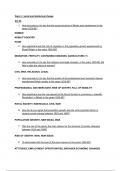
Topic 3 - Social and intellectual change
ALL Qs
1. How accurate is it to say that the social structure of Britain was transformed in the
years 1625-88?
WOMEN
NOBILITY/GENTRY
POOR
2. How significant was the role of migration in the population growth experienced by
Stuart Britain in the years 1625-88?
MIGRATION, FERTILITY, CONTAINING DISEASES, AGRICULTURE (?)
3. How accurate is it to say that religious and legal changes, in the years 1625-88, did
little to alter the status of women?
CIVIL WAR, RELIGIOUS, LEGAL
4. How accurate is it to say that the growth of the professional and merchant classes
transformed British society in the years 1625-88?
PROFESSIONAL AND MERCHANT, RISE OF GENTRY, FALL OF NOBILITY
5. How significant was the role played by the Royal Society in promoting a ‘scientific
Revolution’ in Britain in the years 1625-88?
ROYAL SOCIETY, INDIVIDUALS, CIVIL WAR
6. How far do you agree that population growth was the most important factor in
causing social change between 1625 and 1688?
POPULATION GROWTH, NEW IDEAS, WAR
7. Was the rise of the gentry the main reason for the structure of society changing
between 1625 and 1688?
RISE OF GENTRY, WAR, NEW IDEAS
8. To what extent did the lives of the poor improve in the years 1625-85?
ATTITUDES, EMPLOYMENT OPPORTUNITIES, BROADER ECONOMIC CHANGES
, 9. How far did radical ideas question/change/permeate society in the years 1625-88?
POLITICAL, RELIGIOUS, SCIENTIFIC
10. How far did poverty increase in Britain in the years 1625–88?
11. To what extent did the status of women change in the years 1625–88?
LEGAL, CIVIL WAR, RELIGION
12. To what extent did the power of the nobility decline in Stuart Britain in the years
1625–88?
13. How significant was population growth in British society in the years 1625-88?
POPULATION GROWTH, NEW IDEAS, CIVIL WAR.
FULL PLANS
How accurate is it to say that the social structure of Britain was transformed in the years 1625-88?-
WOMEN, NOBILITY/GENTRY, POOR
Criteria- “transformed”- legal status changed, change in powers,
longlasting/widespread/transformative change.
WOMEN (Civil War, Quakerism/Puritanism, Marriage and Adultery Acts)
Evidence - Civil War- some women gained power as the men went to war e.g. Mary Banks
commanded troops to defend Corfe castle, Brilianna Harley also defended her family’s estate in
Hertfordshire.
Analysis/Evaluation - Break away from the previous, traditional role of women as limited to the
domestic sphere- with the men away, they are able to step into traditionally male dominated roles
such as military leaders, power over finance, property and troops. Widening of employment
opportunities for women as they are afforded more power and independence.
BUT Mainly limited to gentry women, and life went back to normal after the Civil War when the men
came home. Arguably even worse as men felt the patriarchal order had been upended and had to be
reinforced= rise in witchcraft accusations.
Evidence- Rise in religious toleration e.g 1650 Toleration Act= rise in status for women with the
growth of groups like the Quakers and Puritans. Puritan belief in the home as the centre of religious=
belief in women's education to educate their children on religious matters. Puritan women at the
centre of campaigns (1649 Kathrine Chidley petition to Parliament for gender equality, signed by
10,000 Puritan women.) Quaker belief in equal inner light of God= belief in gender equality, equal
education. Set up 4 schools for women.
Analysis- Spreading belief in female education raises the prospects for women economically. Shows
a shift in attitudes towards equality of opportunity amongst the sexes. Arguably long term- toleration
allowed dissent groups to spread their roots and establish foundations in society which allowed them
to survive as an undercurrent despite later persecution.
BUT Quakers were a minority who scared the Conservative majority- not widespread. Also arguably
ALL Qs
1. How accurate is it to say that the social structure of Britain was transformed in the
years 1625-88?
WOMEN
NOBILITY/GENTRY
POOR
2. How significant was the role of migration in the population growth experienced by
Stuart Britain in the years 1625-88?
MIGRATION, FERTILITY, CONTAINING DISEASES, AGRICULTURE (?)
3. How accurate is it to say that religious and legal changes, in the years 1625-88, did
little to alter the status of women?
CIVIL WAR, RELIGIOUS, LEGAL
4. How accurate is it to say that the growth of the professional and merchant classes
transformed British society in the years 1625-88?
PROFESSIONAL AND MERCHANT, RISE OF GENTRY, FALL OF NOBILITY
5. How significant was the role played by the Royal Society in promoting a ‘scientific
Revolution’ in Britain in the years 1625-88?
ROYAL SOCIETY, INDIVIDUALS, CIVIL WAR
6. How far do you agree that population growth was the most important factor in
causing social change between 1625 and 1688?
POPULATION GROWTH, NEW IDEAS, WAR
7. Was the rise of the gentry the main reason for the structure of society changing
between 1625 and 1688?
RISE OF GENTRY, WAR, NEW IDEAS
8. To what extent did the lives of the poor improve in the years 1625-85?
ATTITUDES, EMPLOYMENT OPPORTUNITIES, BROADER ECONOMIC CHANGES
, 9. How far did radical ideas question/change/permeate society in the years 1625-88?
POLITICAL, RELIGIOUS, SCIENTIFIC
10. How far did poverty increase in Britain in the years 1625–88?
11. To what extent did the status of women change in the years 1625–88?
LEGAL, CIVIL WAR, RELIGION
12. To what extent did the power of the nobility decline in Stuart Britain in the years
1625–88?
13. How significant was population growth in British society in the years 1625-88?
POPULATION GROWTH, NEW IDEAS, CIVIL WAR.
FULL PLANS
How accurate is it to say that the social structure of Britain was transformed in the years 1625-88?-
WOMEN, NOBILITY/GENTRY, POOR
Criteria- “transformed”- legal status changed, change in powers,
longlasting/widespread/transformative change.
WOMEN (Civil War, Quakerism/Puritanism, Marriage and Adultery Acts)
Evidence - Civil War- some women gained power as the men went to war e.g. Mary Banks
commanded troops to defend Corfe castle, Brilianna Harley also defended her family’s estate in
Hertfordshire.
Analysis/Evaluation - Break away from the previous, traditional role of women as limited to the
domestic sphere- with the men away, they are able to step into traditionally male dominated roles
such as military leaders, power over finance, property and troops. Widening of employment
opportunities for women as they are afforded more power and independence.
BUT Mainly limited to gentry women, and life went back to normal after the Civil War when the men
came home. Arguably even worse as men felt the patriarchal order had been upended and had to be
reinforced= rise in witchcraft accusations.
Evidence- Rise in religious toleration e.g 1650 Toleration Act= rise in status for women with the
growth of groups like the Quakers and Puritans. Puritan belief in the home as the centre of religious=
belief in women's education to educate their children on religious matters. Puritan women at the
centre of campaigns (1649 Kathrine Chidley petition to Parliament for gender equality, signed by
10,000 Puritan women.) Quaker belief in equal inner light of God= belief in gender equality, equal
education. Set up 4 schools for women.
Analysis- Spreading belief in female education raises the prospects for women economically. Shows
a shift in attitudes towards equality of opportunity amongst the sexes. Arguably long term- toleration
allowed dissent groups to spread their roots and establish foundations in society which allowed them
to survive as an undercurrent despite later persecution.
BUT Quakers were a minority who scared the Conservative majority- not widespread. Also arguably



