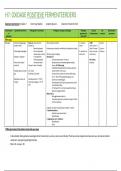
H7: OXIDASE POSITIEVE FERMENTEERDERS
Algemene kenmerken: Oxydase + Gram neg. Staafjes vergisten glucose reduceren nitraat tot nitriet
Commensaal Specifieke kenmerken Pathogenese / transmissie Pathogeen vermogen / pathologie Pathogeen Groei op KIA- Biochemische
of geïsoleerd uit isolatiebodems resultaat kenmerken
pathogeen welk staal?
Vibrio spp.
Pathogeen Kommavormig gebogen Reservoir: water en mens Vibrio cholerae: enteritis V. cholerae: TCBS: A K H2S- /
staafje (‘vibrio’) Infectie via: faeces Geel: sucrose +
- Besmet (zee)water Andere species: enteritis, wondinfecties, longinfecties, sepsis (Virbio, Proteus) Lactose –
Polaire flagel: beweeglijk - Eten van besmette V. vulnificus: uit Groen: sucrose – Glucose +
(rauwe) vissen, schaal- 200 sero-types (O-antigen) wondvocht (coliformen)
Katalase +, Oxydase + en schelpdieren Serotype O:1:
- Groenten gespoeld - Productie enterotoxine cholera Mc Conkey:
Aëroob of facultatief met besmet water - Abrupt braken en levensbedreigende waterige kleurloos
anaëroob Faeces water voeding diarree: 15-20 liters/dag
- Uiteindelijk rijstwaterdiarree: kleurloos, geurloos,
Vergisten glucose zonder Vnl. import zonder eiwitten, met mucus
gas Endemisch: Zuid-Azië - Cholera toxine: verlies van vocht en elektrolyten:
Na+, K+, HCO3 hypokaliëmie (gevaar voor
Makkelijk in cultuur te Infectieuze dosis: > 108 CFU hartritme en nierblokkage)
brengen Verminder maagzuur: 103-105 - Niet behandeld: sterft door hypovolemische shock
CFU en metabole acidose
- O:1 Biotype El Tor : dominante epidemische type
- Opsporen: agglutinatietest
NAG-Virbio’s:
- Niet agglutinerende vibrio’s
- Produceren geen toxine, behalve serotype O:139 en
O:37 (ook enteritis)
Volgende: te vinden in (sub)tropisch zeewater + halofiel
V. parahaemolyticus:
- Enteritis (rauwe zeevruchten)
- Wondinfecties
V. alginolyticus en V. vulnificus:
- Wondinfecties
- Otitis
TCBS-agar bodem (thiosulfaat-citraat-bile-sucrose):
- In deze bodem zitten galzouten waartegen vibrio’s bestand zijn, sucrose, zout en een indicator als de sucrose omgezet word naar een zuur, dan zal de indicator
verkleuren, naar geel en geeft gele kolonies
- Meer info: cursus p. 99
Algemene kenmerken: Oxydase + Gram neg. Staafjes vergisten glucose reduceren nitraat tot nitriet
Commensaal Specifieke kenmerken Pathogenese / transmissie Pathogeen vermogen / pathologie Pathogeen Groei op KIA- Biochemische
of geïsoleerd uit isolatiebodems resultaat kenmerken
pathogeen welk staal?
Vibrio spp.
Pathogeen Kommavormig gebogen Reservoir: water en mens Vibrio cholerae: enteritis V. cholerae: TCBS: A K H2S- /
staafje (‘vibrio’) Infectie via: faeces Geel: sucrose +
- Besmet (zee)water Andere species: enteritis, wondinfecties, longinfecties, sepsis (Virbio, Proteus) Lactose –
Polaire flagel: beweeglijk - Eten van besmette V. vulnificus: uit Groen: sucrose – Glucose +
(rauwe) vissen, schaal- 200 sero-types (O-antigen) wondvocht (coliformen)
Katalase +, Oxydase + en schelpdieren Serotype O:1:
- Groenten gespoeld - Productie enterotoxine cholera Mc Conkey:
Aëroob of facultatief met besmet water - Abrupt braken en levensbedreigende waterige kleurloos
anaëroob Faeces water voeding diarree: 15-20 liters/dag
- Uiteindelijk rijstwaterdiarree: kleurloos, geurloos,
Vergisten glucose zonder Vnl. import zonder eiwitten, met mucus
gas Endemisch: Zuid-Azië - Cholera toxine: verlies van vocht en elektrolyten:
Na+, K+, HCO3 hypokaliëmie (gevaar voor
Makkelijk in cultuur te Infectieuze dosis: > 108 CFU hartritme en nierblokkage)
brengen Verminder maagzuur: 103-105 - Niet behandeld: sterft door hypovolemische shock
CFU en metabole acidose
- O:1 Biotype El Tor : dominante epidemische type
- Opsporen: agglutinatietest
NAG-Virbio’s:
- Niet agglutinerende vibrio’s
- Produceren geen toxine, behalve serotype O:139 en
O:37 (ook enteritis)
Volgende: te vinden in (sub)tropisch zeewater + halofiel
V. parahaemolyticus:
- Enteritis (rauwe zeevruchten)
- Wondinfecties
V. alginolyticus en V. vulnificus:
- Wondinfecties
- Otitis
TCBS-agar bodem (thiosulfaat-citraat-bile-sucrose):
- In deze bodem zitten galzouten waartegen vibrio’s bestand zijn, sucrose, zout en een indicator als de sucrose omgezet word naar een zuur, dan zal de indicator
verkleuren, naar geel en geeft gele kolonies
- Meer info: cursus p. 99