

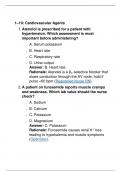
1–10: Cardiovascular Agents
1. Atenolol is prescribed for a patient with
hypertension. Which assessment is most
important before administering?
o A. Serum potassium
o B. Heart rate
o C. Respiratory rate
o D. Urine output
Answer: B. Heart rate
Rationale: Atenolol is a β₁-selective blocker that
slows conduction through the AV node; hold if
pulse <60 bpm (Registered Nurse RN).
2. A patient on furosemide reports muscle cramps
and weakness. Which lab value should the nurse
check?
o A. Sodium
o B. Calcium
o C. Potassium
o D. Magnesium
Answer: C. Potassium
Rationale: Furosemide causes renal K⁺ loss
leading to hypokalemia and muscle symptoms
(OpenStax).
,3. Which instruction should the nurse give for
spironolactone therapy?
o A. “Take with grapefruit juice.”
o B. “Report menstrual irregularities.”
o C. “Expect increased urine output.”
o D. “Avoid foods high in potassium.”
Answer: B. “Report menstrual irregularities.”
Rationale: Spironolactone can cause endocrine
effects like gynecomastia and menstrual changes
(nursingtip.com).
4. A patient receives nitroglycerin IV for chest pain.
What is the primary nursing action?
o A. Monitor BP every 5 minutes
o B. Check liver function tests
o C. Assess deep tendon reflexes
o D. Auscultate lung sounds
Answer: A. Monitor BP every 5 minutes
Rationale: Nitroglycerin causes vasodilation and
hypotension; frequent BP checks are essential
(nursingtip.com).
5. Which teaching point is essential for enalapril
therapy?
o A. “Rise slowly to avoid dizziness.”
o B. “Take on an empty stomach.”
, o C. “Expect a dry mouth.”
o D. “Limit fluid intake to 1 L/day.”
Answer: A. “Rise slowly to avoid dizziness.”
Rationale: ACE inhibitors can cause first-dose
hypotension and orthostatic dizziness
(nursingtip.com).
6. A patient on amiodarone develops visual halos.
What is the priority action?
o A. Obtain an ECG
o B. Check thyroid function
o C. Assess visual acuity
o D. Hold the drug and notify provider
Answer: D. Hold the drug and notify provider
Rationale: Amiodarone can cause optic
neuropathy; halos signal toxicity (nursingtip.com).
7. Which lab should the nurse monitor with warfarin
therapy?
o A. aPTT
o B. PT/INR
o C. Platelet count
o D. D-dimer
Answer: B. PT/INR
Rationale: PT/INR measures warfarin’s
anticoagulant effect (nursingtip.com).
1. Atenolol is prescribed for a patient with
hypertension. Which assessment is most
important before administering?
o A. Serum potassium
o B. Heart rate
o C. Respiratory rate
o D. Urine output
Answer: B. Heart rate
Rationale: Atenolol is a β₁-selective blocker that
slows conduction through the AV node; hold if
pulse <60 bpm (Registered Nurse RN).
2. A patient on furosemide reports muscle cramps
and weakness. Which lab value should the nurse
check?
o A. Sodium
o B. Calcium
o C. Potassium
o D. Magnesium
Answer: C. Potassium
Rationale: Furosemide causes renal K⁺ loss
leading to hypokalemia and muscle symptoms
(OpenStax).
,3. Which instruction should the nurse give for
spironolactone therapy?
o A. “Take with grapefruit juice.”
o B. “Report menstrual irregularities.”
o C. “Expect increased urine output.”
o D. “Avoid foods high in potassium.”
Answer: B. “Report menstrual irregularities.”
Rationale: Spironolactone can cause endocrine
effects like gynecomastia and menstrual changes
(nursingtip.com).
4. A patient receives nitroglycerin IV for chest pain.
What is the primary nursing action?
o A. Monitor BP every 5 minutes
o B. Check liver function tests
o C. Assess deep tendon reflexes
o D. Auscultate lung sounds
Answer: A. Monitor BP every 5 minutes
Rationale: Nitroglycerin causes vasodilation and
hypotension; frequent BP checks are essential
(nursingtip.com).
5. Which teaching point is essential for enalapril
therapy?
o A. “Rise slowly to avoid dizziness.”
o B. “Take on an empty stomach.”
, o C. “Expect a dry mouth.”
o D. “Limit fluid intake to 1 L/day.”
Answer: A. “Rise slowly to avoid dizziness.”
Rationale: ACE inhibitors can cause first-dose
hypotension and orthostatic dizziness
(nursingtip.com).
6. A patient on amiodarone develops visual halos.
What is the priority action?
o A. Obtain an ECG
o B. Check thyroid function
o C. Assess visual acuity
o D. Hold the drug and notify provider
Answer: D. Hold the drug and notify provider
Rationale: Amiodarone can cause optic
neuropathy; halos signal toxicity (nursingtip.com).
7. Which lab should the nurse monitor with warfarin
therapy?
o A. aPTT
o B. PT/INR
o C. Platelet count
o D. D-dimer
Answer: B. PT/INR
Rationale: PT/INR measures warfarin’s
anticoagulant effect (nursingtip.com).


