

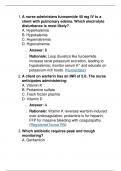
1. A nurse administers furosemide 40 mg IV to a
client with pulmonary edema. Which electrolyte
disturbance is most likely?
A. Hyperkalemia
B. Hypokalemia
C. Hypernatremia
D. Hypocalcemia
o Answer: B
o Rationale: Loop diuretics like furosemide
increase renal potassium excretion, leading to
hypokalemia; monitor serum K⁺ and educate on
potassium-rich foods. (Nurseslabs)
2. A client on warfarin has an INR of 5.0. The nurse
anticipates administering:
A. Vitamin K
B. Protamine sulfate
C. Fresh frozen plasma
D. Vitamin D
o Answer: A
o Rationale: Vitamin K reverses warfarin-induced
over-anticoagulation; protamine is for heparin,
FFP for massive bleeding with coagulopathy.
(Registered Nurse RN)
3. Which antibiotic requires peak and trough
monitoring?
A. Gentamicin
, B. Ceftriaxone
C. Azithromycin
D. Vancomycin
o Answer: A
o Rationale: Aminoglycosides (gentamicin) have
narrow therapeutic windows; measure
peaks/troughs to avoid nephrotoxicity and
ototoxicity. (Registered Nurse RN)
4. Morphine sulfate PO is prescribed for pain. The
nurse should monitor for:
A. Hypertension
B. Respiratory depression
C. Diarrhea
D. Tachycardia
o Answer: B
o Rationale: Opioids depress the respiratory
center; assess RR before administration and hold
if <12 breaths/min. (NursingTip)
5. A client on metformin should be advised to:
A. Avoid grapefruit juice
B. Monitor for lactic acidosis
C. Increase protein intake
D. Take with antacid
o Answer: B
, o Rationale: Metformin can cause lactic acidosis,
especially in renal impairment; monitor lactate
levels and renal function. (NCSBN)
6. Which inhaler is dosed as a rescue medication?
A. Salmeterol
B. Ipratropium
C. Albuterol
D. Beclomethasone
o Answer: C
o Rationale: Albuterol is a short-acting β₂ agonist
for acute bronchospasm relief (“rescue”); others
are maintenance. (Quizlet)
7. Heparin therapy requires monitoring of:
A. PT/INR
B. aPTT
C. Platelet count only
D. Bleeding time
o Answer: B
o Rationale: Unfractionated heparin’s effect is
gauged by aPTT; adjust infusion to maintain
therapeutic range. (NCSBN)
8. A client reports tinnitus while on high-dose
aspirin. The nurse recognizes this as:
A. Allergic reaction
B. Therapeutic effect
client with pulmonary edema. Which electrolyte
disturbance is most likely?
A. Hyperkalemia
B. Hypokalemia
C. Hypernatremia
D. Hypocalcemia
o Answer: B
o Rationale: Loop diuretics like furosemide
increase renal potassium excretion, leading to
hypokalemia; monitor serum K⁺ and educate on
potassium-rich foods. (Nurseslabs)
2. A client on warfarin has an INR of 5.0. The nurse
anticipates administering:
A. Vitamin K
B. Protamine sulfate
C. Fresh frozen plasma
D. Vitamin D
o Answer: A
o Rationale: Vitamin K reverses warfarin-induced
over-anticoagulation; protamine is for heparin,
FFP for massive bleeding with coagulopathy.
(Registered Nurse RN)
3. Which antibiotic requires peak and trough
monitoring?
A. Gentamicin
, B. Ceftriaxone
C. Azithromycin
D. Vancomycin
o Answer: A
o Rationale: Aminoglycosides (gentamicin) have
narrow therapeutic windows; measure
peaks/troughs to avoid nephrotoxicity and
ototoxicity. (Registered Nurse RN)
4. Morphine sulfate PO is prescribed for pain. The
nurse should monitor for:
A. Hypertension
B. Respiratory depression
C. Diarrhea
D. Tachycardia
o Answer: B
o Rationale: Opioids depress the respiratory
center; assess RR before administration and hold
if <12 breaths/min. (NursingTip)
5. A client on metformin should be advised to:
A. Avoid grapefruit juice
B. Monitor for lactic acidosis
C. Increase protein intake
D. Take with antacid
o Answer: B
, o Rationale: Metformin can cause lactic acidosis,
especially in renal impairment; monitor lactate
levels and renal function. (NCSBN)
6. Which inhaler is dosed as a rescue medication?
A. Salmeterol
B. Ipratropium
C. Albuterol
D. Beclomethasone
o Answer: C
o Rationale: Albuterol is a short-acting β₂ agonist
for acute bronchospasm relief (“rescue”); others
are maintenance. (Quizlet)
7. Heparin therapy requires monitoring of:
A. PT/INR
B. aPTT
C. Platelet count only
D. Bleeding time
o Answer: B
o Rationale: Unfractionated heparin’s effect is
gauged by aPTT; adjust infusion to maintain
therapeutic range. (NCSBN)
8. A client reports tinnitus while on high-dose
aspirin. The nurse recognizes this as:
A. Allergic reaction
B. Therapeutic effect


