
NURS 201 - Final exam
Study online at https://quizlet.com/_gasyen
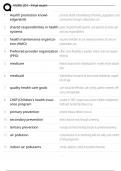
1. Health promotion knowl- promote health and wellbeing of families, populations, and
edge/skills communities through collaborative care
2. shared responsibilities in health payer, hospital/health systems, and patients all share care
systems and cost responsibilities
3. health maintenance organiza- requires members to use network providers; focuses on
tion (HMO) preventative care
4. Preferred provider organization offers more flexibility in provider choice; does not require
(PPO) referrals
5. medicare federal insurance for individuals 65+ or with certain disabil-
ities
6. medicaid state/federal insurance for low income individuals, regard-
less of age
7. quality health care goals care should be effective, safe, timely, patient-centered, effi-
cient, and equitable
8. CHIP (Children's health insur- created in 1997, targets low-income children ineligible for
ance program medicaid, funded by tobacco tax
9. primary prevention prevent disease before it occurs
10. secondary prevention detect disease early through screening
11. tertiary prevention manage and treat existing disease to prevent worsening
12. air pollution contamination of air interfering with the safety and comfort
of living organisms
13. indoor air pollutants smoke, asbestos, mold, household chemicals
1/5
, NURS 201 - Final exam
Study online at https://quizlet.com/_gasyen
14. water pollution any physical or chemical change in water that can harm
living organisms
15. Point-source water pollution pollution traceable to one source
16. non-point sourced pollution all pollution that occurs through runoff, seepage, or falling
of pollutants into water where source is unidentifiable
17. biologic pollutants viruses, bacteria, parasites from improper waste disposal
18. nonbiological pollutants substances not of biological origin; heavy metals, industrial
chemicals, pesticides
19. stress psychological/physiological response to stressors
20. stressor an exposure, event, or situation that causes stress
21. general adaptation syndrome bodys response to stress
22. mental health parity act (2008) equal insurance coverage for mental and physical health
23. affordable care act (2010) expanded medicaid coverage for mental health
24. suicide self-inflicted death with intent to die
25. suicide attempt non-fatal action with intent to die
26. suicidal ideation thoughts or planning of suicide
27. nutritional functions digestion, absorption, metabolism, transportation, storage,
excretion of nutrients
28. nutrition lowers risk of... stroke, heart disease, cancer, diabetes
29. diabetes diet non starchy vegetables, protein, whole carbs
2/5
Study online at https://quizlet.com/_gasyen
1. Health promotion knowl- promote health and wellbeing of families, populations, and
edge/skills communities through collaborative care
2. shared responsibilities in health payer, hospital/health systems, and patients all share care
systems and cost responsibilities
3. health maintenance organiza- requires members to use network providers; focuses on
tion (HMO) preventative care
4. Preferred provider organization offers more flexibility in provider choice; does not require
(PPO) referrals
5. medicare federal insurance for individuals 65+ or with certain disabil-
ities
6. medicaid state/federal insurance for low income individuals, regard-
less of age
7. quality health care goals care should be effective, safe, timely, patient-centered, effi-
cient, and equitable
8. CHIP (Children's health insur- created in 1997, targets low-income children ineligible for
ance program medicaid, funded by tobacco tax
9. primary prevention prevent disease before it occurs
10. secondary prevention detect disease early through screening
11. tertiary prevention manage and treat existing disease to prevent worsening
12. air pollution contamination of air interfering with the safety and comfort
of living organisms
13. indoor air pollutants smoke, asbestos, mold, household chemicals
1/5
, NURS 201 - Final exam
Study online at https://quizlet.com/_gasyen
14. water pollution any physical or chemical change in water that can harm
living organisms
15. Point-source water pollution pollution traceable to one source
16. non-point sourced pollution all pollution that occurs through runoff, seepage, or falling
of pollutants into water where source is unidentifiable
17. biologic pollutants viruses, bacteria, parasites from improper waste disposal
18. nonbiological pollutants substances not of biological origin; heavy metals, industrial
chemicals, pesticides
19. stress psychological/physiological response to stressors
20. stressor an exposure, event, or situation that causes stress
21. general adaptation syndrome bodys response to stress
22. mental health parity act (2008) equal insurance coverage for mental and physical health
23. affordable care act (2010) expanded medicaid coverage for mental health
24. suicide self-inflicted death with intent to die
25. suicide attempt non-fatal action with intent to die
26. suicidal ideation thoughts or planning of suicide
27. nutritional functions digestion, absorption, metabolism, transportation, storage,
excretion of nutrients
28. nutrition lowers risk of... stroke, heart disease, cancer, diabetes
29. diabetes diet non starchy vegetables, protein, whole carbs
2/5


