
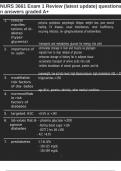
NURS 3661 Exam 1 Review (latest update) questions
n answers graded A+
1. clinical
polyuria, polydipsia, polyphagia; fatigue, weight loss, poor wound
manifes-
healing, CV disease, visual disturbances, renal insufficiency,
tations of di-
recurring infection, tin- gling/numbness of extremities
abetes
(hyper-
glycemia)
-transports and metabolizes glucose for energy into cells
2. importance of -stimulates storage in liver and muscle as glycogen
in- sulin -signals liver to stop release of glucose
-enhances storage of dietary fat in adipose tissue
-accelerates transport of amino acids into cells
-inhibits breakdown of stored glucose, protein and fat
overweight, low activity level, high blood pressure, high cholesterol; HDL < 35
3. modifiable triglycerides >250
risk factors
of dia- betes
age (45+), genetics, ethnicity, other medical conditions
4. nonmodifiab
le risk
factors of
diabetes
5. targeted A1C <6.5% or <140
6. lab values that di- - plasma glucose >200
agnose -fasting blood sugar >126
diabetes -OGTT 2 hrs. BS >200
- A1C >6.5%
7. prediabetes 5.7-6.4%
- 100-125 mg/dL
- 140-199 mg/dL
1/
22
,NURS 3661 Exam 1 Review (latest update) questions
n answers graded A+
8. once the teach how to monitor BG
client has - health history (compliance, life-style, cultural assessment)
been diag-
1/
22
, NURS 3661 Exam 1
Review
nosed with dia- - physical exam (BMI, BP, eye, skin, foot, neuro and oral)
betes what needs - A1C, lipid profile, microalbumins, creatinine, urinalysis, ECG
to occur
9. self-manage- - diabetes disease and treatment processes
ment goals for di- - incorporate nutritional management into lifestyle
abete -incorporate physical activity into lifestyle
s -using medications safely
-monitoring blood glucose, interpreting, and using results
-prevention, detection, and treatment of acute complications
-develop strategies to address psychosocial issues
-develop strategies to promote health/change behavior
10. ADA Diet - control total caloric intake to attain/maintain reasonable body weight;
control
blood glucose
-includes meal planning and weight control plus increase activity
11. What does a measure of how a particular food attects blood glucose levels
the glycemic
index
measure?
Ranks carbs from 0 to 100 based on how quickly they are converted into
12. How does
blood sugar. 50 g of food are compared to 50 g of pure glucose.
the glycemic
index work?
-exercise 3x/week (not 2 days in a row)
13. exercise
regime in a -resistance training
diabetic -same day/time/duration (when glucose is at its peak)
client -proper foot wear (inspect feet)
-stretch 10-15 min before
14. extreme climates, BS >250, and ketones in urine
, NURS 3661 Exam 1
Review
when should a duration
di- abetic
client not 22. short acting in- sulin
exercise?
15. insulin depen-
dent diabetic
pa- tient
should eat 15
gm carb snack
before
16. what
should a
client do to
prevent
hypo-
glycemia
17. Metformin
side effects
18. rapid acting
in- sulin
19. Rapid acting
in- sulin
onset
20. rapid acting
in- sulin
peak
21. rapid acting
in- sulin
n answers graded A+
1. clinical
polyuria, polydipsia, polyphagia; fatigue, weight loss, poor wound
manifes-
healing, CV disease, visual disturbances, renal insufficiency,
tations of di-
recurring infection, tin- gling/numbness of extremities
abetes
(hyper-
glycemia)
-transports and metabolizes glucose for energy into cells
2. importance of -stimulates storage in liver and muscle as glycogen
in- sulin -signals liver to stop release of glucose
-enhances storage of dietary fat in adipose tissue
-accelerates transport of amino acids into cells
-inhibits breakdown of stored glucose, protein and fat
overweight, low activity level, high blood pressure, high cholesterol; HDL < 35
3. modifiable triglycerides >250
risk factors
of dia- betes
age (45+), genetics, ethnicity, other medical conditions
4. nonmodifiab
le risk
factors of
diabetes
5. targeted A1C <6.5% or <140
6. lab values that di- - plasma glucose >200
agnose -fasting blood sugar >126
diabetes -OGTT 2 hrs. BS >200
- A1C >6.5%
7. prediabetes 5.7-6.4%
- 100-125 mg/dL
- 140-199 mg/dL
1/
22
,NURS 3661 Exam 1 Review (latest update) questions
n answers graded A+
8. once the teach how to monitor BG
client has - health history (compliance, life-style, cultural assessment)
been diag-
1/
22
, NURS 3661 Exam 1
Review
nosed with dia- - physical exam (BMI, BP, eye, skin, foot, neuro and oral)
betes what needs - A1C, lipid profile, microalbumins, creatinine, urinalysis, ECG
to occur
9. self-manage- - diabetes disease and treatment processes
ment goals for di- - incorporate nutritional management into lifestyle
abete -incorporate physical activity into lifestyle
s -using medications safely
-monitoring blood glucose, interpreting, and using results
-prevention, detection, and treatment of acute complications
-develop strategies to address psychosocial issues
-develop strategies to promote health/change behavior
10. ADA Diet - control total caloric intake to attain/maintain reasonable body weight;
control
blood glucose
-includes meal planning and weight control plus increase activity
11. What does a measure of how a particular food attects blood glucose levels
the glycemic
index
measure?
Ranks carbs from 0 to 100 based on how quickly they are converted into
12. How does
blood sugar. 50 g of food are compared to 50 g of pure glucose.
the glycemic
index work?
-exercise 3x/week (not 2 days in a row)
13. exercise
regime in a -resistance training
diabetic -same day/time/duration (when glucose is at its peak)
client -proper foot wear (inspect feet)
-stretch 10-15 min before
14. extreme climates, BS >250, and ketones in urine
, NURS 3661 Exam 1
Review
when should a duration
di- abetic
client not 22. short acting in- sulin
exercise?
15. insulin depen-
dent diabetic
pa- tient
should eat 15
gm carb snack
before
16. what
should a
client do to
prevent
hypo-
glycemia
17. Metformin
side effects
18. rapid acting
in- sulin
19. Rapid acting
in- sulin
onset
20. rapid acting
in- sulin
peak
21. rapid acting
in- sulin


