
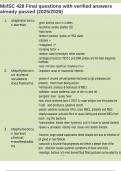
MMSC 428 Final questions with verified answers
already passed (2025/2026)
1. Staphylococcu
-gram positive cocci in clusters
s aureus
-facultative aerobe (prefers O2)
-halo tonic
-ferment mannitol (yellow on MSA plate)
-catalase +
-*coagulase +*
-clumping factor +
-medium sized b-hemolytic white colonies
-serological tests for TSST-1 and DNA probes are the best diagnosis
methods
-most clinically significant staphylococcus
2. staphylococc -important cause of nosocomial infection
us aureus
virulence -protein A: virulent cell wall protein that binds to IgG antibodies and
mechanisms prevents them from being active
-hemolysins: produce B-hemolysis of RBCs
-exfoliatin: causes epidermal layer of skin to peel ott
-pyrogenic toxin: causes fever
-toxic shock syndrome toxin 1 (TSST-1): super antigen over stimulates the
T cells and produces cytokine storm
-panton valentine leukocidin (PVL): lyses WBCs, platelets and RBCs
-staphycoagulase: activates fibrin to cause clotting and prevent WBCs from
reach- ing the bacteria
-hyaluronidase: breaks down hyaluronic acid in tissue to spread bacteria
-lipases & proteases: destroy host tissues and spread bacteria
3. staphylococcu
s aureus -furuncle: large raised suppurative dome shaped boil due to infection of
clinical
oil gland or hail follicle
manifestatio
-carbuncle: a furuncle that progresses and infects a deeper level of the
ns
skin, infection causes systemic symptoms of fever and chills
-impetigo: bullous (>5 mm) domed fluid filled pustules surrounded by zo
,MMSC 428 Final questions with verified answers
already passed (2025/2026)
of erythema, mainly seen in
children
-cellulitis: inflammatory
infection of connective tissue
,MMSC 428 Final questions with verified answers
already passed (2025/2026)
6. staphylococcus lugdunensis
4. staphylococcu
s aureus
drug
resistance
5. staphylococcu
s
epidermidis
,MMSC 428 Final questions with verified answers
already passed (2025/2026)
-staphylococcal scalded
skin syndrome (SSS): -penicillin resistant due to acquiring beta-lactamase genes
release of exfoliatin -MRSA: methicillin resistant staphylococcus aureus
exotoxin causes -VISA: vancomycin intermediate staphylococcus aureus
exfoliative dermatitis -VRSA: vancomycin resistance staphylococcus aureus
with red peeling skin
that resembles a burn, -gram positive cocci in clusters
mainly in children and -nonmotile
newborns -facultative anaerobe (prefer O2)
-toxic shock syndrome -smooth, round, non-hemolytic white colonies on BSA
(TSS): release of TSST-1 -staphycoagulase - (indicated by the fact that it is nonhemolytic)
and enterotoxin B cause -clumping factor -
systemic symptoms -PYR -
including fever, liver and -ODC d+
kidney damage, vomiting, -is part of the normal biota, only causes opportunistic infections
diarrhea, muscle aches -hospital acquired infections: biofilms, septicemia, osteomyelitis, catheter
and rash, menstrual and associ- ated UTI
non-menstrual forms
-gram positive cocci in clusters
-endocarditis
-staphycoagulase -
-intoxication food
poisoning: food is
contaminated with
enterotoxins (no actual
bacteria) and causes
vomiting and diarrhea
-nosocomial infections:
wound infections,
osteomyelitis, biofilm on
body im- plants
-childhood infections: SIDS,
head and neck infection
already passed (2025/2026)
1. Staphylococcu
-gram positive cocci in clusters
s aureus
-facultative aerobe (prefers O2)
-halo tonic
-ferment mannitol (yellow on MSA plate)
-catalase +
-*coagulase +*
-clumping factor +
-medium sized b-hemolytic white colonies
-serological tests for TSST-1 and DNA probes are the best diagnosis
methods
-most clinically significant staphylococcus
2. staphylococc -important cause of nosocomial infection
us aureus
virulence -protein A: virulent cell wall protein that binds to IgG antibodies and
mechanisms prevents them from being active
-hemolysins: produce B-hemolysis of RBCs
-exfoliatin: causes epidermal layer of skin to peel ott
-pyrogenic toxin: causes fever
-toxic shock syndrome toxin 1 (TSST-1): super antigen over stimulates the
T cells and produces cytokine storm
-panton valentine leukocidin (PVL): lyses WBCs, platelets and RBCs
-staphycoagulase: activates fibrin to cause clotting and prevent WBCs from
reach- ing the bacteria
-hyaluronidase: breaks down hyaluronic acid in tissue to spread bacteria
-lipases & proteases: destroy host tissues and spread bacteria
3. staphylococcu
s aureus -furuncle: large raised suppurative dome shaped boil due to infection of
clinical
oil gland or hail follicle
manifestatio
-carbuncle: a furuncle that progresses and infects a deeper level of the
ns
skin, infection causes systemic symptoms of fever and chills
-impetigo: bullous (>5 mm) domed fluid filled pustules surrounded by zo
,MMSC 428 Final questions with verified answers
already passed (2025/2026)
of erythema, mainly seen in
children
-cellulitis: inflammatory
infection of connective tissue
,MMSC 428 Final questions with verified answers
already passed (2025/2026)
6. staphylococcus lugdunensis
4. staphylococcu
s aureus
drug
resistance
5. staphylococcu
s
epidermidis
,MMSC 428 Final questions with verified answers
already passed (2025/2026)
-staphylococcal scalded
skin syndrome (SSS): -penicillin resistant due to acquiring beta-lactamase genes
release of exfoliatin -MRSA: methicillin resistant staphylococcus aureus
exotoxin causes -VISA: vancomycin intermediate staphylococcus aureus
exfoliative dermatitis -VRSA: vancomycin resistance staphylococcus aureus
with red peeling skin
that resembles a burn, -gram positive cocci in clusters
mainly in children and -nonmotile
newborns -facultative anaerobe (prefer O2)
-toxic shock syndrome -smooth, round, non-hemolytic white colonies on BSA
(TSS): release of TSST-1 -staphycoagulase - (indicated by the fact that it is nonhemolytic)
and enterotoxin B cause -clumping factor -
systemic symptoms -PYR -
including fever, liver and -ODC d+
kidney damage, vomiting, -is part of the normal biota, only causes opportunistic infections
diarrhea, muscle aches -hospital acquired infections: biofilms, septicemia, osteomyelitis, catheter
and rash, menstrual and associ- ated UTI
non-menstrual forms
-gram positive cocci in clusters
-endocarditis
-staphycoagulase -
-intoxication food
poisoning: food is
contaminated with
enterotoxins (no actual
bacteria) and causes
vomiting and diarrhea
-nosocomial infections:
wound infections,
osteomyelitis, biofilm on
body im- plants
-childhood infections: SIDS,
head and neck infection


