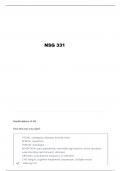
Manifestations of MS
Give this one a try later!
VISUAL: nystagmus, diplopia, blurred vision
SPEECH: dysarthria
THROAT: dysphagia
SENSATION: pain, paresthesia, Lhermitte's sign (electric shock sensation
when bending neck forward), dizziness
URINARY: incontinence, frequency or retention
CNS: fatigue, cognitive impairment, depression, unstable mood
-Hearing loss
, MUSCULOSKELETAL: weakness, spasms, tremors, ataxia
BOWEL: diarrhea, constipation
REPRODUCTIVE: erectile dysfunction, decreased libido, decreased
sensation
SYMPTOMS are reflective of damage area: unsteady gait, vertigo,
elimination changes
Psoriasis
Give this one a try later!
-chronic skin condition producing red lesions covered with silvery scales;
immune system triggers inflammation
-Triggered by: skin injury or infection, smoking, drinking, emotional stress,
medications
-Prevention of secondary infections
-Education: disease process, specific skin care, side effects, stressors,
health promotion, address psychological stressors, SELF-IMAGE, social
isolation, support
Anticholinergics
Give this one a try later!
, produce dry mouth, may leave bad taste
-Short-acting: atrovent (temp. blurred vision with eye contact, caution with
narrow-angle glaucoma or prostatic enlargement)
-Long-Acting: spriva (blurred vision if powder gets in eyes, must not use
with Atrovent, use with SABA for quick relief, max effect 1 week after
starting, daily dose)
Risk Factors for Skin Cancer
Give this one a try later!
-fair skin type
-chronic sun exposure
-family history
-exposure to tar/arsenic chemicals
-exposure to natural sunlight or UV light (tanning beds)
-Psoralen and PUVA radiation
Prevention: Avoid exposure to ^, wear protective clothing and sunscreen
Risk Factors for Pneumonia
Give this one a try later!
, -abdominal or chest surgery
-age >65
-air pollution
-altered consciousness: alcoholism, head injury, seizures, anesthesia, drug
overdose, stroke
-bed rest and prolonged immobility
-chronic disease: chronic lung and liver disease, diabetes, heart disease,
cancer, chronic kidney disease
-debilitating illness
-exposure to bats, birds, rabbits, and farm animal droppings
-immunosuppressive disease and/or therapy (corticosteroids, cancer
chemotherapy, HIV infection, immunosuppressive therapy after organ
transplant)
-inhalation or aspiration of noxious substances
-intestinal and gastric feedings via nasogastric or nasointestinal tubes
-IV drug use
-malnutrition
- recent antibiotic therapy
-resident of a long-term care facility
-smoking
-tracheal intubation (endotracheal intubation, trachestomy)
-URI
Low-Flow Oxygen Delivery Systems
Give this one a try later!
-Nasal cannula (24-44% concentration, 1-6 L/min)
-Simple face mask (short periods of time, 35-50% concentration, 6-12
L/min)
-Partial rebreather/ Nonrebreather mask (short term, 60-90% at 10-15 L/min)
-oxygen-conserving cannula (long-term at home, looks like a moustache or
pendant, built-in reservoir that increases O2 concentration, 30-50% up to 8
L/min)
Table 28.19 on page 568
Give this one a try later!
VISUAL: nystagmus, diplopia, blurred vision
SPEECH: dysarthria
THROAT: dysphagia
SENSATION: pain, paresthesia, Lhermitte's sign (electric shock sensation
when bending neck forward), dizziness
URINARY: incontinence, frequency or retention
CNS: fatigue, cognitive impairment, depression, unstable mood
-Hearing loss
, MUSCULOSKELETAL: weakness, spasms, tremors, ataxia
BOWEL: diarrhea, constipation
REPRODUCTIVE: erectile dysfunction, decreased libido, decreased
sensation
SYMPTOMS are reflective of damage area: unsteady gait, vertigo,
elimination changes
Psoriasis
Give this one a try later!
-chronic skin condition producing red lesions covered with silvery scales;
immune system triggers inflammation
-Triggered by: skin injury or infection, smoking, drinking, emotional stress,
medications
-Prevention of secondary infections
-Education: disease process, specific skin care, side effects, stressors,
health promotion, address psychological stressors, SELF-IMAGE, social
isolation, support
Anticholinergics
Give this one a try later!
, produce dry mouth, may leave bad taste
-Short-acting: atrovent (temp. blurred vision with eye contact, caution with
narrow-angle glaucoma or prostatic enlargement)
-Long-Acting: spriva (blurred vision if powder gets in eyes, must not use
with Atrovent, use with SABA for quick relief, max effect 1 week after
starting, daily dose)
Risk Factors for Skin Cancer
Give this one a try later!
-fair skin type
-chronic sun exposure
-family history
-exposure to tar/arsenic chemicals
-exposure to natural sunlight or UV light (tanning beds)
-Psoralen and PUVA radiation
Prevention: Avoid exposure to ^, wear protective clothing and sunscreen
Risk Factors for Pneumonia
Give this one a try later!
, -abdominal or chest surgery
-age >65
-air pollution
-altered consciousness: alcoholism, head injury, seizures, anesthesia, drug
overdose, stroke
-bed rest and prolonged immobility
-chronic disease: chronic lung and liver disease, diabetes, heart disease,
cancer, chronic kidney disease
-debilitating illness
-exposure to bats, birds, rabbits, and farm animal droppings
-immunosuppressive disease and/or therapy (corticosteroids, cancer
chemotherapy, HIV infection, immunosuppressive therapy after organ
transplant)
-inhalation or aspiration of noxious substances
-intestinal and gastric feedings via nasogastric or nasointestinal tubes
-IV drug use
-malnutrition
- recent antibiotic therapy
-resident of a long-term care facility
-smoking
-tracheal intubation (endotracheal intubation, trachestomy)
-URI
Low-Flow Oxygen Delivery Systems
Give this one a try later!
-Nasal cannula (24-44% concentration, 1-6 L/min)
-Simple face mask (short periods of time, 35-50% concentration, 6-12
L/min)
-Partial rebreather/ Nonrebreather mask (short term, 60-90% at 10-15 L/min)
-oxygen-conserving cannula (long-term at home, looks like a moustache or
pendant, built-in reservoir that increases O2 concentration, 30-50% up to 8
L/min)
Table 28.19 on page 568