s
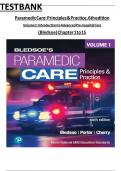
TESTBANK
s
Paramedic Care: Principles & Practice, 6th edition
s s s s s s
Volume 1: Introduction to Advanced Pre-hospital Care
s s s s s s
(Bledsoe) Chapter 1 to 15
s s s s
,s
Table of contents:
s s
CHAPTER 1: Introduction to Paramedicine
s s s s
CHAPTER 2: EMS Systems
s s s
CHAPTER 3: Roles and Responsibilities of the Paramedic
s s s s s s s
CHAPTER 4: Workforce Safety and Wellness
s s s s s
CHAPTER 5: EMS Research
s s s
CHAPTER 6: Public Health
s s s
CHAPTER 7: Medical/Legal Aspects of Out-of-Hospital Care
s s s s s s
CHAPTER 8: Ethics in Paramedicine
s s s s
CHAPTER 9: EMS Systems and Communications
s s s s s
CHAPTER 10: Documentation
s s
CHAPTER 11: Pathophysiology
s s
CHAPTER 12: Human Lifespan Development
s s s s
CHAPTER 13: Emergency Pharmacology
s s s
CHAPTER 14: Intravenous Access and Medication Administration
s s s s s s
CHAPTER 15: Airway Management and Ventilation
s s s s s
, lOMoARcPSD|81 17673
s
Chapter 1: Introduction to Paramedicine
s s s s
1) What is one of the emerging roles and responsibilities of a paramedic in the 21st century?
s s s s s s s s s s s s s s s s
A) Third-party biller
s s
B) Managed health care
s s s
C) Health promotion
s s
D) Interneteducation
s s
Answer: C s
Diff: 1 Page Ref: 4
s s s s
Standard: Preparatory (EMS Systems) s s s
Objective: 4 s
2) Safety inspections, accident prevention, and medical screening of employees are some of the
s s s s s s s s s s s s s
responsibilities for paramedics working in: s s s s
A) industrial medicine.
s s
B) community clinics.
s s
C) correctional institutions.
s s
D) sportsmedicine.
s s
Answer: A s
Diff: 1 Page Ref: 8
s s s s
Standard: Preparatory (EMS Systems) s s s
Objective: 5 s
3) Which of the following best describes the initial education program of the paramedic?
s s s s s s s s s s s s s
A) It addresses everything one needs to know to practice paramedicine.
s s s s s s s s s s
B) It is a rite of passage, but information is inconsistent with how things really should be done.
s s s s s s s s s s s s s s s s s
C) It is the base and beginning of one's professional education, not the end.
s s s s s s s s s s s s s
D) Lectures prepare students, but all learning occurs on the job during the internship phase.
s s s s s s s s s s s s s s
Answer: C s
Diff: 1 Page Ref: 5
s s s s
Standard: Preparatory (EMS Systems) s s s
Objective: 3 s
4) Which of the following best describes the paramedic's professional obligation?
s s s s s s s s s s
A)Acceptance and adherence to a code of professional ethics and etiquette
s s s s s s s s s s s
B) Placing the system's well-being above that of the patient
s s s s s s s s s
C)Absolute adherence to medical protocols
s s s s s
D) Following long-standing traditions in practice
s s s s s
Answer: A s
Diff: 2 Page Ref: 6
s s s s
Standard: Preparatory (EMS Systems) s s s
Objective: 3 s
1
,s lOMoARcPSD|81 17673
5)Amajor advance in the education of out-of-hospital was the:
s s s s s s s s s s
A) formation of the NationalAssociation of Emergency Medical Technicians.
s s s s s s s s s
B) 2009 publication National EMS Services Education Standards.
s s s s s s s
C) passage of the Health Insurance Portability andAccountabilityAct (HIPAA).
s s s s s s s s s s
D) establishment of the National Registry computer-based certification exam.
s s s s s s s s
Answer: B s
Diff: 1 Page Ref: 5
s s s s
Standard: Preparatory (EMS Systems) s s s
Objective: 4 s
6) Which of the following statements about a paramedic's skill competency is TRUE?
s s s s s s s s s s s s
A) High-frequency, low-criticality skills should be reviewed often.
s s s s s s s
B) Low-frequency, high-criticality skills should be rarely reviewed.
s s s s s s s
C)All skills should be reviewed equally, regardless ofcriticality.
s s s s s s s s s
D) Frequent review of infrequently used skills is critical to ensure competency.
s s s s s s s s s s s
Answer: D s
Diff: 1 Page Ref: 5
s s s s
Standard: Preparatory (EMS Systems) s s s
Objective: 3 s
7) The paramedic's right to care for patients, administer medications, and perform other related
s s s s s s s s s s s s s
tasks falls on the license of:
s s s s s
A) the EMS system medical director.
s s s s s
B) the state secretary of health.
s s s s s
C) the receiving hospital personnel.
s s s s
D) thestatemedicaldirector.
s s s s
Answer: A s
Diff: 1 Page Ref: 4
s s s s
Standard: Preparatory (EMS Systems) s s s
Objective: 4 s
8) Manyprofessional sports teams have found paramedics to be effective complements to their:
s s s s s s s s s s s s s
A) team physicians.
s s
B) physical therapists.
s s
C) athletic trainers.
s s
D) rehabilitationprograms.
s s
Answer: C s
Diff: 1 Page Ref: 8
s s s s
Standard: Preparatory (EMS Systems) s s s
Objective: 5 s
2
TESTBANK
s
Paramedic Care: Principles & Practice, 6th edition
s s s s s s
Volume 1: Introduction to Advanced Pre-hospital Care
s s s s s s
(Bledsoe) Chapter 1 to 15
s s s s
,s
Table of contents:
s s
CHAPTER 1: Introduction to Paramedicine
s s s s
CHAPTER 2: EMS Systems
s s s
CHAPTER 3: Roles and Responsibilities of the Paramedic
s s s s s s s
CHAPTER 4: Workforce Safety and Wellness
s s s s s
CHAPTER 5: EMS Research
s s s
CHAPTER 6: Public Health
s s s
CHAPTER 7: Medical/Legal Aspects of Out-of-Hospital Care
s s s s s s
CHAPTER 8: Ethics in Paramedicine
s s s s
CHAPTER 9: EMS Systems and Communications
s s s s s
CHAPTER 10: Documentation
s s
CHAPTER 11: Pathophysiology
s s
CHAPTER 12: Human Lifespan Development
s s s s
CHAPTER 13: Emergency Pharmacology
s s s
CHAPTER 14: Intravenous Access and Medication Administration
s s s s s s
CHAPTER 15: Airway Management and Ventilation
s s s s s
, lOMoARcPSD|81 17673
s
Chapter 1: Introduction to Paramedicine
s s s s
1) What is one of the emerging roles and responsibilities of a paramedic in the 21st century?
s s s s s s s s s s s s s s s s
A) Third-party biller
s s
B) Managed health care
s s s
C) Health promotion
s s
D) Interneteducation
s s
Answer: C s
Diff: 1 Page Ref: 4
s s s s
Standard: Preparatory (EMS Systems) s s s
Objective: 4 s
2) Safety inspections, accident prevention, and medical screening of employees are some of the
s s s s s s s s s s s s s
responsibilities for paramedics working in: s s s s
A) industrial medicine.
s s
B) community clinics.
s s
C) correctional institutions.
s s
D) sportsmedicine.
s s
Answer: A s
Diff: 1 Page Ref: 8
s s s s
Standard: Preparatory (EMS Systems) s s s
Objective: 5 s
3) Which of the following best describes the initial education program of the paramedic?
s s s s s s s s s s s s s
A) It addresses everything one needs to know to practice paramedicine.
s s s s s s s s s s
B) It is a rite of passage, but information is inconsistent with how things really should be done.
s s s s s s s s s s s s s s s s s
C) It is the base and beginning of one's professional education, not the end.
s s s s s s s s s s s s s
D) Lectures prepare students, but all learning occurs on the job during the internship phase.
s s s s s s s s s s s s s s
Answer: C s
Diff: 1 Page Ref: 5
s s s s
Standard: Preparatory (EMS Systems) s s s
Objective: 3 s
4) Which of the following best describes the paramedic's professional obligation?
s s s s s s s s s s
A)Acceptance and adherence to a code of professional ethics and etiquette
s s s s s s s s s s s
B) Placing the system's well-being above that of the patient
s s s s s s s s s
C)Absolute adherence to medical protocols
s s s s s
D) Following long-standing traditions in practice
s s s s s
Answer: A s
Diff: 2 Page Ref: 6
s s s s
Standard: Preparatory (EMS Systems) s s s
Objective: 3 s
1
,s lOMoARcPSD|81 17673
5)Amajor advance in the education of out-of-hospital was the:
s s s s s s s s s s
A) formation of the NationalAssociation of Emergency Medical Technicians.
s s s s s s s s s
B) 2009 publication National EMS Services Education Standards.
s s s s s s s
C) passage of the Health Insurance Portability andAccountabilityAct (HIPAA).
s s s s s s s s s s
D) establishment of the National Registry computer-based certification exam.
s s s s s s s s
Answer: B s
Diff: 1 Page Ref: 5
s s s s
Standard: Preparatory (EMS Systems) s s s
Objective: 4 s
6) Which of the following statements about a paramedic's skill competency is TRUE?
s s s s s s s s s s s s
A) High-frequency, low-criticality skills should be reviewed often.
s s s s s s s
B) Low-frequency, high-criticality skills should be rarely reviewed.
s s s s s s s
C)All skills should be reviewed equally, regardless ofcriticality.
s s s s s s s s s
D) Frequent review of infrequently used skills is critical to ensure competency.
s s s s s s s s s s s
Answer: D s
Diff: 1 Page Ref: 5
s s s s
Standard: Preparatory (EMS Systems) s s s
Objective: 3 s
7) The paramedic's right to care for patients, administer medications, and perform other related
s s s s s s s s s s s s s
tasks falls on the license of:
s s s s s
A) the EMS system medical director.
s s s s s
B) the state secretary of health.
s s s s s
C) the receiving hospital personnel.
s s s s
D) thestatemedicaldirector.
s s s s
Answer: A s
Diff: 1 Page Ref: 4
s s s s
Standard: Preparatory (EMS Systems) s s s
Objective: 4 s
8) Manyprofessional sports teams have found paramedics to be effective complements to their:
s s s s s s s s s s s s s
A) team physicians.
s s
B) physical therapists.
s s
C) athletic trainers.
s s
D) rehabilitationprograms.
s s
Answer: C s
Diff: 1 Page Ref: 8
s s s s
Standard: Preparatory (EMS Systems) s s s
Objective: 5 s
2